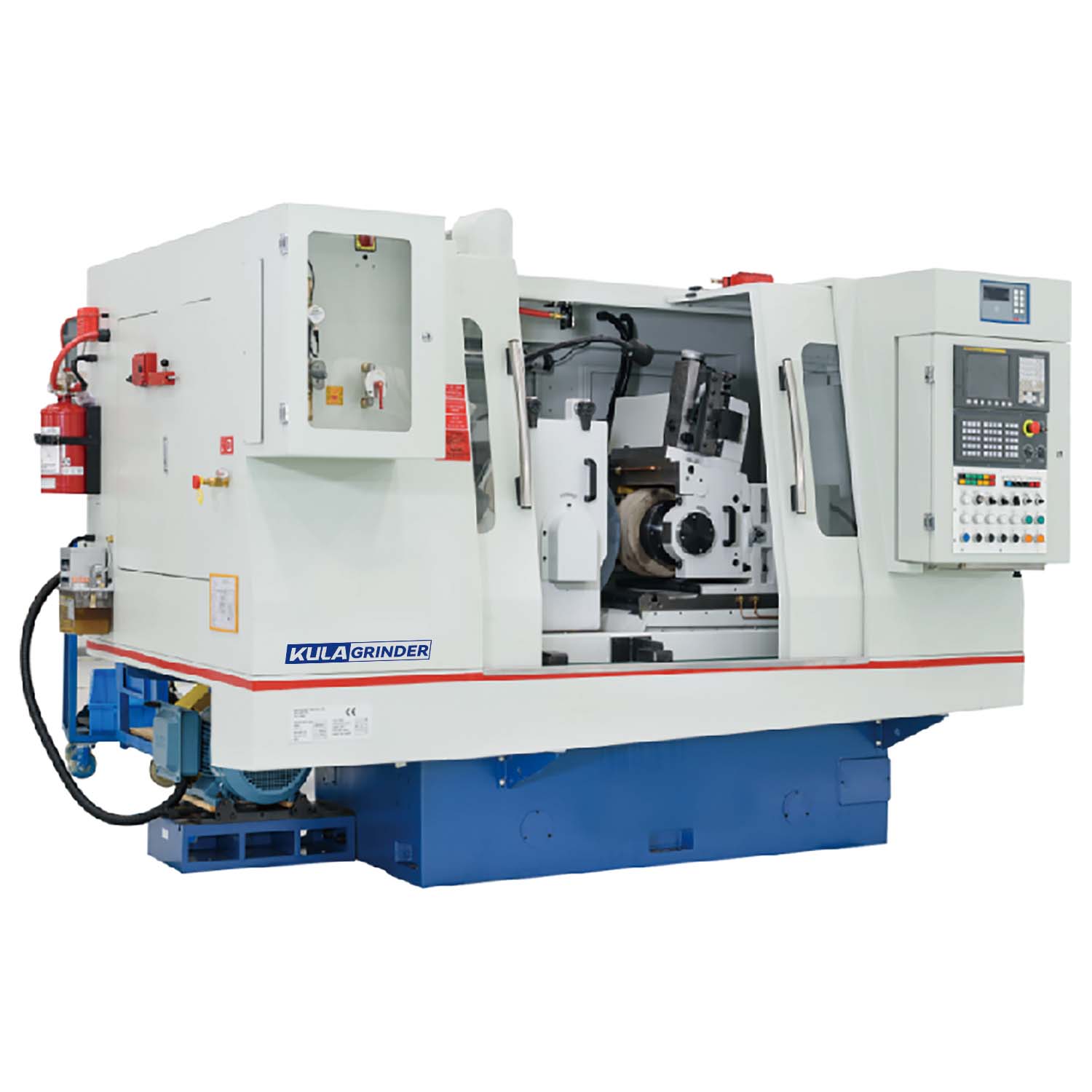
Balancing ultra-high precision with maximum throughput in cylindrical part production creates a distinct challenge. Traditional centering often introduces setup bottlenecks. It also imposes severe cycle-time limitations on your production floor. You might view centerless grinding as manufacturing magic, but it remains a strict physics-based process. Success depends entirely on matching part geometry, volume requirements, and machine capabilities. We designed this guide to provide manufacturing engineers and production managers with an evidence-based framework for evaluating the centerless process. You will learn how to compare it against traditional alternatives. We will help you determine when upgrading your equipment represents a financially and technically sound investment. By understanding the core mechanics and implementation realities, you can make informed decisions. These insights will help you optimize both production speed and long-term part quality.
Key Takeaways
Centerless grinding eliminates the need for spindle fixtures, making it the highest-throughput solution for cylindrical parts, provided batch sizes justify setup times.
The primary decision between centerless and traditional cylindrical grinding hinges on part geometry (presence of centers) and production volume.
Upgrading to a CNC centerless grinder transforms the process from an operator-dependent art into a repeatable, data-driven system with automated wheel dressing and sub-micron compensation.
Successful implementation requires assessing tooling costs, floor vibration, and specific feed methods (thru-feed vs. in-feed) prior to machine selection.
The Physics of the Process: How Centerless Grinding Actually Works
To master this manufacturing process, you must first demystify it. Centerless grinding relies on a fundamental three-point system. You have the grinding wheel, the regulating wheel, and the workblade. They operate in a dynamic, continuous relationship. The grinding wheel performs the actual material removal. It rotates at high speeds to cut the metal. The regulating wheel sits opposite the grinding wheel. It rotates much slower and controls the spin of the workpiece. It also dictates the feed rate through friction. The workblade sits perfectly between them. It supports the part from underneath. These three elements trap the workpiece. They force it to become perfectly round through continuous, rigid contact.
Eliminating spindles and fixtures provides massive advantages for production floors. You no longer need to locate parts on predefined centers. This unique setup allows for continuous feeding. It also produces zero axial thrust during operation. You gain superior roundness on long or brittle parts. Tube finishing benefits greatly from this mechanic. You avoid crushing delicate thin walls because the support remains uniform along the entire length of the tube.
However, the process has strict physical limitations. You must transparently assess what centerless grinding cannot do. It cannot grind features concentric to internal bores. You rely entirely on the outside diameter for locating. It also struggles with highly asymmetrical heavy parts. If a part lacks balance, it will not rotate smoothly on the workblade. Understanding these physical boundaries helps you avoid costly manufacturing mistakes.
Centerless vs. Cylindrical Grinding: Process Selection Framework
Engineers often debate which grinding method works best for a given project. We rely on empirical production data to build a selection framework. You must evaluate throughput, geometry constraints, and deflection risks.
Centerless processing wins in continuous, high-volume runs. Parts move through the machine without stopping. You completely eliminate the loading and unloading of spindle fixtures. Conversely, cylindrical grinding wins in low-volume, high-mix environments. It offers much faster changeovers. You can swap parts quickly without recalibrating a complex workblade and regulating wheel setup.
Part geometry creates hard constraints for your choice. Centerless proves ideal for pins, shafts, tubes, and fasteners. These are parts where center holes are impossible or undesirable. Cylindrical becomes strictly required when you need tight concentricity. If you must align multiple outside diameters with an internal feature, you need centers.
Accuracy and deflection also play a major role in process selection. Traditional cylindrical grinders face deflection issues with long, thin parts. The pressure of the wheel pushes against the unsupported middle of the part. Centerless grinding provides continuous support along the entire workpiece. It effectively eliminates the chatter risk associated with bending long shafts.
Table: Process Selection Framework Comparison
Evaluation Criteria
Centerless Grinding
Cylindrical Grinding
Throughput
Ultra-high (continuous feeding possible)
Moderate (requires fixture loading)
Ideal Part Geometry
Pins, shafts, tubes, fasteners
Complex profiles requiring ID/OD concentricity
Changeover Speed
Slow (requires detailed wheel/blade alignment)
Fast (quick fixture swaps)
Deflection Risk
Low (continuous blade support)
High (unsupported span between centers)
Why High-Volume Facilities Transition to a CNC Centerless Grinder
Traditional centerless grinding demands intense manual skill. Operators rely heavily on intuition. They use manual adjustments to achieve tight tolerances. This creates a severe operator skill gap across the industry. You cannot easily scale an intuition-based process as older operators retire. Modern facilities solve this problem by upgrading their core technology.
Implementing a CNC Centerless Grinder modernizes your entire workflow. It reduces reliance on specialized legacy operators. The machine uses digital data instead of guesswork. You gain automated control over every axis. This shift transforms the manufacturing process into a highly repeatable system.
Automated wheel dressing stands out as a critical feature. CNC controls manage complex wheel profiling automatically. You can program step grinding and complex tapers with ease. The machine dresses the wheel precisely. It reduces costly downtime and maintains consistent cutting forces. You no longer stop production for manual diamond dressing passes.
Sub-micron precision and regulatory compliance drive many facility upgrades. You leverage servo-driven axes and in-process gauging to automatically compensate for wheel wear. The system measures parts dynamically. It adjusts the wheels before a part drifts out of tolerance. This ensures you meet tight CpK requirements. Aerospace and medical device manufacturers rely on this compliance to guarantee part safety.
Key Evaluation Dimensions for Machine and Setup Selection
Selecting the right machine requires a deep dive into your specific production needs. You must evaluate feed methods, material compatibility, and future scalability. These dimensions dictate your overall manufacturing success.
You must first select the appropriate feed method for your parts. This decision impacts your tooling and machine layout.
Thru-feed: This method works best for straight, uniform cylinders. Parts enter one side of the machine and exit the other. It maximizes throughput for high-volume items like dowel pins.
In-feed (Plunge): This method becomes required for headed parts, multiple diameters, or complex profiles. The part rests on the blade, and the wheel plunges straight into it. You use this for bolts or engine valves.
Material and wheel compatibility also define your machine requirements. You must evaluate machine rigidity based on part metallurgy. Grinding titanium aerospace fasteners requires different rigidity than standard carbon steel tubing. Titanium dissipates heat poorly. You need a highly rigid machine structure and specialized abrasive wheels to prevent thermal damage.
Finally, assess integration and scalability. Look at the machine's capacity to integrate into modern automated cells. You should consider robotic loaders, bowl feeders, and automated post-process inspection systems. A modern facility demands a machine that communicates seamlessly with existing floor architecture.
Implementation Realities: Troubleshooting and Risk Mitigation
Even with advanced equipment, the grinding process carries inherent geometric and physical risks. You build trustworthiness in your operations by acknowledging these realities. Troubleshooting effectively ensures your production remains profitable.
The lobing effect represents a common geometric risk. Sometimes, you accidentally produce a constant-diameter polygon instead of a true circle. These shapes look like Reuleaux triangles. They measure perfectly round on a simple two-point micrometer. However, they fail immediately when placed in a V-block. You fix this by setting the correct workblade height and angle. You must position the center of the workpiece slightly above the centerline of the wheels. This breaks the harmonic frequency that creates lobes.
Chatter and surface finish issues require careful diagnosis. You must identify the root causes quickly. Floor vibration often introduces distinct ripple marks on the workpiece. Improper regulating wheel speed can also cause erratic spinning. Insufficient coolant delivery leads to thermal damage and poor surface finish. You need high-pressure coolant directed exactly at the cutting zone.
You must also plan for setup overhead. We assume transparently that centerless setups take longer than traditional methods. Dialing in the exact blade height, taper adjustments, and wheel dressing requires dedicated time. The investment is only realized if your batch sizes offset the initial dial-in time. Using automated CNC changeovers significantly mitigates this risk.
Conclusion: Shortlisting Your Grinding Strategy
Choosing the right grinding strategy requires analyzing your precise manufacturing constraints. A high-quality automated machine stands out as a high-yield investment for scale and precision. It minimizes operator intervention while maximizing continuous output.
To finalize your procurement logic, you should follow a structured approach. Take action using these clear steps:
Conduct a part-print audit: Review your geometry, tolerances, and expected production volumes to ensure they match centerless capabilities.
Calculate setup trade-offs: Weigh the longer initial setup times against the incredibly fast cycle times to find your break-even batch size.
Request test grinds: Ask machine builders to run cycle time estimates based on your worst-case production scenarios.
By applying this framework, you secure a manufacturing process that delivers consistent quality and predictable long-term output.
Frequently Asked Questions (FAQ)
Q: What is the minimum economical batch size for a CNC centerless grinder?
A: The exact number depends on part complexity, but CNC technology lowers the economic threshold significantly. CNC reduces traditional manual setup times through saved part programs and automated wheel dressing. This allows you to run smaller batches profitably compared to older manual machines.
Q: Can centerless grinding achieve better surface finishes than cylindrical grinding?
A: Yes, it frequently does. The continuous support structure of the workblade greatly reduces workpiece vibration. This superior stability allows the abrasive wheel to cut cleanly, often resulting in superior Ra and Rz surface finish values, especially on long parts.
Q: How do you control concentricity without using centers?
A: You cannot completely control it. While centerless methods yield superior roundness on the outside diameter, achieving true concentricity to an unground internal feature is the primary limitation. If absolute OD-to-ID concentricity is required, you must use traditional cylindrical grinding.