Grinding is highly unforgiving. Because it typically stands as the final machining operation, a setup error here instantly destroys the cumulative value of all upstream processes. You lose the hours spent on milling, turning, and costly heat treatment. Transitioning a CAD/CAM model into a stable, highly repeatable CNC grinding process setup requires strict control over microscopic variables. A single miscalculation in feed rates or coolant trajectory can warp a high-value aerospace component. Machine crashes at this stage are devastating. A standardized, data-driven setup protocol eliminates unpredictable operator-to-operator variance. It actively prevents these catastrophic crashes. More importantly, it reliably achieves micro-inch tolerances without sacrificing your production cycle times. We will walk you through the essential steps to master wheel selection, feed calibration, and thermal management. You will learn actionable formulas and gain a definitive pre-run checklist to ensure every cycle is safe and precise.
Key Takeaways
Establishing a rigid setup SOP minimizes scrap rates on high-value, heat-treated components.
Optimal surface finish (Ra) dictates that wheel dressing overlap ratios and coolant filtration standards must be calculated mathematically, not guessed.
Different machine configurations (e.g., CNC Cylindrical Grinder vs. CNC Surface Grinder) require specialized workholding and truing considerations.
Digitizing the pre-run inspection checklist reduces equipment downtime and ensures regulatory/safety compliance.
The Business Case for a Standardized Setup Protocol
Unstandardized setups cause major headaches on the shop floor. Operators often rely on intuition instead of hard data. This tribal knowledge leads directly to wheel glazing, severe thermal damage, and unpredictable surface chatter. These defects drive up tooling costs rapidly. They also cause painful rejection rates during final quality control. A successful setup process prevents this chaos. It establishes a rigid foundation for reliable manufacturing.
You must define success criteria clearly before running any parts. A successful setup guarantees dimensional brilliance across every production batch. It keeps tolerances strictly within ±0.001 mm to ±0.005 mm. It secures geometric accuracy so flatness and roundness stay below 2 μm constantly. It also hits precise surface roughness (Ra) targets without requiring secondary polishing operations.
Performance Metric | Target Value | Operational Impact |
Dimensional Tolerance | ±0.001 mm to ±0.005 mm | Ensures precise assembly fit for aerospace and medical parts. |
Geometric Accuracy | <2 μm (Flatness/Roundness) | Prevents vibration in high-speed rotational components. |
Surface Finish (Ra) | 0.1 μm to 0.4 μm | Eliminates the need for manual polishing and reduces friction. |
Scaling your production requires moving away from unwritten rules. A documented, repeatable Standard Operating Procedure (SOP) lets you scale multiple production shifts easily. New operators can follow the SOP and achieve expert-level results. It helps facilities maintain strict aerospace or medical-grade compliance. Following ISO 16089 safety standards becomes much easier when every step is documented. Documentation builds confidence across your team. Everyone knows exactly how to approach the machine.
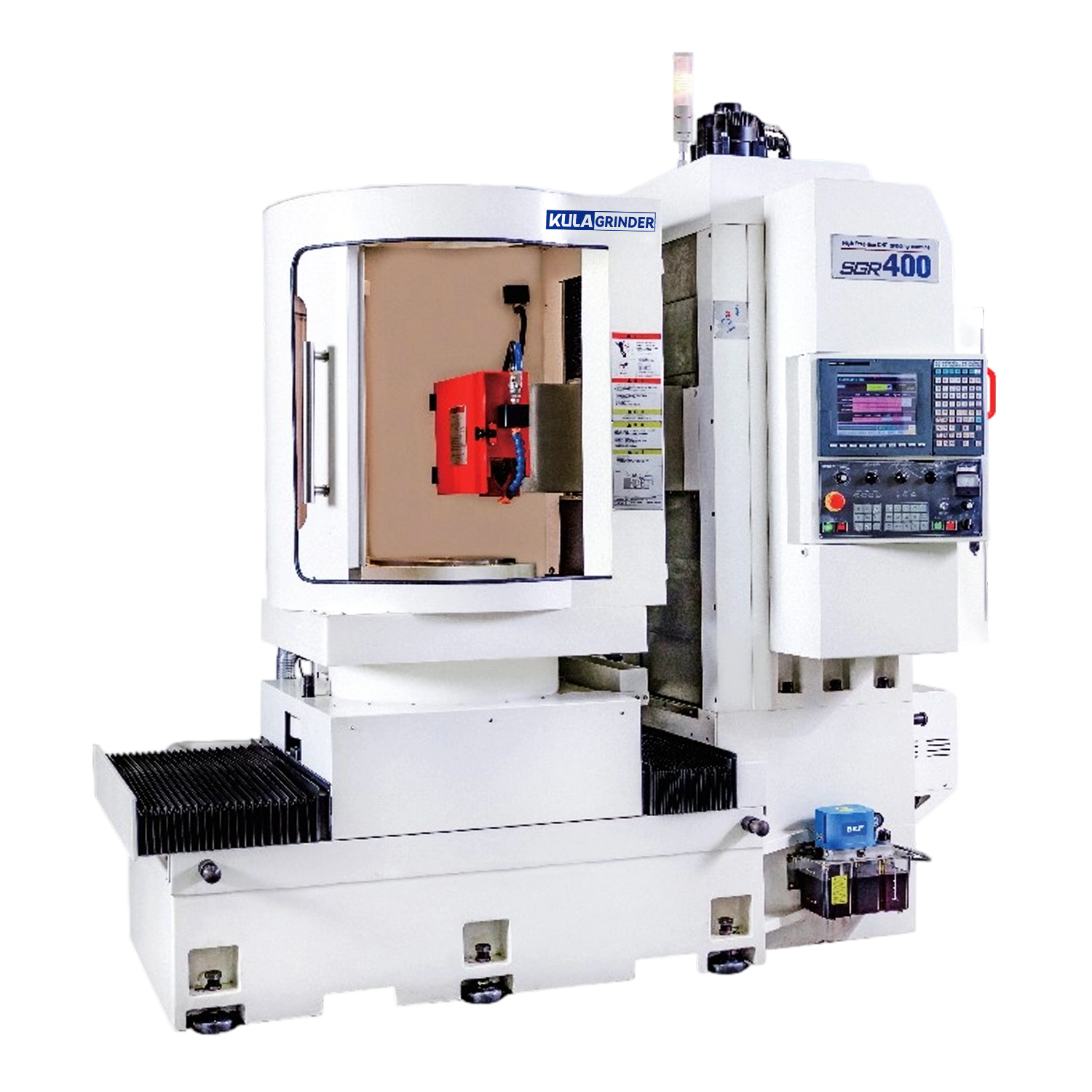
Step 1: Wheel Selection, Balancing, and Dressing Parameters
Selecting the right wheel dictates your foundational success. You must match grit size and abrasive type to your specific material. Use Aluminum Oxide (AlOx) for standard soft steels. Choose cubic Boron Nitride (cBN) for hardened high-speed steels or superalloys. Use Diamond abrasives for carbides and advanced ceramics. Pick these strictly based on workpiece hardness and your required Ra value. A finer grit yields a smoother finish but removes material slowly. A coarser grit removes stock quickly but leaves deep scratches.
Next, you must prioritize dynamic balancing. You cannot afford spindle runout before the wheel even touches the work. Unbalanced wheels create vibration. This vibration transfers directly into the workpiece as visible chatter marks. Real-time acoustic and vibration sensors are critical here. Dynamic balancers detect micro-vibrations automatically. They shift internal weights to eliminate runout continuously while the spindle rotates.
Dressing and truing formulas control your wheel topography. The Dress Lead and Overlap Ratio directly impact how the wheel cuts. The overlap ratio defines how many times the diamond dresser overlaps its previous path per wheel revolution. You must calculate this mathematically.
Lower Overlap Ratio (2 to 4): Creates an open, aggressive wheel topography. This is ideal for fast stock removal and roughing cycles.
Higher Overlap Ratio (10 to 22): Creates a closed, flat wheel surface. This is mandatory for fine finishing and hitting low Ra values.
Never rely on visual guessing when setting these parameters. Program the exact dress lead into the machine control. A precise dressing cycle ensures consistent abrasive exposure. It prevents the wheel from rubbing and generating excessive heat.
Step 2: Calibrating Feed Rates, Speeds, and Spark-Out
You must balance efficiency against precision carefully. There is a strict inverse relationship between material removal rates (MRR) and surface integrity. Pushing feeds too hard degrades your finish rapidly. High MRR generates immense heat at the cutting zone. This heat causes thermal expansion and alters the metallurgical structure of the part.
Managing spindle and feed dynamics requires careful tuning. To improve your surface finish, increase the wheel speed safely. Always stay within the maximum rated RPM of the specific abrasive. Simultaneously, decrease your work speed. You should also reduce the depth of cut per pass. This specific combination minimizes individual chip thickness. Thinner chips require lower cutting forces. Lower forces mean less deflection and better dimensional accuracy.
Spark-out optimization is a crucial final step. Spark-out refers to zero-feed passes at the end of a grinding cycle. It allows the mechanical system to relieve structural deflection. The machine essentially "catches up" to the tool pressure applied during roughing. You must program the correct number of spark-out passes. This achieves final dimensional stability. However, do not overdo it. Excessive spark-out passes rub the material instead of shearing it. This friction introduces severe surface burns. Usually, three to five passes work best for optimal stability.
Step 3: Coolant Delivery and Filtration Standards
Coolant does much more than just reduce sparks. Up to 60% of wheel overheating stems from poor coolant application. Subsequent part deformation usually follows. Operators often blame aggressive feed rates for thermal damage. However, fluid delivery is frequently the real culprit. If fluid never reaches the cutting zone, the wheel will burn the part immediately.
Chemistry and application demand strict daily oversight. You must maintain optimal fluid health consistently. For synthetic fluids, keep pH levels strictly between 8.5 and 9.5. Anything lower invites rust on your expensive fixtures. Anything higher damages machine seals and irritates operator skin. Use a digital refractometer to verify concentration levels daily.
Application trajectory is equally critical. You must use high-pressure scrubber nozzles. A spinning wheel creates a dense barrier of air around its perimeter. Low-pressure coolant simply bounces off this air barrier. Scrubber nozzles are designed specifically to break this boundary layer. They penetrate the air shield and clear the wheel pores of trapped debris.
Filtration standards also dictate your surface finish quality. You should follow the standard engineering 10% filtration rule. Coolant filter pore sizes must be larger than 10% of the average abrasive grain size. If filters are too coarse, metal swarf recirculates through the system. It loads the wheel and scratches your workpiece. If they are too fine, they strip essential lubricating additives from the mixture. Proper filtration prevents clogging and extends coolant life significantly.
The 10-Point Pre-Run Inspection Checklist
Even the best parameters fail without a stable machine environment. We recommend a scalable, physical-to-digital checklist framework. This catches mechanical deviations before you ever press cycle start on any CNC Grinding Machine. Running a proper CNC grinding process setup requires verifying these core nodes systematically.
Wheel & Spindle Compatibility: Verify RPM ratings immediately. Check the wheel for internal micro-cracks using a standard acoustic ring test. Confirm your dynamic balance system is active.
Workholding Verification: Indicate your magnetic chuck for absolute flatness. Ensure your tailstock alignment and center condition are flawless.
Axis Movement: Jog all axes manually through their full travel limits. Verify zero backlash. Confirm smooth linear guide operation.
Coolant System: Check fluid concentration using a refractometer. Verify tank levels. Adjust all nozzle trajectories to hit the cut zone.
Safety Interlocks: Mandate functional testing of all safety devices. Check light curtains, door locks, and emergency stops physically.
Dresser Condition: Inspect the diamond dresser for excessive wear or dulling. Rotate the diamond if a flat spot has formed.
Hydraulic Pressure: Confirm hydraulic lines maintain stable pressure. Fluctuation here causes unpredictable axis lunges.
Spindle Temperature: Run a brief warm-up cycle. Ensure the spindle reaches thermal equilibrium before grinding tight tolerances.
Chiller Operation: Verify the coolant chiller functions correctly. Ambient temperature swings will warp the machine bed.
Part Cleanliness: Ensure the workpiece is free of oil and debris before clamping. Dirt under a part destroys geometric accuracy instantly.
Transitioning this checklist from paper to a digital Computerized Maintenance Management System (CMMS) is highly recommended. Paper lists get lost or ignored easily. Digital adoption provides time-stamped accountability for every operator. It requires them to log exact values. It also feeds this data into predictive maintenance tracking. This proactive approach reduces sudden downtime and keeps production schedules intact.
Troubleshooting Setups and Evaluating Equipment Upgrades
Things will inevitably go wrong on the shop floor. You must know how to identify process failures quickly. Diagnosing the root cause saves hours of wasted troubleshooting time. Focus on the visual evidence left on the workpiece.
Chatter Marks: These visible ripples usually indicate insufficient vibration damping. They can also point to improper wheel balance or irregular wheel speeds. Sometimes, a worn spindle bearing is the culprit.
Glazing or Dulling: A shiny wheel surface means it is no longer cutting. This suggests the abrasive grade is too hard for your material. It might also mean your dressing frequency is simply too low.
Burn Marks: Discoloration indicates severe thermal damage. This usually points directly to coolant starvation or an excessively high material removal rate.
When troubleshooting, you must determine if issues are process-related or machine-related. First, verify all setup parameters against your SOP. If a facility consistently struggles with thermal deformation despite optimal coolant and feed settings, process tweaks might not be enough. It may be time to evaluate major equipment upgrades.
Look for a machine built with a thermally symmetric polymer-granite bed. Polymer-granite beds absorb vibrations much better than traditional cast iron. They also resist thermal expansion incredibly well. Alternatively, invest in adaptive control software. This technology monitors real-time spindle load constantly. It adjusts your feed rates dynamically during the cut. If the wheel encounters a hard spot, the software slows the feed automatically. This prevents crashes and extends wheel life dramatically.
Conclusion
A reliable CNC grinding setup is never based on guesswork. It is a strict mathematical and systematic alignment of wheel topography, kinematic parameters, and thermal management. By controlling these exact variables, you eliminate scrap and guarantee precision. You must respect the intricate relationship between feed rates, wheel dressing, and coolant delivery.
Take an actionable next step today. Audit your current grinding operations using the 10-point inspection checklist provided above. Review your dressing overlap ratios immediately to ensure they match your desired surface finish. Transition your paper logs into a digital CMMS to enforce true accountability. Finally, consult with expert applications engineers. They can provide tailored process optimization or recommend specific tooling upgrades to boost your overall productivity.
FAQ
Q: What is the most common cause of thermal damage during CNC grinding?
A: Thermal damage mostly stems from coolant starvation and poor wheel conditions. When high-pressure nozzles fail to break the air barrier around a spinning wheel, coolant never reaches the cutting zone. Additionally, using a dull or glazed wheel creates intense friction instead of a clean shearing action. This friction rapidly generates heat, causing severe metallurgical burns on the workpiece.
Q: How often should I dress the wheel on a CNC Surface Grinder?
A: Dressing frequency depends on your material removal rate and the abrasive’s natural breakdown characteristics. You should dress the wheel when spindle load monitoring indicates a loss of sharpness, or when you notice surface finish degradation. Harder materials require more frequent dressing to expose fresh abrasive grains. Do not dress on a fixed time schedule; let process data guide you.
Q: What is the difference in setup between a CNC Cylindrical Grinder and a Centerless Grinder?
A: The primary difference lies in workholding. A cylindrical grinder setup requires exact center-hole preparation on the workpiece and precise tailstock pressure adjustment to hold the part between centers. Conversely, centerless setups do not use spindle centers. Instead, they focus heavily on regulating the angle of the control wheel and meticulously setting the workblade height to support the component during grinding.
Q: Why is spark-out necessary in high-precision grinding?
A: Spark-out allows the machine to "catch up" to tool deflection. During active grinding, cutting forces push the wheel away from the workpiece slightly. Spark-out involves running zero-feed passes. This removes residual material caused by that system spring-back. It ensures perfect dimensional accuracy without adding new mechanical stress or risking friction burns from aggressive feeding.


