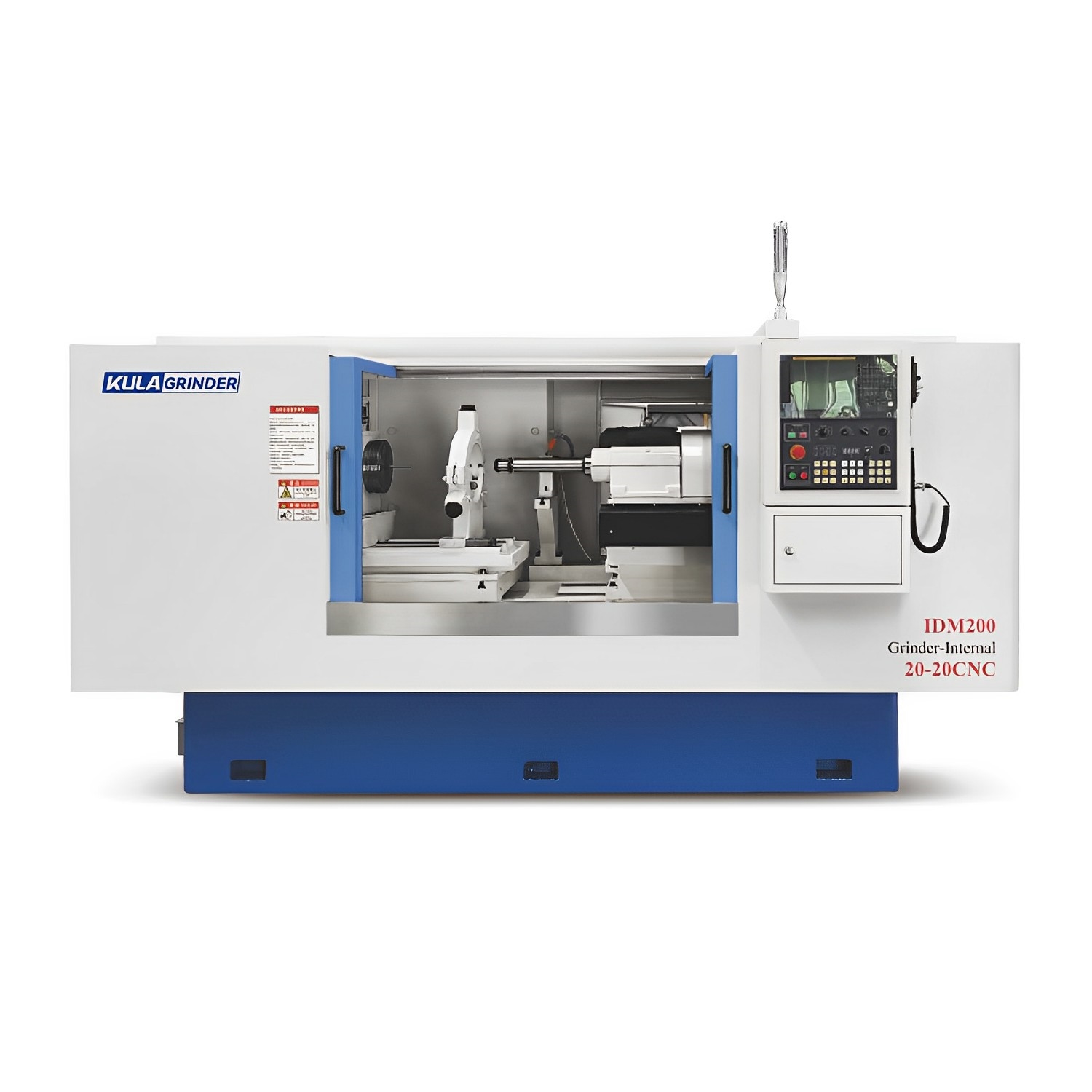
A deep hole CNC internal grinder is a precision grinding machine specifically designed for machining the inner diameter of deep holes in workpieces. It is widely used for internal grinding of high-precision parts such as hydraulic components. Hydraulic components place extremely high demands on deep holes for dimensional accuracy, roundness, and surface finish. Traditional machining methods often struggle to meet these requirements. However, deep hole internal grinders, with their unique structure and grinding technology, enable efficient and precise deep hole machining, providing key technical support for hydraulic component manufacturing.

I. Working Principle and Structural Features of Deep Hole Internal Grinders
A deep hole internal grinder achieves grinding through the relative motion of the grinding wheel and the workpiece's inner hole. The workpiece is typically held in a chuck, which rotates as the primary motion. The grinding wheel rotates at high speed while simultaneously reciprocating along the longitudinal axis of the machine bed, grinding the entire length of the deep hole. The grinding wheel head and worktable control the radial feed of the grinding wheel and the axial feed of the workpiece, respectively, ensuring uniform tool contact across the entire inner hole. Grinding wheels are often made of highly wear-resistant, fine-grained materials, ensuring smoother, more stable finished surfaces.
Compared to conventional internal cylindrical grinders, deep-hole internal cylindrical grinders use thinner grinding wheels with a longer reach, placing higher demands on wheel rigidity and overall machine stability. This requires a sturdy bed and a highly rigid grinding wheel spindle to minimize vibration and deformation during machining and ensure grinding accuracy. Furthermore, an efficient coolant supply system effectively reduces temperatures in the cutting zone, preventing thermal deformation from affecting machining quality.
II. Technical Requirements for Deep-Hole Machining of Hydraulic Components
Hydraulic components, such as hydraulic valve bodies and cylinders, often contain complex, long, deep holes. These holes require not only micron-level dimensional accuracy but also low surface roughness and minimal roundness error. Deep-hole internal cylindrical grinders, with their precise feed control and rigid machine structure, provide a stable and reliable machining environment for these deep holes. Furthermore, the internal bores of hydraulic components often have multiple apertures, requiring multi-stage grinding and multiple tool switching. Deep-hole internal cylindrical grinding machines, equipped with multi-functional tool systems and automatic tool changing, significantly improve processing efficiency and consistency. Modern CNC systems can precisely adjust parameters at each stage, flexibly adapting to the complex aperture structures of various hydraulic components.
III. Advantages of Deep-Hole Internal Cylindrical Grinders in Improving Hydraulic Component Processing Quality
· High-Precision Grinding Capabilities
Utilizing a high-precision spindle and rigid grinding structure, combined with fine grinding wheel materials and optimized process parameters, these CNC machines achieve micron-level internal bore size control and high levels of roundness, meeting the stringent standards of hydraulic components.
· Excellent Surface Quality
During the grinding process, uniform contact between the grinding wheel and the workpiece and stable grinding forces are achieved. Combined with efficient cooling, these machines achieve a low-roughness machined surface, significantly improving the component's sealing performance and wear resistance.
· Adaptable to Complex Process Requirements
Equipped with various grinding methods, including longitudinal grinding, transverse grinding, and deep grinding, these machines can meet the requirements of multi-stage deep and tapered hole machining. CNC tool changing technology enables automated, multi-step continuous processing, reducing manual intervention and improving production efficiency.
· Reduce Machining Deformation
The stable machine tool structure and efficient cooling system effectively control heat and grinding stress, reducing thermal deformation and ensuring repeatable and stable machining.
IV. Application Examples and Development Trends
Currently, deep-hole internal cylindrical grinding machines are increasingly used in the hydraulic industry. For example, in deep-hole machining of high-performance hydraulic pump valve bodies, advanced grinding technology can control hole diameter errors to within ±2 microns and surface roughness to Ra0.4μm, significantly improving the sealing performance and service life of the hydraulic system.
Looking ahead, as hydraulic components evolve towards higher performance and multifunctional integration, deep-hole internal cylindrical grinding machines will gradually incorporate intelligent manufacturing and automation technologies. Integrated online measurement and feedback adjustment enable real-time monitoring and adaptive adjustment of the machining process, further improving machining quality and efficiency. Furthermore, continuous innovation in machine tool structure and cooling systems will meet the increasingly complex and demanding demands of deep-hole machining.
In summary, as core equipment for deep-hole machining of hydraulic components, deep-hole internal cylindrical grinding machines, with their robust and stable structure, precise CNC system, and excellent grinding performance, effectively improve the machining quality and production efficiency of hydraulic components. In the future, this equipment will play an even more critical role in the hydraulic manufacturing industry, helping hydraulic systems advance towards high performance and intelligence.
——
Good news! KULA Grinder will showcase its latest grinding machine products and innovative technologies at EMO Hannover 2025 in Hanover, Germany, from September 22nd to 26th, 2025. We sincerely invite customers and partners from around the world to visit our booth to share and exchange ideas on new trends in precision machining and work together to advance the digitalization and intelligence of the manufacturing industry.


