An optimized CNC grinder is only as accurate and efficient as the abrasive wheel it drives. You can invest heavily in top-tier machinery, but the wrong abrasive instantly limits your overall production capabilities. We often see facilities treat grinding wheel selection for CNC grinder as a basic consumable purchase. This casual mindset consistently leads to disastrous operational outcomes. Poor abrasive choices actively destroy cycle times, ruin surface integrity, and inflate your daily scrap rates.
You must approach this as a critical process engineering decision. In this comprehensive guide, you will learn how to properly evaluate the three primary abrasive categories: Corundum, CBN, and Diamond. We will show you how successful selection relies strictly on material chemistry, machine rigidity, and precise thermal management. You must align these factors perfectly to succeed. Doing so guarantees optimal material removal and protects your equipment. Let us explore the exact frameworks engineers use to select the perfect grinding wheel.
Key Takeaways
Diamond is strictly for non-ferrous materials, carbides, and ceramics; it suffers rapid chemical degradation when grinding steel.
CBN (Cubic Boron Nitride) is the required superabrasive for hardened steels, high-speed steels (HSS), and superalloys due to its thermal stability.
Corundum (Aluminum Oxide) remains the cost-effective baseline for soft-to-medium ferrous metals where superabrasives cannot justify their high initial cost.
Machine architecture (e.g., CNC Cylindrical Grinder vs. CNC Surface Grinder) dictates bond type and grit selection to manage contact area and coolant access.
The True Cost of Incorrect Grinding Wheel Selection for CNC Grinders
Mismatching your abrasive to the workpiece generates severe financial and operational consequences. Facilities often underestimate how deeply a poor wheel choice impacts the entire manufacturing pipeline. You cannot force an incompatible abrasive to perform well simply by adjusting machine feeds and speeds. The underlying physics and chemistry will ultimately dictate the outcome.
Thermal Damage and Grinding Burn
The wrong wheel acts more like a friction heater than a cutting tool. When abrasive grains dull prematurely or pack full of metal chips, they stop shearing the material. Instead, they rub against the workpiece. This excessive friction generates massive localized heat. We refer to this phenomenon as grinding burn.
Grinding burn severely alters the metallurgy of your workpiece. It tempers hardened surfaces and induces residual tensile stresses. These thermal shifts routinely cause micro-cracking across the component surface. Once micro-cracking occurs, the part becomes highly susceptible to fatigue failure in the field. You must scrap these parts immediately. You cannot salvage a component once deep thermal damage penetrates the subsurface structure.
Premature Wheel Wear vs. Dress Frequency
Using an inadequate abrasive forces operators to dress the wheel constantly. A well-matched wheel self-sharpens during the cutting process. As the grains wear down, the bonding matrix releases them, exposing fresh, sharp cutting edges.
When you select the wrong grit or bond, this self-sharpening mechanism fails. The wheel either glazes over or loads up with swarf. To restore cutting ability, the CNC program must pause. The dressing tool then removes a layer of the wheel. High dress frequencies hide massive efficiency losses. They consume expensive abrasive material rapidly. More importantly, frequent truing cycles cause hidden machine downtime. Your CNC grinder stops producing parts and spends valuable minutes re-profiling the wheel.
Spindle Load and Machine Wear
Pushing a poorly suited wheel forces your equipment to work significantly harder. Dull or loaded grinding wheels refuse to cut cleanly. The machine must apply extreme radial forces to force the wheel into the workpiece.
This dynamic forces the CNC spindle motor to draw excessive power. High spindle loads directly strain the precision bearings inside the machine headhead. Continuous overloading accelerates equipment depreciation. Precision bearings require tight tolerances to maintain part accuracy. When you abuse them through excessive grinding pressure, you invite chatter marks, vibration, and eventual spindle failure. You protect your capital equipment by selecting a wheel capable of free, unhindered cutting.
Corundum vs. CBN vs. Diamond: The Material Compatibility Framework
Engineers do not guess when selecting abrasive materials. They rely on a strict, rule-based evaluation matrix driven entirely by metallurgical chemistry. You must match the abrasive grain to the chemical and physical properties of the target material.
Abrasive Category | Primary Chemical Makeup | Target Workpiece Material | Optimal Hardness Range |
Corundum | Aluminum Oxide / Silicon Carbide | Mild steels, soft cast iron, aluminum | Below 50 HRC |
CBN | Cubic Boron Nitride | Hardened tool steels, Inconel, Titanium | 50 HRC to 65+ HRC |
Diamond | Synthetic Carbon Crystals | Tungsten carbide, ceramics, glass, HVOF | Non-ferrous extreme hardness |
Corundum (Aluminum Oxide & Silicon Carbide)
Corundum remains the foundation of conventional grinding operations. Aluminum oxide and silicon carbide provide reliable performance for everyday tasks. We primarily deploy these wheels for unhardened steels, mild cast iron, and general-purpose grinding applications.
They offer excellent versatility and low upfront costs. Operators can easily profile them into complex shapes using standard diamond dressing tools. However, corundum suffers from high volumetric wear compared to superabrasives. The grains break down rapidly under heavy loads. Because the wheel diameter shrinks quickly, you must program continuous dimensional compensation into the CNC control. If you fail to update your offsets, your parts will quickly drift out of tolerance.
CBN (Cubic Boron Nitride)
CBN represents a massive leap in abrasive technology. We consider it the undisputed choice for hardened tool steels, aerospace superalloys, inconel, and automotive powertrain components. It easily tackles ferrous metals exceeding 50 HRC.
The engineering reality of CBN lies in its extreme thermal stability. Unlike diamond, CBN does not react chemically with carbon or iron at extreme temperatures. It maintains its cutting edge even when generating intense heat during heavy stock removal. Because it wears incredibly slowly, a single CBN wheel can run thousands of parts before requiring major dimensional compensation. It delivers unmatched consistency for long-run ferrous production.
Diamond Superabrasives
Diamond holds the title as the hardest known abrasive material. Manufacturers use it extensively for grinding tungsten carbide, technical ceramics, quartz glass, and non-ferrous thermal spray coatings like HVOF.
Despite its extreme hardness, diamond possesses a severe chemical limitation. You must never use diamond wheels on steel. At high grinding temperatures, a process called diffusion wear occurs. The carbon atoms inside the diamond crystals dissolve directly into the iron structure of the steel workpiece. This chemical reaction causes the diamond grains to erode rapidly. The wheel essentially melts away, destroying an expensive superabrasive in minutes. Always restrict diamond strictly to non-ferrous and non-metallic applications.
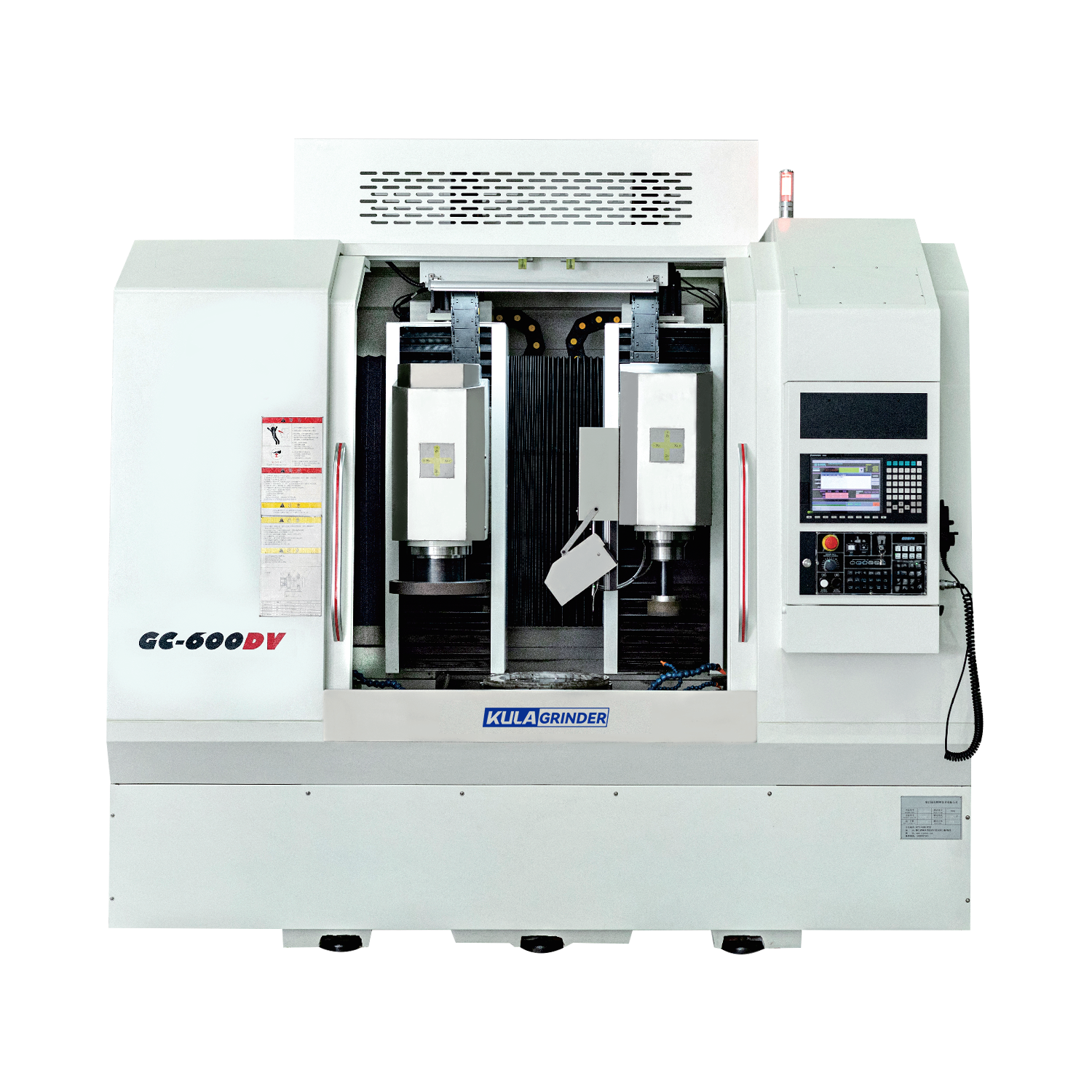
Aligning Abrasive Selection with CNC Machine Types
You cannot specify a wheel based solely on the workpiece material. You must also map the wheel specifications to the kinematic realities of your specific machine architecture. Different machines create vastly different contact zones, pressure loads, and thermal dynamics.
CNC Cylindrical Grinder Considerations
Operations utilizing a CNC Cylindrical Grinder focus heavily on outer diameter (OD) and inner diameter (ID) profiles. These machines generate extremely small contact areas between the wheel and the cylindrical workpiece.
This tiny contact patch results in very high point-pressure on individual abrasive grains. Therefore, the selection rule dictates wheels with exceptional form-retention. We typically specify vitrified or metal bonds for these applications. These rigid bonds hold the grains tightly, maintaining tight diametrical tolerances over long production runs. Additionally, coolant dynamics play a vital role here. You must deploy high-pressure coolant directly into the nip point. Proper fluid delivery prevents localized workpiece deflection and flushes away swarf before it scores the surface.
CNC Surface Grinder Considerations
Conversely, a CNC Surface Grinder creates a massively different environment. These machines utilize large, flat contact arcs. The wheel engages a wide swath of material simultaneously.
This extended contact zone traps chips and generates severe heat. The strict selection rule here demands highly porous wheel structures. We highly recommend open vitrified structures or specific resin bonds. Induced porosity allows the wheel to act like a sponge. The open pores carry coolant deep into the cutting zone and provide physical space for metal chips to escape. If you use a dense, tightly packed wheel on a surface grinder, you will instantly burn the material due to chip packing and coolant starvation.
CNC Laser Grinder and Hybrid Systems
Modern manufacturing now incorporates hybrid systems. A CNC Laser Grinder transitions seamlessly between thermal laser ablation and traditional mechanical grinding.
These advanced platforms handle ultra-hard materials like PCD (Polycrystalline Diamond) tools. The selection rule shifts dramatically for these hybrid setups. The laser handles the heavy stock removal and rough shaping. The mechanical grinding wheel is reserved purely for the final surface finishing pass. Because the wheel removes very little material, we prioritize ultra-fine grits and flexible resin bonds over heavy stock removal profiles. The goal here is mirror-like surface integrity, not aggressive cutting action.
Critical Evaluation Criteria Beyond the Abrasive
Selecting the core abrasive grain marks only the first step. You must carefully navigate the secondary specifications. The bonding matrix, grit size, and machine rigidity ultimately make or break your wheel performance.
Bond Type Selection
The bond acts as the structural glue holding the abrasive grains together. Choosing the correct bond dictates how the wheel behaves under load.
Resin Bond: These bonds offer fast cutting action and excellent self-sharpening characteristics. They produce a superior surface finish because they cushion the abrasive grains slightly. However, they suffer from higher wear rates and require more frequent changes.
Vitrified Bond: Manufacturers bake these glass-like bonds in kilns. They provide extraordinary thermal resistance and remain highly rigid. You can easily profile them into complex geometric shapes. Because they are inherently brittle, they demand highly stable machine conditions.
Metal Bond: We use metal bonds when maximum lifespan and extreme form retention are paramount. They lock the superabrasive grains fiercely in place. The major drawback involves dressing. Metal bonds require specialized EDM (Electrical Discharge Machining) or electrolytic dressing techniques to expose fresh grains.
Grit Size and Concentration
Engineers constantly balance Material Removal Rate (MRR) against final surface roughness (Ra). Coarse grits remove material rapidly but leave deep scratch patterns. Fine grits deliver pristine finishes but cut slowly, risking thermal damage if pushed too hard.
Furthermore, you must evaluate grit concentration. Concentration defines the volume of abrasive grains suspended in the bond. Higher concentration does not automatically equal better performance. While high concentration wheels last longer, they reduce the available space for chip clearance. If your application creates long, stringy chips, a lower concentration wheel actually performs better by preventing premature loading.
Spindle Rigidity Requirements
Superabrasives like CBN and Diamond offer incredible performance, but they are entirely unforgiving regarding machine condition. They require highly rigid, vibration-free CNC machine tools.
If your older grinder suffers from worn spindle bearings or loose guideways, superabrasives will fail. The microscopic vibrations cause the hard crystalline grains to shatter prematurely rather than shear the metal. This micro-shattering destroys the wheel life and leaves severe chatter marks on your components. You must audit your spindle runout and overall structural stiffness before upgrading to superabrasive technology.
Conclusion
Successful grinding wheel selection requires far more than matching diameters and arbor hole sizes. The ultimate performance of your CNC grinder is strictly dictated by the complex interactions between workpiece material, machine rigidity, and thermal constraints. You must view the wheel as an engineered cutting tool, precisely calibrated to the specific physics of your operation.
We strongly warn against prioritizing low upfront wheel costs when high-volume production requires the supreme stability of CBN or Diamond. A cheap wheel quickly becomes an expensive liability when it causes unpredictable scrap rates and excessive spindle wear. You must invest in the proper chemistry and bond structure to protect your manufacturing margins.
Take immediate action by auditing your current wheel performance. Consult with an experienced application engineer to evaluate your specific CNC grinding parameters. Analyze your scrap parts for hidden thermal damage, and arrange a controlled trial using a properly matched superabrasive. Precision data will always guide you to the perfect grinding solution.
FAQ
Q: Can I use a diamond grinding wheel on steel?
A: No. You must never use diamond wheels on steel. At high grinding temperatures, diamond exhibits a strong chemical affinity for iron. The carbon atoms in the diamond dissolve directly into the steel. This diffusion wear causes the diamond to rapidly degrade, dulling the wheel and causing severe thermal damage to the part.
Q: When should I upgrade from Corundum to CBN?
A: You should upgrade to CBN when grinding ferrous materials harder than 50 HRC. It is also justified when excessive machine downtime for wheel dressing causes a severe bottleneck in your production throughput. CBN’s thermal stability allows for massive continuous production runs on hardened steel without frequent truing.
Q: Does the type of coolant matter for CBN and Diamond wheels?
A: Yes, coolant type matters immensely. Straight grinding oil typically yields the best wheel life and lubricity for superabrasives. Conversely, heavy reliance on water-soluble coolants can cause chemical degradation in certain resin bonds over time, leading to premature grain release and shortened wheel life.
Q: How do I choose the right bond type for a CNC Surface Grinder?
A: Due to the large contact area generated during surface grinding, you need a porous bond. An open vitrified bond or a specifically formulated resin bond is required. These porous structures allow metal chips to escape and permit coolant to flood the cutting zone, effectively preventing thermal damage and part warping.


