Honing and lapping are both precision finishing processes, but they are designed for different tasks. CNC Honing is mainly used to improve bore geometry and create a functional surface inside cylindrical parts, often performed using a CNC Honing Machine for higher precision and consistency. Lapping is more often used to refine flat or mating surfaces that require close contact and a very fine finish. The difference is not only about how smooth the surface looks. It also involves the type of surface being finished, the type of error that needs correction, and the way the finished part is expected to perform in service.
Key Takeaways
● CNC Honing is mainly used for bore geometry and functional finish.
● Lapping is more suitable for flat or mating surfaces.
● CNC Honing Machine processes correct form errors inside holes more effectively.
● Lapping is stronger in flatness and ultra-fine surface refinement.
● The right choice depends on part geometry and surface function.
Honing vs. Lapping at a Glance
Main Target
The main target of honing is bore geometry and functional finish. It is often used when a hole must meet tighter standards for roundness, straightness, or cylindricity while still maintaining a surface suited to real operating conditions. Lapping has a different objective. It focuses more on flatness, surface refinement, and contact quality across a finished face.
Typical Surface
Honing is mainly applied to internal cylindrical surfaces. Common examples include cylinders, sleeves, and bearing bores, where the inner wall directly affects fit and movement. Lapping is usually applied to flat or mating surfaces. These include parts that must seal, align, or make even contact across the surface.
Abrasive Action
Honing uses bonded abrasive stones in guided motion. The stones move in a controlled combination of rotation and reciprocation, allowing the process to cut and correct at the same time. Lapping works differently. Abrasive particles act between the lap and the work surface, which makes the process more suitable for fine surface refinement than for correcting deep internal form errors.
Best at Correcting
Honing is best at correcting roundness, straightness, cylindricity, and taper inside bores. It is useful when a part is close to its target size but still needs better geometry. Lapping is best at correcting flatness, removing high spots, and improving the contact pattern. It is the stronger option when the main problem lies on the face of the part rather than inside a cylindrical passage.
Surface Character
A honed surface usually has a crosshatch texture. That texture is often desirable because it can support lubricant retention and stable sliding behavior. A lapped surface is usually much smoother and provides more uniform contact. This makes it suitable for applications where sealing or surface-to-surface contact matters more than oil retention.
Common Applications
Honing is commonly used for cylinders, sleeves, bearing bores, and hydraulic parts. These parts depend on internal geometry and surface function at the same time. Lapping is more common for valve faces, seals, gauges, and mating surfaces. In those applications, flatness and close contact often matter more than cylindrical correction.
Why the Two Processes Deliver Different Results
Why Honing Improves Bore Geometry
Honing improves bore geometry because the abrasive stones follow a guided path and press directly against the inner wall. This makes it possible to remove material in a controlled way along the full length of the bore. As the tool moves, it can reduce taper and improve roundness or straightness. That is why honing is often chosen when the internal form still needs correction after earlier machining. It is more than a simple polishing step.
Why Lapping Excels in Flatness and Contact
Lapping performs well on flat surfaces because the abrasive works across the contact area in a more distributed way. Instead of targeting a cylindrical wall, it refines the face by reducing unevenness and smoothing local high spots. This improves the uniformity of the finished surface. As a result, lapping is often used when contact quality is a key part of product performance. It is especially effective on sealing and mating surfaces.
Why Surface Texture Changes Functional Performance
Surface texture affects how a part behaves in use. A honed crosshatch can hold lubricant and support controlled movement in sliding parts. A lapped surface can create more consistent surface contact and reduce leakage where two surfaces meet closely. This is why the best finish is not always the smoothest one. The better finish is the one that matches the working condition of the part.
When to Choose Honing and When to Choose Lapping
Choose Honing for Internal Bore Correction
Honing is usually the better choice when the main issue is inside a bore. It is effective for parts such as engine cylinders, hydraulic cylinders, sleeves, and bearing bores. In these applications, size alone is not enough because the bore also needs the right form and texture. Honing addresses these requirements together. That makes it a practical finishing route for many internal precision parts.
Choose Lapping for Flat or Mating Surfaces
Lapping is usually the better choice when the critical surface is flat or must mate closely with another surface. It is often used for valve faces, seals, gauges, and precision contact parts. In these cases, flatness and smooth contact are more important than internal geometry. Lapping can refine the surface without aggressively changing the overall part shape. That makes it suitable for final finishing on contact-sensitive surfaces.
When Surface Finish Alone Is Not Enough
Many finishing decisions go wrong because roughness values are treated as the only standard. A smoother surface may look better on paper, but it may not perform better in service. Some bores need a textured surface to manage lubrication properly. Some sealing faces need very close contact instead. The correct process depends on function, not only on appearance or a single finish number.
A Simple Decision Rule
A simple rule is to start with the location of the problem. If the issue is inside the bore, honing is usually the better starting point because it is designed to improve internal geometry while refining the surface at the same time. If the issue is on a flat contact face or a mating surface, lapping is usually the more suitable option because it is better at improving flatness, removing small surface irregularities, and creating a more uniform contact area. The next step is to consider surface function rather than surface appearance alone. If the part needs lubrication support, a controlled texture such as a honed crosshatch is often more useful. If the part depends on sealing performance or close surface contact, a smoother lapped finish is usually the better match.
A side-by-side comparison makes it easier to see how honing and lapping differ in target, surface type, correction ability, and typical use.
Aspect | Honing | Lapping |
Main target | Bore geometry and functional finish | Flatness and ultra-fine surface refinement |
Typical surface | Internal cylindrical surfaces | Flat or mating surfaces |
Abrasive action | Bonded abrasive stones in guided motion | Abrasive between lap and work surface |
Best at correcting | Roundness, straightness, cylindricity, taper | Flatness, high spots, contact pattern |
Surface character | Crosshatch texture | Very smooth contact surface |
Common applications | Cylinders, sleeves, bearing bores, hydraulic parts | Valve faces, seals, gauges, mating surfaces |

Conclusion
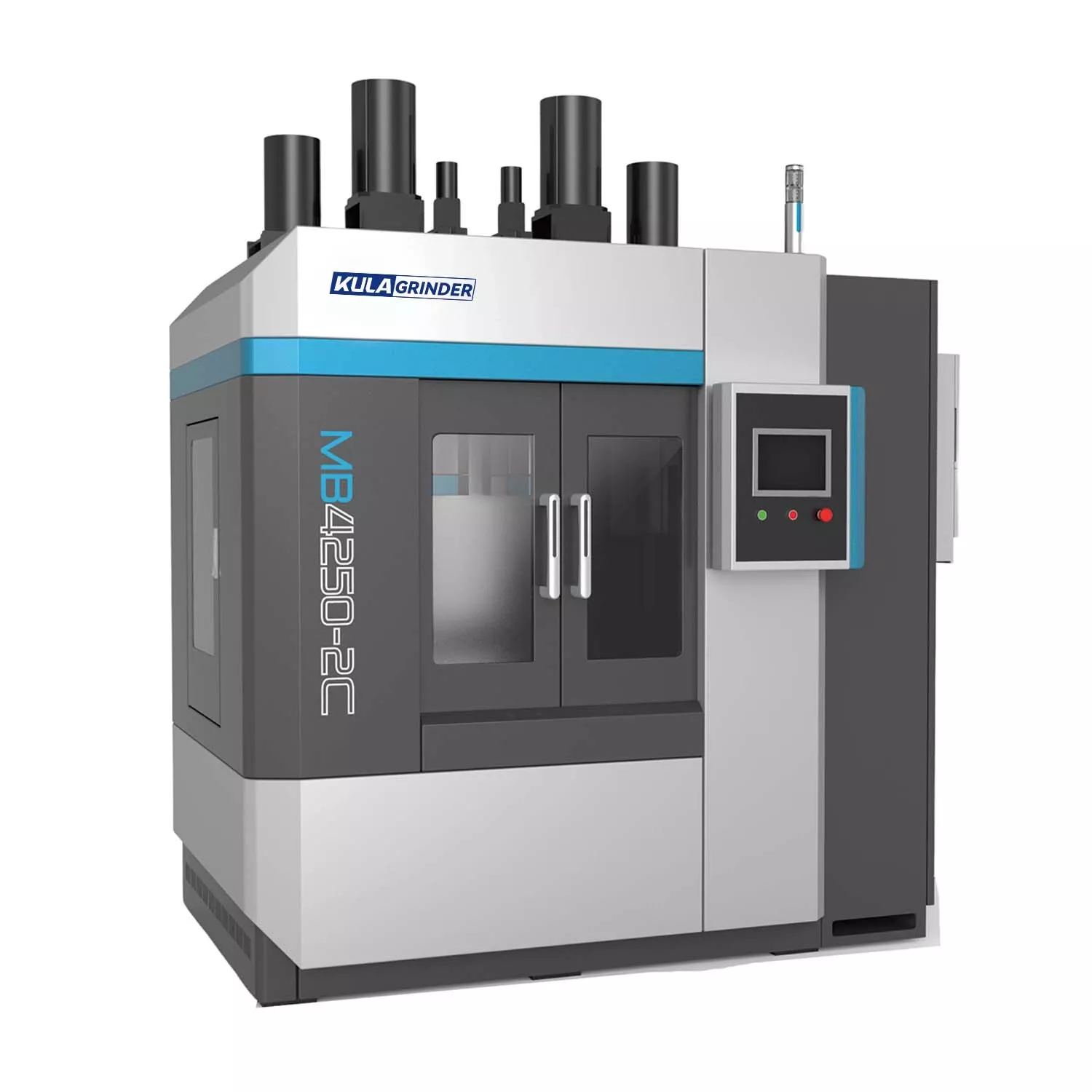
The difference between honing and lapping comes down to geometry, correction target, and surface function. CNC Honing is mainly used for internal cylindrical surfaces that need better form and a functional finish, typically achieved with a CNC Honing Machine. Lapping is mainly used for flat or mating surfaces. For manufacturers evaluating honing equipment, CNC Honing Machine solutions ,such as those offered by KULA provide options for vertical, horizontal, and deep-hole applications.
FAQs
Is CNC honing better than lapping?
Neither process is better in every case. Honing is usually the stronger choice for internal bores and form correction because it can improve both geometry and surface condition at the same time. Lapping is usually more suitable for flatness, close contact, and ultra-fine surface refinement on mating faces. The better process depends on the geometry of the part and the function of the finished surface.
Which process is better for internal bores?
Honing is generally the better choice for internal bores. It is designed to improve roundness, straightness, cylindricity, and overall bore quality while also creating a functional surface texture. This is especially important in parts such as cylinders, sleeves, and hydraulic components. Lapping is less suitable when the main challenge lies inside a cylindrical passage.
Can both processes be used in one production route?
Yes. A part can use honing on an internal bore and lapping on a separate sealing face when different surfaces require different finishing results. This is common in components that combine internal motion with external sealing or contact requirements. In that type of design, the two processes do not compete with each other. They serve different functional areas of the same part.
What is the main difference between honing and lapping?
The main difference lies in what each process is designed to improve. Honing is mainly used for internal cylindrical surfaces that need better geometry and a functional finish. Lapping is mainly used for flat or mating surfaces that need very fine refinement and close surface contact. In simple terms, honing is more about bore correction, while lapping is more about surface refinement.


