Balancing extreme throughput with zero-scrap mandates poses a persistent engineering bottleneck. Manufacturers face harsh realities when pushing production volumes higher. You need absolute reliability. Pushing faster cycle times often sacrifices dimensional accuracy. This dynamic frustrates process engineers daily.
Advanced CNC Centerless Grinding Machine technology emerges as the definitive solution here. These systems handle cylindrical components effortlessly. They deliver sub-micron precision alongside true lights-out automation. Legacy servo-driven systems simply cannot keep pace. High-stakes applications demand flawless execution every single time.
We will explore a comprehensive evaluation framework below. You will learn how to select a High Precision Centerless Grinder properly. This guide addresses the distinct demands of aerospace alloys. It also tackles high-volume automotive production challenges. We break down machine rigidity, compensation feedback, and changeover agility for your upcoming capital equipment decisions.
Key Takeaways
Capacity vs. Precision: Modern CNC centerless grinders resolve the historic trade-off between speed and accuracy, achieving multi-part cycles (e.g., up to 1,800 parts/hour) with continuous sub-micron scale feedback.
Aerospace Compliance: CNC centerless grinding for aerospace fasteners relies on rigid machine bases (granite/mineral cast) and advanced coolant strategies to ensure zero-burn, zero-defect yields on titanium and superalloys.
Automotive Agility: For transmission parts, the ROI of a new grinder hinges on changeover efficiency—specifically, targeting sub-15-minute wheel changes and open-architecture software to minimize long-term operational expenses.
Investment Lens: Upgrading from legacy servo-cycle machines to full CNC automation requires evaluating specific hardware criteria: twin-grip spindles, 0.1-micron scale feedback, and out-of-the-box robotic integration capabilities.
The Business Case: Scaling High-Stakes Production Without Sacrificing Tolerance
Tier 1 suppliers face a massive production dilemma today. Legacy grinding equipment suffers heavily from thermal drift. Spindle temperatures rise during operation. This heat alters machine geometry slightly. Such minor shifts destroy tight tolerances instantly. Operators must perform frequent manual wheel dressing to compensate. These older machines struggle severely to maintain stable Cpk values over an eight-hour shift. Relying on operator experience limits your scalability.
The modern CNC solution changes this paradigm entirely. Engineers now integrate continuous online measurement directly into the workflow. Automatic size compensation happens in real time. CNC wheel dressing stabilizes the entire production process. We reduce our reliance on human "feel" completely. Facilities can finally shift toward strictly data-driven quality control. The machine adjusts itself before parts fall out of tolerance. This proactive approach saves massive amounts of time.
Commercial outcomes improve dramatically following these upgrades. You must frame your ROI beyond simple parts-per-minute metrics. Consider the broader financial impacts:
Reduced Consumable Wear: Intelligent dressing cycles remove less abrasive material. You extend the time between wheel replacements significantly.
Scrap Elimination: Real-time compensation prevents out-of-tolerance parts. Processing high-value materials becomes far less risky.
Labor Reallocation: Automated systems require less manual oversight. You can deploy skilled machinists to more complex tasks.
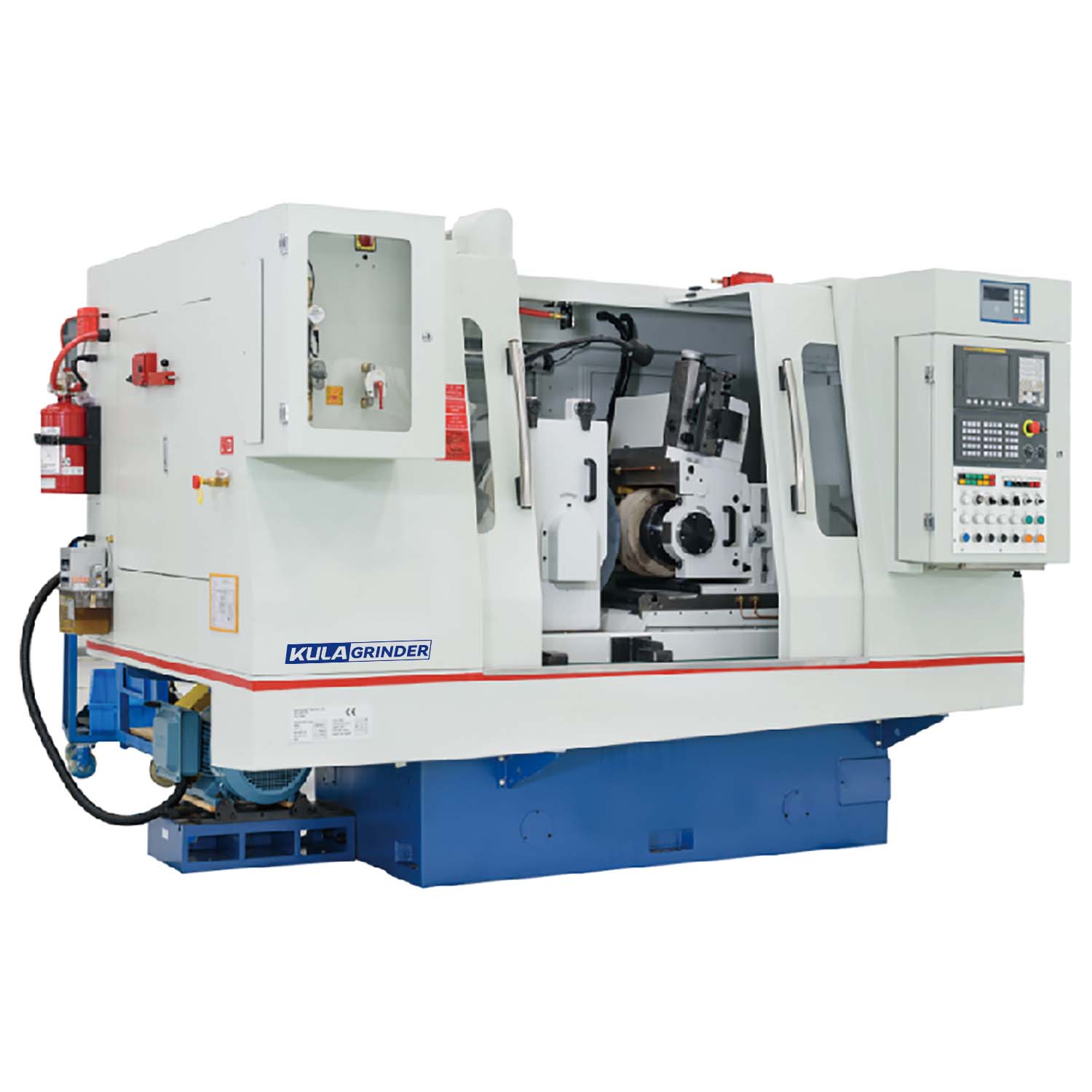
CNC Centerless Grinding for Aerospace Fasteners: Zero-Defect Strategies
Grinding aerospace fasteners presents highly specific challenges. Application realities demand extreme caution and precise control. You often process titanium alloys and exotic superalloys. These materials carry exceptionally strict surface integrity requirements. Heat buildup causes rapid metallurgical damage. Zero-burn mandates remain completely non-negotiable in this industry. Even microscopic surface stress fractures lead to catastrophic part failure.
Multi-part infeed grinding offers incredible yields. This method processes several profiled parts simultaneously. However, high-yield infeed grinding requires exceptional mechanical stability. A rigid setup processes multiple parts per cycle. It does this without inducing any harmful deflection. Plunging a wide wheel into tough alloys generates massive cutting forces. CNC centerless grinding for aerospace fasteners relies on robust machine architecture to absorb these dynamic loads securely.
Tooling and maintenance limits also dictate production strategies. Wheel wear remains a stark reality in aerospace applications. Tough materials degrade abrasive grains quickly. Advanced CNC dressing programs solve this bottleneck. They allow a machine to run an entire shift unattended. Manual intervention becomes completely unnecessary. The system maintains both complex profile geometry and exact surface finish specifications. Smart dressing interpolation guarantees repeatable results.
Common Mistakes in Aerospace Grinding
Using generic coolant delivery nozzles instead of targeted high-pressure arrays.
Ignoring thermal expansion of the work-rest blade during long cycles.
Applying excessively aggressive dressing feeds.
Automotive Transmission Parts: Optimizing Changeover Agility
Automotive components demand absolute consistency at massive scales. Transmission shafts, valve spools, and gear blanks see widely varying batch sizes. High-volume variances complicate production schedules daily. Machine downtime severely damages facility profitability. You need rapid adaptability to handle multiple product families. Flexibility determines your ultimate competitive advantage.
Reducing setup times requires highly specific hardware configurations. Fast changeovers keep spindles turning profitably. Twin-grip spindles stand out as a critical feature. They support the grinding wheel on both ends. This design allows single-operator wheel changes. You can swap complete wheel assemblies in under 15 minutes. Older cantilevered designs often require hours of realignment. Rapid changeovers transform job shop economics entirely.
Software and maintenance infrastructure also require careful scrutiny. Proprietary "black box" software hides complex diagnostic data. You depend entirely on expensive vendor service calls. Complex hydraulic systems add multiple points of failure. Leaks cause unexpected downtime. We strongly advocate for open-architecture controls. Hydraulics-free machine designs simplify your maintenance schedules. Clean servo-driven actuation proves far more reliable over a decade of use.
Evaluating a High Precision Centerless Grinder: Core Engineering Specifications
Selecting the right equipment requires deep technical understanding. You must evaluate core engineering specifications carefully. Superficial feature lists often mask underlying mechanical weaknesses. Let us examine the exact hardware requirements you need.
Foundation and rigidity matter more than any other specification. The machine base acts as your primary vibration dampener. Standard cast iron transfers harmonic vibrations to your parts. Modern builders use bedrock, granite, or specialized mineral cast bases. These advanced materials offer superior vibration dampening. They provide crucial thermal stability during aggressive grinding cycles. A thermally stable base prevents mid-shift tolerance drifting.
Micro-scale feedback separates average machines from exceptional ones. High precision requires exact positional awareness. Look strictly for independent slide positioning. You need 0.1-micron (or better) glass scale feedback. This resolution handles aggressive tolerances effortlessly. Rotary encoders on servo motors simply cannot match linear glass scales. Direct measurement eliminates backlash errors completely.
Dressing technologies impact your cycle times directly. You must compare available options based on your specific part profiles. We outline the primary choices below.
Dressing Technology | Primary Benefit | Best Application |
Rotary Diamond Disks | Extremely fast form generation. High durability. | High-volume straight cylindrical parts. |
Full CNC Interpolation | Infinite profile flexibility without custom physical tooling. | Complex aerospace fasteners and multi-step shafts. |
On-Wheel Acoustic Sensing | Detects exact touch-off points. Minimizes wheel waste. | High-value abrasive wheels (CBN or Diamond). |
System Selection: When to Upgrade from Servo Cycles to Full CNC Systems
Engineers often debate upgrading their floor equipment. A clear decision framework helps mitigate confusion. Basic servo-cycle grinders handle simple tasks adequately. They work well for wide tolerance bands. Highly accurate full CNC systems manage extreme geometric demands. We must compare them skeptically before investing capital.
True "lights-out" manufacturing requires strict prerequisites. A high-end CNC Centerless Grinder must integrate seamlessly into your cell. It needs to connect with gantry systems easily. Bowl feeders and 6-axis robotics should communicate natively. Look for EtherCAT® networking capabilities. Standardized communication protocols prevent third-party retrofit nightmares. Integration should never require custom scripting or hacked relays.
Implementation carries distinct operational risks. We must discuss these transparently. Operators face a steep learning curve. Moving from manual handwheels to high-end CNC screens intimidates many machinists. Vendor training mitigates this heavily. Ask about simulation software options. "Cradle-to-grave" support partnerships ensure long-term success. Your vendor must act as an application engineering partner, not just a machinery broker.
Best Practices for System Integration
Map your exact automation footprint before ordering the machine.
Demand open API access for your factory data collection software.
Train maintenance personnel on servo drives alongside the operators.
Conclusion
Choosing the correct equipment requires balancing several critical factors. Base rigidity forms the foundation of all precision work. Sub-micron compensation feedback guarantees your long-term accuracy. Changeover agility dictates your operational profitability. You cannot compromise on these three engineering pillars.
Engineering buyers must demand empirical proof before finalizing any purchase. Request comprehensive vendor run-offs. Ask for accurate cycle-time estimates based on your actual part prints. Demand formal CPK capability studies on your toughest materials. Theoretical brochures mean nothing without physical part validation.
We encourage you to consult directly with grinding application engineers. They will help you calculate precise throughput expectations. They can model efficiency gains for your specific aerospace or automotive components. Let data drive your next manufacturing upgrade.
FAQ
Q: What is the difference between infeed and thru-feed centerless grinding?
A: Infeed grinding processes profiled or multi-diameter parts. The wheel plunges directly into the workpiece. We use this for items like aerospace fasteners and headed pins. Thru-feed grinding pushes straight cylindrical parts continuously between the wheels. It works perfectly for straight pins, rods, and simple shafts.
Q: How does a CNC Centerless Grinder prevent thermal damage on aerospace titanium?
A: Thermal damage prevention relies on three critical factors. We use rigid work-rest blades to prevent chatter. The CNC controls grinding wheel RPM dynamically. Finally, highly targeted, high-pressure coolant delivery floods the exact cutting zone. This flushes heat away before metallurgical changes occur.
Q: What materials can a high precision centerless grinder process?
A: Modern systems handle a vast array of materials. Core materials include standard steel, aluminum, and advanced plastics. They also process extremely tough materials. We routinely grind industrial ceramics, tungsten carbide, titanium alloys, and aerospace superalloys with exceptional accuracy.
Q: How long does a typical wheel changeover take on a modern machine?
A: Legacy machines often required several hours for a complete changeover. Modern advanced systems change this dramatically. Twin-grip spindle designs allow rapid extraction. With the proper lifting tooling, a single operator can complete a full wheel change in under 15 minutes.


