In high-mix, low-volume production runs, grinding equipment often spends more time in setup than active material removal. Operators waste valuable hours adjusting tools instead of grinding profitable parts. A machine not actively cutting parts acts as a depreciating asset rather than a revenue generator. Milling and turning operations widely adopted quick-change systems years ago to solve this. Grinding setups, however, remain notoriously manual and tedious across the industry today. Operators constantly battle micron-level tolerance demands, frequent wheel dressing cycles, and complex fixture alignments. You cannot afford to rely on outdated methods. Achieving measurable CNC grinding setup time reduction requires a major operational shift. We must transition from machine-side trial-and-error to systematic offline preparation. You will discover how to leverage standardized workholding, modern digital probing, and strict SMED principles. These proven strategies will help you reclaim lost capacity and maximize spindle uptime.
Key Takeaways
Offline Preparation is Mandatory: Move wheel balancing, dressing tool setup, and fixture assembly off the spindle to reclaim cutting hours.
Standardization Over Customization: Adopting zero-point modular fixturing allows for changeovers in minutes with <0.005mm repeatability, mitigating the need to dial-in every job.
Process Predictability: Integrating in-machine probing and RFID tool tracking eliminates manual measurement variations and scrap-inducing test cuts.
Cultural Buy-In: Hardware investments fail without standardized operating procedures (SOPs) and operator discipline.
The True Cost of Setup Inefficiencies in Grinding Operations
Manufacturers often confuse setup time and changeover time. We must clearly define the difference to optimize shop floor efficiency. Setup usually refers to a single-tool adjustment or an isolated parameter tweak. Changeover spans the entire transition period. It begins immediately after the last good part of Batch A exits the machine. It ends only when the first good part of Batch B passes quality inspection. True optimization requires addressing the full changeover window.
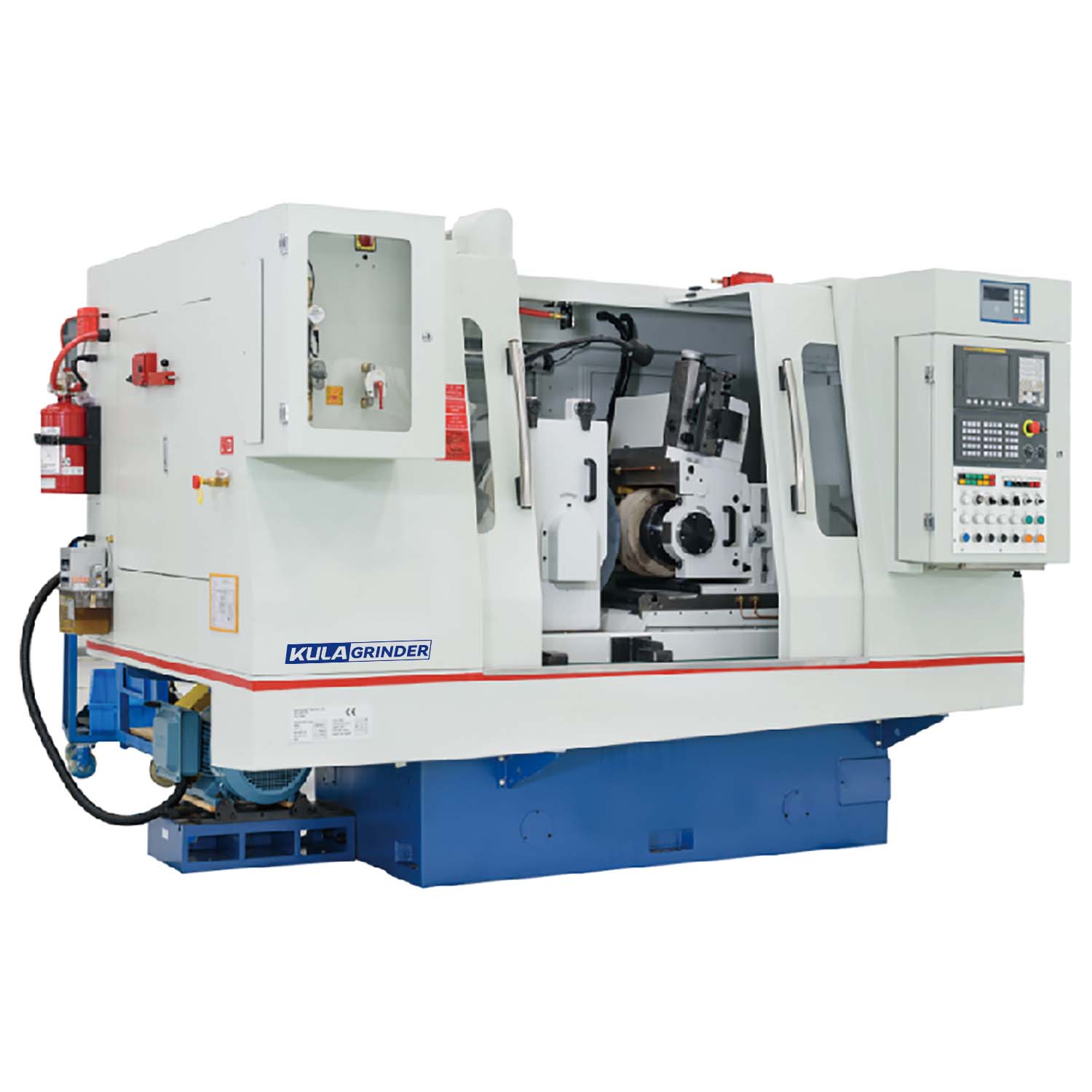
Frequent changeovers compound downtime rapidly in high-mix environments. Imagine a high-precision CNC Grinding Machine sitting idle for 2.5 hours during a complex transition. This localized delay creates a massive bottleneck. The resulting pause impacts downstream finishing departments and disrupts final delivery schedules. You lose critical momentum across the entire production line.
You can quantify this inefficiency using a straightforward calculation. Evaluate your downtime costs using this simple formula: Lost Capacity = Setup Hours per Week × Machine Hourly Rate. A facility losing 15 hours a week at $100 per hour bleeds $1,500 weekly per machine. Reclaiming just 30% of this lost time often equals the output of purchasing an entirely new machine. We avoid massive capital expenditures by simply optimizing what already exists.
Metric | Setup Inefficiency | Changeover Inefficiency |
Scope of Delay | Single tool or fixture adjustment | Full batch-to-batch transition |
Typical Duration | 15 to 30 minutes | 1 to 4 hours |
Downstream Impact | Minor workflow disruptions | Severe bottlenecks and missed shipping dates |
Primary Causes | Manual tool measurement, dial-in errors | Searching for parts, missing setup sheets, raw material delays |
Applying SMED Principles to CNC Grinding Workflows
You cannot improve what you do not measure. We recommend starting your optimization journey by auditing the current state of your shop floor. Use the "pit stop" methodology to record operations. Set up a video camera and document the entire changeover process. Reviewing this footage reveals invisible time-wasters. You will quickly spot operators walking away to find wrenches, looking for blueprints, or waiting for quality control approvals.
The core of SMED (Single-Minute Exchange of Dies) involves separating internal tasks from external tasks. We must classify every action correctly.
Internal Tasks: You must stop the machine to complete these actions. Examples include final wheel mounting, locking zero-point fixtures into place, and first-piece probing routines.
External Tasks: Operators can perform these actions while the machine continues running the previous batch. Examples include pre-building the next job's fixture, pre-balancing grinding wheels, verifying digital work orders, and preparing CNC programs.
The ultimate goal requires converting internal tasks into external tasks. We must shift the existing paradigm. Management should mandate a strict rule: the machine only receives "plug-and-play" task packages. Prohibit operators from hunting for tools at the machine control. Forbid programmers from verifying G-code while the spindle sits idle. Every component must arrive at the machine pre-measured, pre-assembled, and ready for immediate deployment.
Standardizing Workholding for Rapid Changeovers
Effective workholding relies on core engineering fundamentals. The 3-2-1 locating principle remains essential for grinding applications. Proper locating controls the six degrees of freedom. Three points define the primary base plane. Two points establish the secondary directional plane. One final point locks the last spatial constraint. This structured approach ensures absolute stability under heavy grinding forces. It also prevents over-constraining the part, which often causes distortion and rejected components.
Many shops still rely on custom, dial-in fixtures. Transitioning to modular and zero-point systems provides a massive competitive advantage. Some engineers express skepticism regarding the rigidity of these quick-change systems. Modern zero-point base plates, however, easily handle aggressive cutting forces. They routinely maintain repeatability better than 0.005mm. Operators simply drop the pre-built fixture onto the zero-point pins and actuate the pneumatic or hydraulic locks. The process takes seconds rather than hours.
Machine-specific strategies further accelerate this process. If you operate a CNC Centerless Grinder, focus on quick-change work rest blades. Implementing modular regulating wheel assemblies speeds up transitions between distinct part families. You avoid tearing down the entire machine core for every diameter change.
Likewise, if you run a CNC Composite Grinder, standardized chucks become your best asset. High-precision quick-change collet systems allow seamless switching between ID (Internal Diameter), OD (Outer Diameter), and face grinding operations. You can execute multiple complex processes without breaking down the fundamental base setup.
Optimizing Wheel Dressing and Preparation
Wheel dressing historically acts as a massive time sink in precision manufacturing. Machine-side dressing forces the spindle to abandon value-added cutting. You must evaluate strategies to minimize this specific in-machine downtime during changeovers. We want the machine producing chips, not continually reshaping abrasive wheels.
Pre-profiling and offline presetting offer excellent returns on investment. Measuring grinding wheels and dressing rolls offline removes the burden from the production equipment. Modern offline tool presetters scan the wheel geometry with pinpoint accuracy. Operators then upload these precise offsets directly to the machine control via RFID chips or a secure network connection. This digital handoff completely eliminates manual touch-offs and risky paper-based data entry.
Advanced dressing technology also plays a crucial role. Transitioning from traditional single-point diamonds to rotary diamond dressers yields significant benefits. Rotary dressers provide faster, more consistent wheel profiling. They excel during complex form grinding changeovers. A rotary system plunges the full profile into the grinding wheel simultaneously. This technique drastically reduces the dressing cycle time and improves the overall surface finish of your parts.
Digital Workflows and In-Process Probing Integration
Manual indicator sweeps and scrap-inducing test cuts are the proven enemies of rapid setup. Operators relying on paper dial indicators introduce human error into the process. Dialing in a part manually consumes precious minutes and heavily depends on individual operator skill. We must eliminate this outdated practice.
Deploying high-precision touch probes directly inside the machine environment transforms process reliability. In-machine probing applications automatically locate critical part datums before the wheel ever touches the material. The probe detects any minute part misalignment caused by loading variations. The system then automatically updates the work offsets inside the CNC control prior to the first pass. You achieve a perfect first part without manual intervention.
Digital workflows extend beyond physical probing. Utilizing CAM simulation and digital twin technology verifies every movement virtually. Programmers test clearance issues and complex toolpaths before the job ever hits the physical shop floor. This proactive simulation prevents catastrophic machine crashes. It also eliminates operator hesitation. When operators know the program runs perfectly in the digital twin, they confidently press the cycle start button without riding the feed-rate override dial.
Implementation Roadmap: Calculating ROI and Managing Risks
Transforming your shop floor requires patience and structure. Avoid the chaotic "rip and replace" mentality. We recommend a phased, three-stage rollout approach to ensure sustainable success.
Organizational (Weeks 1-2): Implement external preparation rules and deploy digital setup sheets. This stage carries low financial costs but delivers high, immediate impact. Stop operators from hunting for tools.
Hardware (Weeks 3-6): Invest in zero-point base plates and standardized workholding. Focus strictly on the top 20% of your most frequently run part families. Do not attempt to standardize every obsolete part in your catalog at once.
Automation (Months 2+): Integrate offline presetters and establish automated probing routines. Train your staff on digital tool data management and RFID tracking protocols.
You must address the upfront cost of modular tooling logically to mitigate implementation risks. Provide management with a framework for calculating ROI based strictly on recovered spindle hours. Do not evaluate the tooling cost in a vacuum. If a $10,000 zero-point system saves two hours of setup time daily, the recovered capacity pays for the hardware in a matter of weeks.
Phase | Primary Action | Estimated Timeframe | Expected Capacity Gain |
1. Organizational | Separate internal/external tasks, digitize setup sheets | Weeks 1-2 | 5% - 10% |
2. Hardware | Deploy zero-point plates, standardize top part families | Weeks 3-6 | 15% - 25% |
3. Automation | Integrate offline presetting, RFID, and in-machine probing | Months 2-6 | 10% - 20% |
Technology alone cannot fix broken shop floor discipline. Success heavily relies on a culture of continuous improvement. Hardware investments will fail if operators revert to old habits. Management must cross-train operators thoroughly. You must standardize specific torque specs for fixture bolts, mandate strict cleaning procedures for locating pins, and enforce rigorous workflow discipline.
Conclusion
Achieving significant CNC grinding setup time reduction stands as a systematic engineering and management challenge. It is never a single hardware fix. You must blend strict SMED protocols with modern workholding and digital probing to see actual results.
Manufacturers often obsess over shaving seconds off a cycle time while ignoring hours lost during changeovers. By treating setup optimization with the same rigorous engineering standards as cycle time reduction, you unlock massive hidden capacity. This shift directly improves profit margins, especially on demanding small-batch production runs.
Your next step requires immediate action. Audit your machine OEE (Overall Equipment Effectiveness) this week. Record a changeover using the pit stop method. Alternatively, consult with a tooling engineer to evaluate zero-point fixture feasibility for your most challenging part families.
FAQ
Q: Does zero-point fixturing compromise the micron-level accuracy required for CNC grinding?
A: No. High-end zero-point systems offer 0.002mm to 0.005mm repeatability. This micron-level precision is more than sufficient for most demanding grinding base-plate applications. The system locks down securely, ensuring rigidity while eliminating manual dial-in errors.
Q: How do we reduce setup time on a CNC Centerless Grinder for entirely different part diameters?
A: You should group your incoming orders by part families. Utilize pre-set quick-change work rest blades and modular regulating wheel cartridges. This prevents operators from tearing down the core machine components, drastically shrinking the transition window.
A: Yes. High-mix, small shops actually see a much faster ROI on presetters than massive mass-production facilities. Small shops execute daily or hourly changeovers. Reclaiming those lost setup hours offsets the equipment cost incredibly fast.


