Column and saddle surface grinders may look similar at first glance, but their internal architecture and shop-floor roles are quite different. A CNC Surface Grinder is designed to deliver precision and efficiency in flat and complex-surface machining, yet whether a column surface grinder or a saddle-based design is best for your shop depends on part size, production mix, and investment goals. At KULA Precision Machinery Co., Ltd., part of OTURN Machinery, we help buyers understand these choices so they can match machine architecture with real production demands.
Anatomy of a Column-Moving Surface Grinder
Column travel, wheel-head arrangement, and stiffness advantages
In a column surface grinder, the grinding wheel head is mounted on a rigid vertical column. Instead of moving the table to achieve the cutting path, the column itself travels. This arrangement maximizes rigidity, since the column supports the wheel with high stiffness and reduces deflection even under heavy grinding loads. For long parts, the consistent pressure across the work surface ensures micron-level accuracy without distortion. The wheel-head can also incorporate multiple axes of CNC motion, allowing more flexibility in handling contour grinding or stepped profiles.
Typical applications and shop-floor footprint
Column-moving machines shine in industries where the parts themselves are oversized or demand extreme flatness over long distances. Aerospace plates, mechanical manufacturing bases, and energy-sector components often require this type of stability. Because the column moves rather than the table, these machines generally occupy a larger footprint, but they reduce the risk of vibration from table overhangs. Shops with heavy-duty finishing jobs or those handling long molds benefit most, as cycle stability outweighs the added floor space. Beyond aerospace, sectors such as shipbuilding, railway, and heavy equipment manufacturing also adopt column grinders because of their reliability in producing large components with demanding tolerances.
Anatomy of a Saddle-Moving Surface Grinder
Saddle vs table movement and implications for small-part handling
A saddle-moving or economic saddle surface grinder is built with the grinding wheel mounted above, while the saddle and table perform the key movements. Unlike column-based designs, here the table moves in the X direction while the saddle moves in Y, bringing the workpiece beneath the grinding wheel. This design makes loading and unloading faster for small or medium-sized parts and gives operators excellent control over short-travel, repetitive grinding cycles.
When hydraulic or simpler mechanical designs are preferred
For many shops, the appeal of the economic saddle surface grinder lies in simplicity and cost efficiency. Hydraulic drive tables or straightforward mechanical systems are often sufficient for mold inserts, precision tooling, or small electronics parts. While these machines may not match the rigidity of a column grinder, they excel when a shop runs a high mix of smaller parts that need accurate but not extreme heavy-duty grinding. For CNC Saddle Surface Grinding Machines, additional control features bring higher repeatability and automation options, bridging the gap between economy and precision. Many small-to-medium manufacturers in the automotive, mold, and medical device sectors find saddle grinders to be the most practical balance between investment and performance.
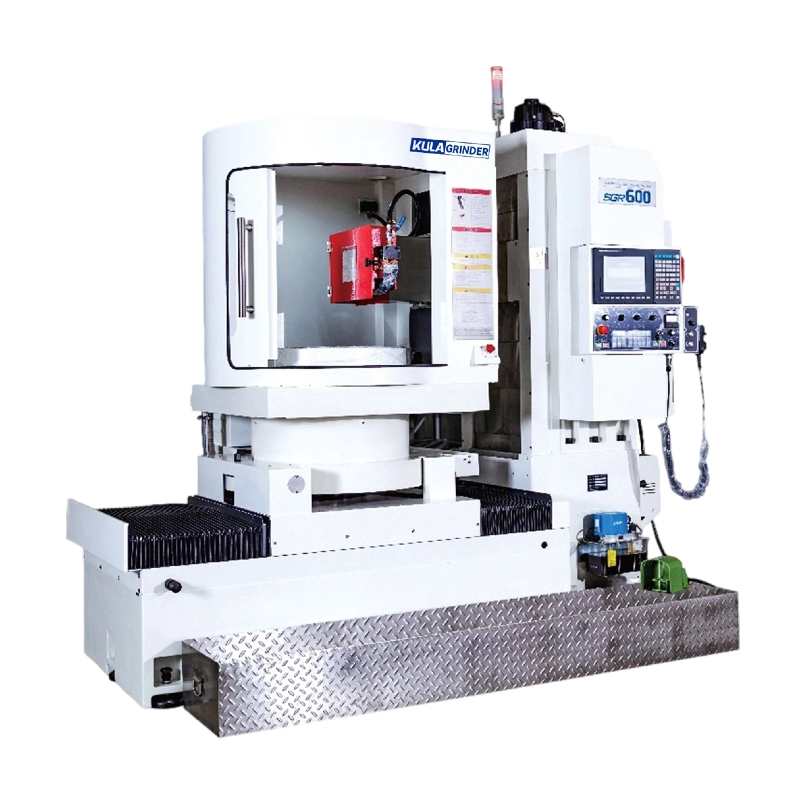
Head-to-Head Comparison: Precision, Stability, Cost, and Maintainability
Rigidity and vibration damping
The column surface grinder maintains superior rigidity, especially for heavy stock removal or wide-area finishing. Its mass and structure absorb vibration better, which means tight tolerances remain achievable even under load. Saddle grinders, while less rigid, perform well in lighter passes and are easier to adapt to small-batch work where cycle interruptions are common.
Cycle times and automation possibilities
Automation is increasingly central to modern grinding. Column grinders integrate smoothly with CNC controls, automatic wheel dressing, and closed-loop feedback, making them ideal for shops pursuing lights-out machining. Saddle grinders, particularly CNC variants, also allow automation but are more limited by table dynamics. For high-volume, long runs, column grinders usually win on cycle consistency, whereas saddle machines are more agile for quick setups.
CAPEX vs OPEX trade-offs
When considering capital expenditure (CAPEX), saddle grinders generally cost less up front. Their operating costs (OPEX) also tend to be lower due to simpler maintenance. However, when production involves continuous heavy-duty loads, column machines justify their higher investment by reducing scrap, improving tool life, and delivering repeatable results over years of service. The long-term economics favor column grinders for demanding aerospace, energy, or heavy mold applications, while saddle grinders are cost-effective for tooling shops and mid-sized manufacturing. Buyers should also weigh the availability of spare parts and service networks—both of which KULA Precision Machinery Co., Ltd. provides globally through the OTURN Machinery platform.
Use-Cases & Decision Flowcharts
“I make long aerospace plates” → prefer column-moving
If your shop handles large-scale aerospace panels, defense plates, or precision bases for machines, the column-moving design is the clear choice. The extended travel range, superior stiffness, and vibration control guarantee surface quality that smaller architectures cannot maintain.
“I run tooling/mold inserts and high-mix small parts” → consider saddle/economic solutions
For shops that manufacture diverse small components—such as die inserts, electronic housings, or precision medical device parts—the saddle grinder is often more practical. Fast changeovers, compact footprints, and lower investment make these machines attractive. A CNC Saddle Surface Grinding Machine further enhances flexibility with programmable cycles and automatic compensation.
Upgrade Paths & Retrofit Options
CNC retrofit kits, automatic dressing, and feedback loops
Both column and saddle surface grinders can be upgraded. Adding CNC retrofit kits allows older hydraulic or mechanical grinders to achieve new precision levels. Automatic dressing systems reduce downtime, while closed-loop feedback ensures that micron tolerances are maintained consistently across cycles.
When to replace vs retrofit
Retrofitting makes sense if the base machine remains structurally sound. For example, a well-maintained column grinder can last decades with upgrades to controls and wheel systems. However, if a shop’s production mix changes—moving from small molds to aerospace plates, or from long heavy parts to high-volume inserts—replacement with the right architecture may be more cost-effective than retrofitting. Buyers should always consider the long-term service and upgrade path, as technology advances quickly in CNC grinding.
Conclusion
The CNC Surface Grinder remains a cornerstone of modern machining, but whether a column surface grinder or a saddle-moving design best suits your needs depends on part geometry, production mix, and investment plans. KULA Precision Machinery Co., Ltd., as the grinding machine division of OTURN Machinery, supports buyers worldwide with both CNC column surface grinding machines and CNC saddle surface grinding machines, ensuring that every shop can align its machine choice with its real precision demands. To explore which architecture fits your workflow, contact us today and share your application details—we will help you make the right decision.


