In advanced equipment such as aero-engines and gas turbines, blades are critical components. The machining requirements for their channels (such as cooling holes and assembly holes) are extremely high, involving precision indicators such as surface roughness, roundness, and straightness. Traditional drilling and reaming processes are insufficient to meet these requirements, making specialized honing technology the preferred choice.
This article will systematically analyze the important role of honing machines in the precision machining of blade channels from several aspects, including the background of precision machining, the technical advantages of honing machines, core application processes, and future development trends.

What is Precision Machining of Blade Channels?
Blade channels refer to the elongated hole structures inside or on the surface of blades. These channels are typically used to achieve complex functions, such as the delivery of cooling air and the connection of assembled components. Blades are often made of high-strength materials such as high-temperature alloys or titanium alloys, which have excellent high-temperature resistance but are difficult to machine. Traditional machining often only meets the forming requirements and struggles to achieve the required precision dimensions and surface quality.
Therefore, precision machining of this type of special channel requires high-precision, high-stability machining equipment and processes, which is the manufacturing foundation for improving blade performance.
Honing Technology: The Core Process from Grinding to "Fine Machining"
Honing is a special finishing grinding method. Its core lies in using an oilstone or abrasive grains on the honing head to perform rolling grinding against the hole wall, removing material while achieving high-precision surface quality and geometric accuracy. Compared with traditional drilling and reaming, honing has the following significant advantages:
· High Precision – Honing significantly improves the dimensional and shape accuracy of the channel;
· Low Machining Stress – Compared to traditional grinding, honing has lower thermal impact on the workpiece and less machining deformation;
· High Surface Quality – Effectively optimizes hole wall roughness, improving aerodynamic performance and fluid transport efficiency.
Therefore, in the scenario of blade channels requiring high precision and high reliability, honing becomes an ideal finishing method.
Honing Machine Core Advantages Analysis
1. Equipment Adaptability: Simultaneous Optimization of Structure and Precision
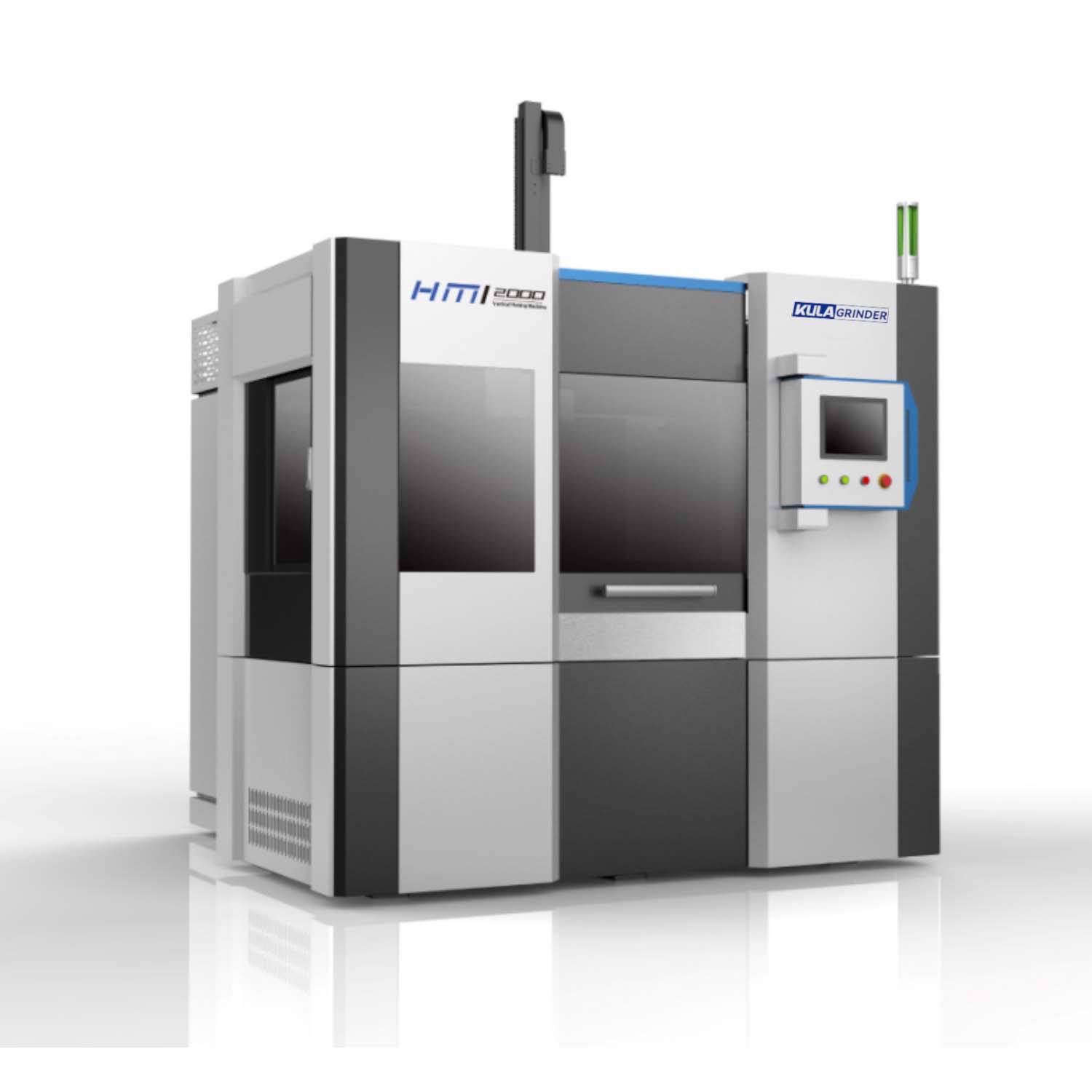
Due to the complexity of blade channels, ordinary machine tools are insufficient, necessitating the use of specialized CNC honing machines. These machines typically feature:
· High-precision spindle and rigid machine body structure;
· Customizable honing heads to match channels of different diameters and shapes;
· Flexible honing heads combined with an adaptive pressure control system, allowing real-time adjustment of honing force to avoid over-processing.
Especially when machining slender, irregularly shaped channels, the matching of equipment and tools directly affects the final machining quality.
2. Process Parameter Adjustment: Layered Machining Strategy
Reasonable process parameters are crucial for ensuring machining quality. Generally, honing adopts the following layered strategy:
· Rough honing – Primarily removes machining allowance and corrects channel contours;
· Semi-finish honing – Further improves geometric accuracy;
· Finish honing – Focuses on dimensional accuracy and surface finish.
Throughout the process, parameters such as rotational speed, feed rate, and reciprocating frequency must be adjusted according to material properties (e.g., the physical properties of high-temperature alloys and titanium alloys). Simultaneously, appropriate honing fluid is used to effectively cool, lubricate, and remove chips.
Online Measurement and Process Control: Guarantee of Stable Machining
An efficient honing system requires more than just equipment and process parameters for long-term stable production; it also necessitates precise process monitoring:
· An online measurement system can measure key indicators such as bore diameter, roundness, and straightness in real time;
· Simultaneous with a CNC system enables real-time error compensation;
· Modular clamping devices ensure consistent blade positioning and prevent deformation during clamping.
These combined technologies make the machining process more controllable, significantly improving the consistency and reliability of finished products.
Industry Value and Practical Applications
The application of honing technology in blade bore machining is not only a process upgrade but also a core support for enhancing manufacturing capabilities. It has a direct impact on the performance of the entire machine:
· Aero engines – Improved channel surface quality optimizes cooling efficiency and extends engine life;
· Gas turbines – High consistency in precision channels contributes to stable combustion and fluid control;
· Automotive turbochargers and other components – Honing improves operating efficiency and durability.
With the development of intelligent manufacturing, honing machines are increasingly integrating with online inspection, automatic clamping, and intelligent feedback systems, driving the entire manufacturing process towards automation and precision.
Future Trends: Further Enhanced Intelligence and Material Compatibility
With the advancement of Industry 4.0 technologies, the digitalization and intelligence of honing machines have become an irreversible trend:
· AI-assisted process optimization will automatically adjust processing parameters based on feedback;
· Big data quality prediction helps to anticipate processing errors;
· Adaptability to complex materials (such as composite materials and difficult-to-machine alloys) is further enhanced.
These trends will propel honing technology from a "precision machining method" to a "core equipment for intelligent manufacturing," further enhancing the overall competitiveness of the national manufacturing industry.
Conclusion
The application of honing machines in the precision honing of blade channels not only improves machining accuracy and surface quality but also effectively meets the stringent requirements of high-end equipment manufacturing in fields such as aerospace and power. Through equipment adaptation, process optimization, and real-time process control, honing machines are becoming an indispensable key piece of equipment in precision manufacturing. In the future, with the introduction of intelligent technologies, this field will see even greater technological breakthroughs and the release of industrial value.


