In the fields of heavy equipment manufacturing, engineering machinery, and precision machinery, the planar machining of large workpieces has always been a highly challenging task. These workpieces are often large in size, heavy in weight, and complex in structure, placing stringent requirements on the load-bearing capacity, stability, and machining quality of the machining equipment.
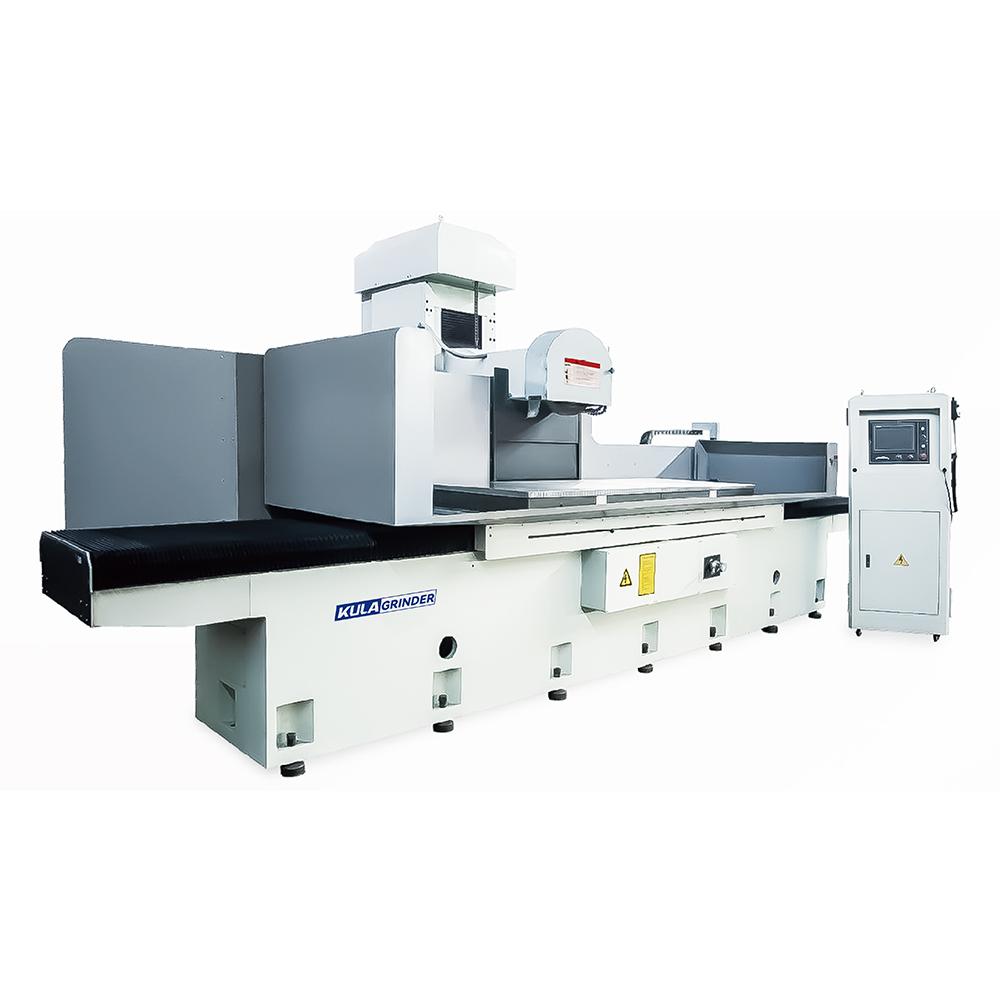
As a specialized type of precision grinding equipment, the horizontal spindle rectangular table surface grinder, with its superior rigidity, wide machining range, and stable accuracy, has become one of the core pieces of equipment for large workpiece planar machining.

I. Challenges and Equipment Advantages in Large Workpiece Machining
The main challenges in large workpiece planar machining include:
Heavy Weight: The heavy weight of the workpiece easily leads to deformation of the machine tool bed and machining platform during machining;
Poor Rigidity: The workpiece itself lacks rigidity and is prone to vibration under grinding forces;
Wide Machining Surface: Long-distance reciprocating machining places higher demands on the precision and stability of the guideways, worktable, and spindle system.
Compared to ordinary surface grinders, horizontal spindle rectangular table surface grinders possess the following core advantages:
High-rigidity bed and rectangular table structure: Utilizing high-strength cast iron or welded structures, they effectively resist grinding forces and vibrations.
Wide-stroke worktable: The rectangular worktable can support large workpieces and achieves smooth reciprocating motion via precision guideways.
Grinding head and wheel system: It can be equipped with large-diameter grinding wheels and a high-precision spindle, improving grinding efficiency and surface quality.
These structural advantages make it irreplaceable in the machining of heavy workpieces.
II. Equipment Structure and Precision Basis
In the structural design of a horizontal spindle rectangular table surface grinder, the horizontal spindle and rectangular worktable system are key components.
1. Worktable System
The worktable uses a rectangular bearing surface and slides on high-precision guideways. It is usually equipped with a powerful electromagnetic chuck for workpiece fixation. For workpieces of different materials or structures, vacuum chucks or special fixtures can also be used for clamping. The stability of the rectangular table system directly affects machining accuracy and grinding consistency.
2. Grinding Head and Spindle
The grinding head spindle, supported by rollers or hydrostatic bearings, drives the grinding wheel to rotate at high speed to cut the workpiece. To reduce vibration and improve surface finish, a high-precision spindle and a rationally designed grinding wheel diameter are core technical elements. Furthermore, regular calibration of the spindle's coaxiality and rotational accuracy is necessary to avoid the accumulation of machining errors.
3. Rigidity and Precision Control
In machining large workpieces, the rigidity of the machine tool bed and guideway system must be sufficiently high. High-strength structures and high-quality materials can reduce deformation under load, ensuring that the cutting forces generated during grinding do not affect the overall geometric accuracy. Simultaneously, in conjunction with existing measurement feedback systems, dynamic compensation technology can further improve machining consistency.
III. Process Optimization Strategies
The grinding process for large workpieces differs significantly from that for ordinary workpieces, requiring the development of reasonable machining plans based on the workpiece material, geometry, and precision requirements.
1. Layered Grinding Strategy
To balance efficiency and precision, the machining process generally employs layered grinding:
Rough Grinding Stage: Focuses on material removal, processing a large amount of allowance to improve overall efficiency;
Semi-finish Grinding Stage: Used to balance residual material removal and precision control;
Fine Grinding Stage: Reduces grinding speed and feed rate to minimize thermal deformation and ensure dimensional and surface quality.
This strategy maintains workpiece stability throughout the grinding process by gradually reducing the machining allowance, avoiding thermal stress or geometric errors caused by grinding a large amount at once.
2. Grinding Media and Lubrication/Cooling
For different grinding characteristics of cast iron, alloy steel, and other materials, appropriate grinding wheel types and grinding fluids should be matched. Correct selection of grinding fluid not only helps with cooling and lubrication but also reduces grinding wheel wear and improves the surface quality of the machined surface.
3. Auxiliary Measurement and Feedback Control
To ensure machining accuracy, modern grinding machines are often equipped with real-time measurement and feedback systems. For example, laser interferometers or high-precision probes are used to detect the flatness of the workpiece, and then the error information is fed back to the CNC system to achieve dynamic compensation and improve machining consistency.
IV. The Role of Auxiliary Technologies in Grinding Large Workpieces
Auxiliary systems not only improve machining reliability but are also crucial for handling complex working conditions.
1. Clamping Auxiliary Equipment
Large workpieces are heavy and complex in shape, making it difficult to quickly and stably fix them using traditional clamping methods. Therefore, modular fixtures, vacuum adsorption, or magnetic chucks are increasingly valued. Properly arranging support points and fixtures can effectively prevent workpiece deformation caused by gravity, thus ensuring datum stability.
2. CNC Program Optimization
Due to the long machining cycle of large workpieces, writing efficient CNC programs is particularly important. Multi-process, continuous machining programs can reduce clamping actions and improve machining continuity and efficiency.
3. Monitoring and Diagnostic Systems
Modern grinding machines are equipped with monitoring systems that monitor spindle temperature, grinding force, feed rate, etc., in real time. Data analysis allows for timely adjustment of machining parameters or prompts for maintenance, thereby preventing equipment malfunctions from affecting machining quality.
V. Typical Application Scenarios
Horizontal spindle surface grinders are widely used in multiple industrial fields, with particularly significant advantages:
Machining of heavy-duty machine tool beds: For example, the base of gantry machining centers and the bed of bridge-type machine tools, which require high flatness and are large in size.
Grinding of engineering machinery bases and large base plates: Large base plates require extremely high precision in contact surfaces during assembly and operation; these grinders can meet strict geometric tolerances.
Processing of large mold base plates: During mold production, the flatness of the base plate or large-sized mold directly affects the forming quality; horizontal spindle surface grinders, with their stable precision and high surface quality, are the preferred equipment.
In addition, this type of equipment can also be used for precision surface grinding of large blades and disc-shaped parts in the energy sector, improving part life and fit accuracy.
VI. Practical Suggestions for Improving Precision and Production Efficiency
In actual production, effectively balancing precision and efficiency is key:
Develop grinding plans based on workpiece characteristics: Adjust grinding wheel, speed, and feed parameters for different materials and sizes.
Optimize auxiliary clamping solutions: Employ modular fixtures and innovative fixing methods to reduce clamping time.
Strengthen CNC programs and measurement feedback strategies: Reduce error accumulation through data-driven compensation technology.
Proper equipment maintenance and monitoring: Regularly calibrate the spindle and guideways to maintain high precision.
These practices not only effectively improve machining consistency but also reduce equipment failure rates and enhance production line stability.
Summary
Horizontal spindle surface grinders, with their excellent rigidity, wide machining capabilities, and high precision, play a crucial role in the surface grinding of large workpieces. Through multi-dimensional technological applications such as structural optimization, process parameter control, and auxiliary system collaboration, the challenges of machining large workpieces can be effectively solved, ensuring both machining quality and efficiency.
As manufacturing moves towards intelligence and high precision, horizontal spindle surface grinders will continue to play an irreplaceable technological role in heavy equipment manufacturing, precision machining, and other fields.


