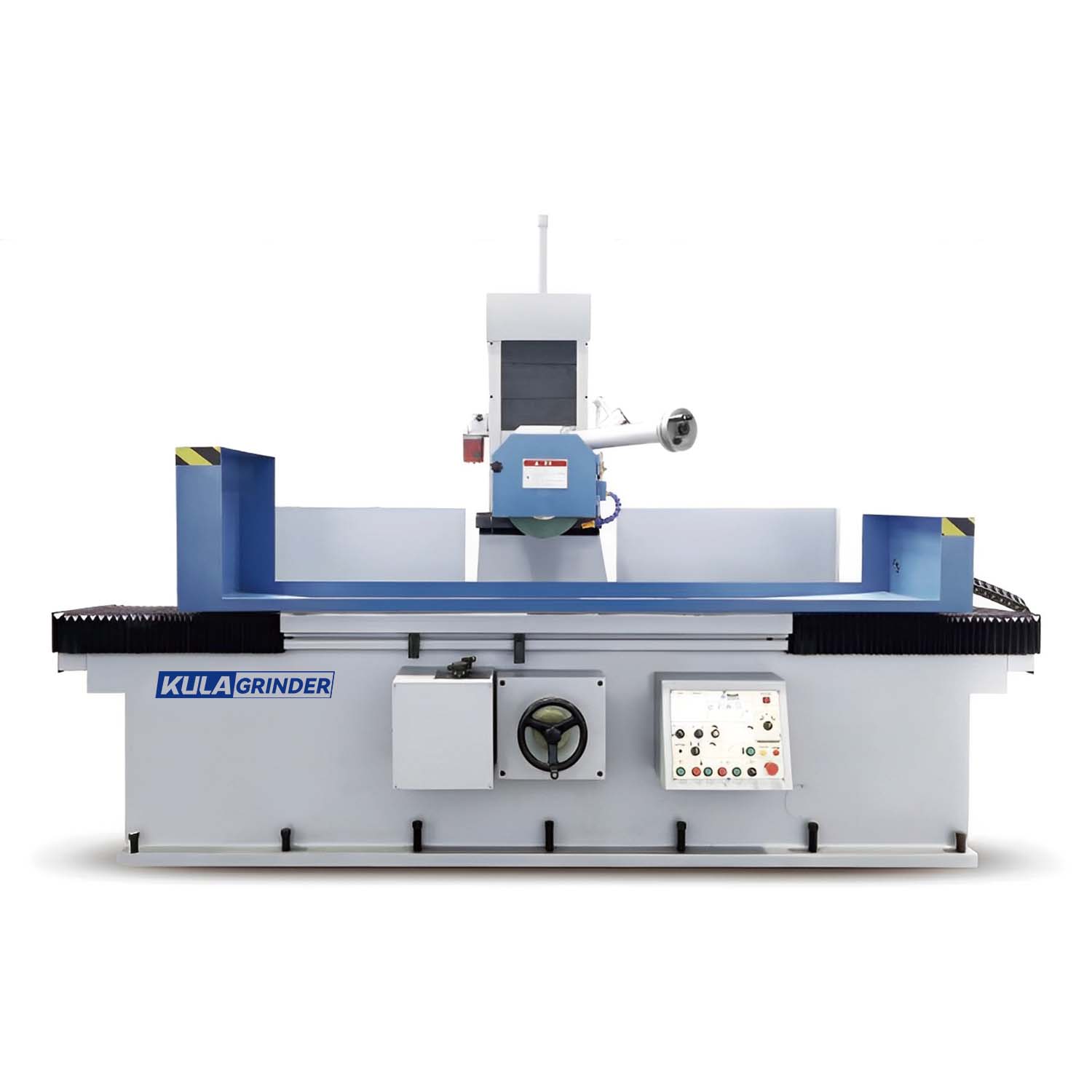
CNC surface grinders transform toolmaking by simplifying the grinding process. Automated systems enable precise machining, reducing errors and material waste. Production cycle times are significantly faster, and cycle times are much shorter compared to conventional methods. This ensures consistent quality and minimizes downtime, enabling you to efficiently meet the demands of high-volume production.
Key Takeaways
CNC surface grinders improve accuracy in making tools. This lowers mistakes and makes better-quality products.
These machines help work faster by cutting down cycle times. They can run nonstop, helping factories meet high production needs easily.
Buying CNC surface grinders saves money over time. They reduce waste and lower tool costs, making them very useful for factories.
Benefits of CNC Surface Grinder
Precision and Accuracy
Precision is critical in tool manufacturing, and CNC surface grinders excel in this area. These machines deliver unmatched accuracy, ensuring that every part meets exact specifications. Industries such as automotive, aerospace, and medical equipment rely on this precision to produce components that fit perfectly and function flawlessly.
By automating the grinding process, you eliminate human error, which often leads to costly mistakes. This precision not only improves the quality of your tools but also ensures compliance with stringent industry standards.
Speed and Productivity
CNC surface grinders significantly boost productivity by reducing cycle times and enabling continuous operation. Unlike traditional grinding methods, these CNC grinding machines can operate for extended periods without interruption, allowing you to meet high production demands efficiently.
Faster cycle times mean you can complete more tasks in less time, increasing your overall output.
Automation allows for simultaneous operations, such as loading and unloading, further enhancing productivity.
With these capabilities, you can scale your operations without compromising on quality, making CNC surface grinders an invaluable asset for high-volume manufacturing.
Consistency and Repeatability
Consistency is vital in tool manufacturing, especially when producing large quantities of identical parts. CNC surface grinders ensure that every component is manufactured to the same exacting standards.
Advanced programming and automation eliminate variations, delivering uniform results across all production runs.
The ability to replicate complex profiles and patterns with precision ensures that your tools meet customer expectations every time.
This level of repeatability reduces the need for rework and minimizes waste, saving you time and resources. By maintaining consistent quality, you build trust with your clients and strengthen your reputation in the industry.
Cost Savings and Waste Reduction
Investing in a CNC surface grinder may require a high initial cost, but the long-term savings far outweigh this expense. These machines help you reduce waste and manage tooling costs effectively.
xx Machining, for example, identified the causes of tool breakages using advanced monitoring systems, leading to significant reductions in scrap parts. By preventing tool failures, you can minimize material waste and lower your overall production costs.
| Metric | Description |
| Initial Cost | High initial investment required for CNC machines, often millions of dollars. |
| Payback Period | Companies assess the lifetime cost to minimize payback period, influencing purchase decisions. |
| Tooling Costs | Excessive tool breakage leads to increased scrap and waste, impacting overall costs. |
To maximize financial rewards, you can implement strategies such as increasing machine utilization and optimizing programming. These measures not only shorten the payback period but also enhance your profitability over time.
Key Features of CNC Surface Grinder
Automation and Programming
Automation and programming are at the core of modern CNC surface grinders, enabling you to achieve unparalleled efficiency and precision. These machines minimize manual intervention, allowing you to focus on other critical tasks. Fully automatic systems streamline operations, making them ideal for high-volume production environments. Semi-automatic models, on the other hand, offer flexibility for smaller batch sizes or specialized tasks.
Advanced control systems further enhance the capabilities of CNC surface grinders. These systems improve surface finish quality and ensure precise execution of complex grinding operations. For instance, automation of wheel dressing eliminates the need for manual templates, reducing errors and saving time. Additionally, PC-based control systems simplify the transition from manual to CNC operation, offering an intuitive interface that even novice operators can navigate with ease.
| Feature Type | Description | Impact on Efficiency |
| Fully Automatic | High levels of automation, minimizing operator intervention. | Maximizes throughput in high-volume settings. |
| Semi-Automatic | A blend of automation and manual operation for flexibility. | Suitable for smaller batch sizes. |
| Advanced Control Systems | Enhances precision and surface finish quality. | Critical for high-volume production. |
| Robotic Integration | Increases automation and reduces labor costs. | Enhances overall efficiency. |
| Digital Technologies | IoT and data analytics improve performance and predictive maintenance. | Minimizes downtime, crucial for production. |
By leveraging these features, you can optimize your production processes, reduce downtime, and maintain consistent quality across all operations.
Material Adaptability
CNC surface grinders excel in handling a wide range of materials, making them indispensable in diverse manufacturing industries. Whether you work with metals, ceramics, or composites, these machines adapt seamlessly to your specific requirements. This adaptability ensures that you can meet the demands of various applications without compromising on quality or efficiency.
The SGC series, for example, is designed to process workpieces with high dimensional requirements. Its robust construction and advanced lubrication systems ensure stability and precision, even when grinding challenging materials like carbide. This versatility allows you to tackle complex projects with confidence, knowing that your CNC surface grinder can handle the task.
Moreover, the ability to switch between different materials quickly enhances your operational flexibility. This feature is particularly beneficial in industries such as aerospace and automotive, where manufacturers often deal with a variety of materials in a single production cycle.
Real-Time Monitoring Systems
Real-time monitoring systems are revolutionizing the way you manage quality control in CNC surface grinding machine. These systems provide immediate feedback on critical parameters, allowing you to detect anomalies and make adjustments on the fly. This capability not only improves surface quality but also reduces waste and rework, saving you time and resources.
In-process metrology, for instance, enables real-time feedback on surface roughness, ensuring that each component meets stringent quality standards. Multi-sensor approaches further enhance monitoring accuracy by considering multiple parameters simultaneously. Technologies like IoT and data analytics take this a step further, offering predictive maintenance capabilities that minimize downtime and extend machine life.
| Evidence Description | Key Findings |
| Multi-sensor approach | Increases accuracy and reliability of monitoring by considering multiple parameters. |
| Real-time data acquisition | Allows immediate feedback and anomaly detection, enhancing quality control. |
| Surface roughness prediction | Enhances quality control by predicting surface quality in real-time. |
| Tool wear prediction | Improves reliability and productivity in CNC operations. |
| Chatter detection | Reduces waste and cost, contributing to zero-defect manufacturing. |
By integrating real-time monitoring systems into your CNC surface grinder, you can achieve a higher level of operational efficiency and maintain a competitive edge in the market.
Applications of CNC Surface Grinder in Tool Manufacturing
Automotive and Aerospace Industries
In the automotive and aerospace sectors, precision and quality are non-negotiable. CNC surface grinders play a pivotal role in meeting these stringent requirements. These machines ensure tight tolerances and deliver high-quality surface finishes, which are essential for components like engine parts, turbine blades, and structural elements.
| Industry Sector | Key Benefits |
| Automotive | High demand for precision and quality in component manufacturing; essential for tight tolerances. |
| Aerospace | Necessity for precision and complexity; adherence to stringent safety and performance standards. |
| Overall Growth | Increasing need for high-quality surface finishes; advancements in automation enhancing efficiency. |
By leveraging CNC surface grinders, you can achieve the precision and complexity required to adhere to safety and performance standards in these industries. This ensures your components meet the rigorous demands of modern automotive and aerospace applications.
Mold and Die Making
CNC surface grinders are indispensable in mold and die making, where surface quality and dimensional accuracy are critical. These machines excel in machining hardened materials like AISI D3 steel, commonly used in this field. Their ability to handle complex geometries and deliver superior finishes makes them a preferred choice for manufacturers.
CNC surface grinders outperform traditional methods like face milling in achieving high-quality finishes.
Economic considerations, such as reduced labor and consumable costs, make them a cost-effective solution.
Their precision ensures molds and dies meet exact specifications, reducing rework and improving overall efficiency.
By integrating CNC surface grinders into your mold and die-making processes, you can enhance productivity while maintaining the highest quality standards.
High-Precision Component Production
High-precision component production demands exceptional accuracy and repeatability. CNC surface grinders rise to this challenge by delivering consistent results across various applications. Whether you're cutting zirconium tubes or maintaining part roundness, these machines provide a reliable solution.
Case studies highlight their role in achieving tight tolerances and superior surface finishes.
Their versatility allows you to tackle diverse projects, from medical devices to electronics.
Advanced grinding technologies ensure zero-defect manufacturing, reducing waste and boosting profitability.
By adopting CNC surface grinders, you can overcome production challenges and achieve unparalleled precision in high-precision component manufacturing.
Maximizing Efficiency with CNC Surface Grinder
Maintenance and Calibration
Regular maintenance and calibration are essential for maximizing the efficiency of your high-precision CNC surface grinder. These practices ensure consistent performance and extend the machine's operational life. Preventive maintenance reduces the likelihood of breakdowns, allowing uninterrupted production cycles.
Key maintenance tasks include:
Lubricating all moving parts to minimize wear and tear.
Inspecting and cleaning the coolant system to prevent contamination.
Checking for oil leakage from cylinders and tightening bolts and fasteners.
Calibrating the machine’s accuracy to meet precise tolerances.
Maintaining spindle speed within optimal ranges and ensuring precise alignment of moving parts are critical metrics for achieving high-quality results. By adhering to regular maintenance schedules, you can enhance productivity and avoid costly downtime.
Tip: Preventive maintenance not only ensures consistent results but also helps you meet stringent industry standards for precision machining.
Operator Training
Well-trained operators are vital for unlocking the full potential of your CNC surface grinder. Training programs should focus on machine operation, troubleshooting, and safety protocols. Skilled operators can identify issues early and make adjustments to maintain production quality.
Effective communication across departments also plays a key role in improving efficiency. When operators coordinate with maintenance teams, they can address potential problems before they escalate. Lean manufacturing principles, such as reducing cycle times and eliminating errors, further enhance operational efficiency.
By investing in operator training, you empower your team to maximize the machine's capabilities while minimizing errors and downtime. This ensures smooth workflows and consistent output, even in high-demand environments.
Programming Optimization
Optimizing programming is a powerful strategy for improving the performance of your CNC surface grinder. Advanced programming techniques reduce cycle times, improve tool life, and minimize tool wear. These benefits translate into significant cost savings and enhanced productivity.
| Impact of Programming Optimization on CNC Surface Grinders | Description |
| Cycle Time Reduction | Reduces cycle times by 25% or more. |
| Tool Life Improvement | Can double tool life, leading to cost savings. |
| Reduced Tool Wear | Minimizes tool deflection and vibration, enhancing tool longevity. |
| Decreased Machine Downtime | Virtually eliminates broken tools and associated downtime. |
| Enhanced Performance | Enables efficient use of tools by adhering to recommended parameters. |
Real-time tracking and in-process inspections further refine programming efficiency. These methods allow immediate corrective actions, reducing defects and ensuring zero-defect manufacturing. By leveraging programming optimization, you can achieve faster production cycles and superior quality in every operation.
CNC surface grinders revolutionize tool manufacturing by enhancing efficiency and precision. You can meet industry demands with faster production cycles and reduced waste. Their advanced features empower you to produce high-quality tools consistently. By adopting best practices, you maximize their benefits and maintain a competitive edge in the evolving manufacturing landscape.
FAQ
What industries benefit the most from CNC surface grinders?
Automotive, aerospace, and mold-making industries gain the most. These machines ensure precision, repeatability, and high-quality finishes for demanding applications.
How can you maintain a CNC surface grinder effectively?
Lubricate moving parts, clean coolant systems, and calibrate regularly. Preventive maintenance ensures consistent performance and reduces downtime.
Can CNC surface grinders handle different materials?
Yes! They adapt to metals, ceramics, and composites. Their versatility makes them ideal for diverse manufacturing needs.
Tip: Regular operator training enhances machine efficiency and ensures optimal results across all material types.


