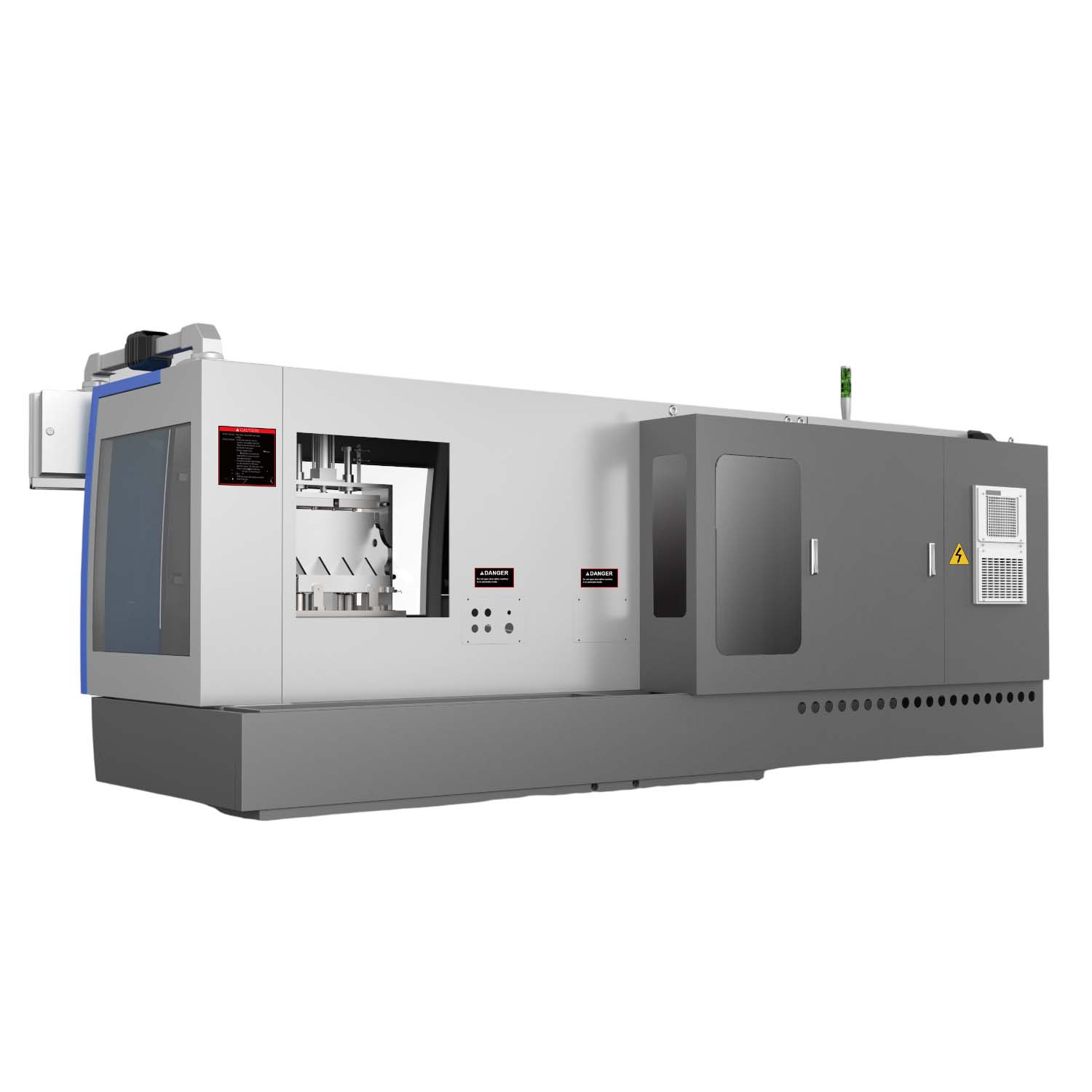
You face significant challenges when working with a CNC Deep Hole Honing Machine. Achieving precise dimensions, avoiding surface imperfections, and keeping the process stable often test your expertise. Overcoming these obstacles lets you deliver high-quality components, reduce costs, and boost productivity. Practical solutions address each challenge directly.
Key Takeaways
Regularly inspect and replace honing tools, control temperature with steady coolant flow, and calibrate your machine to keep dimensions accurate and avoid costly errors.
Use precise fixturing, vibration control, and real-time monitoring to prevent shape and straightness errors, ensuring every bore meets tight quality standards.
Adopt automation, adaptive control, and real-time feedback systems to boost productivity, extend tool life, and maintain stable, high-quality honing processes.
CNC Deep Hole Honing Machine and Its Role in Precision Manufacturing
Key Process Characteristics
You rely on the CNC Deep Hole Honing Machine to deliver unmatched precision in finishing internal bores. This process uses abrasive stones mounted on a honing head that rotates and moves back and forth inside the workpiece. The machine offers two main feed modes: quantitative feed, which keeps the speed constant, and constant pressure feed, which adjusts force in real time. These features help you achieve high accuracy and excellent surface finishes.
Recent advances have brought artificial intelligence and IoT into the honing process. You can now monitor operations in real time and adjust parameters instantly. Advanced tool materials, such as carbide and diamond-like coatings, extend tool life and improve wear resistance. Simulation software lets you test process settings virtually, reducing the need for physical prototypes. Additive manufacturing allows you to create custom tool shapes for unique applications.
Here is a summary of key process characteristics:
| Process Characteristic | Description / Values |
| Honing Principle | Abrasive stones rotate and reciprocate to polish internal bores. |
| Feed Modes | Quantitative (constant speed) and constant pressure (real-time force adjustment). |
| Machining Accuracy | IT7 to IT6. |
| Surface Roughness (Ra) | 0.2 to 0.025 µm. |
| Speeds | Circumferential: 16-60 m/min; Reciprocating: 8-20 m/min. |
| Typical Aperture Range | 5-500 mm diameter. |
| Depth-to-Diameter Ratio | 10 or more. |
| Applications | Automotive, aerospace, hydraulic cylinders, engine cylinders, valves, pumps, etc. |
Importance in Achieving Tight Tolerances
You need to meet strict dimensional and surface requirements in industries like aerospace and automotive. The CNC Deep Hole Honing Machine helps you achieve these goals by providing precise control over tool movement and pressure. Research shows that honing creates a unique surface texture, improving wear resistance and functional performance in cylinder bores. The process produces a "transitional topography" that boosts durability and accuracy.
Empirical studies confirm that honing angle and groove patterns directly affect engine performance, oil consumption, and emissions. By adjusting machining parameters, you can reach high levels of dimensional accuracy and surface quality. CNC control ensures repeatability and consistency, making it possible to deliver parts that meet the tightest tolerances every time.
Dimensional Accuracy Challenges in CNC Deep Hole Honing Machine Operations
Causes of Dimensional Errors
You often face dimensional errors when working with deep hole honing. These errors can affect the quality and performance of your finished parts. Understanding the main causes helps you prevent costly mistakes.
Tool Wear: As you use the honing stones, they wear down. Worn tools lose their ability to cut precisely, which leads to oversized or undersized bores.
Thermal Expansion: The heat generated during honing can cause both the workpiece and the tool to expand. This expansion changes the final dimensions of the hole.
Improper Machine Calibration: If you do not calibrate your CNC Deep Hole Honing Machine regularly, you risk introducing systematic errors into every part you produce.
Inconsistent Coolant Flow: Coolant keeps the temperature stable and removes debris. If the flow is uneven, you may see localized heating or clogging, which affects accuracy.
Workpiece Clamping Issues: Loose or uneven clamping allows the workpiece to move during honing. Even small shifts can cause out-of-tolerance holes.
Vibration and Machine Rigidity: Vibrations from the machine or the environment can cause the honing head to deviate from its intended path.
Tip: Always monitor your process for early signs of tool wear or temperature changes. Early detection saves time and material.
Solutions for Precision Control
You can achieve high dimensional accuracy by following proven strategies and best practices. These solutions help you maintain tight tolerances and deliver reliable results.
Regular Tool Inspection and Replacement
Check your honing stones before each job. Replace them when you notice uneven wear or reduced turning performance. This step ensures consistent material removal.
Temperature Management
Use high-quality coolants and maintain a steady flow. Monitor the temperature of both the tool and the workpiece. If you see a rise in temperature, pause the process and let the parts cool.
Machine Calibration
Calibrate your CNC Deep Hole Honing Machine at scheduled intervals. Use certified gauges and reference parts to verify accuracy. Document each calibration for traceability.
Stable Workpiece Clamping
Secure the workpiece with precision fixtures. Double-check the clamping force and alignment before starting the honing cycle. Stable clamping prevents unwanted movement.
Vibration Control
Place your machine on a solid foundation. Use vibration dampers if needed. Regularly inspect the machine structure for signs of looseness or wear.
Process Monitoring and Feedback
Install sensors to track tool position, force, and temperature in real time. Use the data to adjust parameters instantly. Many modern systems offer automatic compensation for minor deviations.
Note: Consistent process control not only improves accuracy but also extends the life of your tools and machines.
By applying these solutions, you can minimize dimensional errors and produce parts that meet even the strictest requirements.
Shape and Straightness Errors in CNC Deep Hole Honing Machine Processes
Common Shape Deviations
When you hone deep holes, you often see shape deviations that affect the final quality. The most frequent issues include barrel-shaped bores, where the center is wider than the ends, and taper, where the diameter changes from one end to the other. You may also encounter bell-mouthing, which causes the bore to flare at the opening, and banana-shaped bores, which curve instead of staying straight. These errors can result from uneven tool pressure, misalignment, or improper fixture setup. If you ignore these problems, you risk poor sealing, reduced part life, and lower performance.
Tip: Always inspect the bore profile after honing. Early detection of shape errors helps you correct the process before producing a full batch.
Techniques for Improving Straightness
You can improve straightness by using advanced machine features and precise fixturing. Modern honing systems offer real-time monitoring and adaptive feedback. These features let you make micron-level adjustments during the process. You should also use axial and radial floating fixtures. Axial floating allows the tool to move along the bore's axis, compensating for minor misalignments. Radial floating adds flexibility, letting the tool self-center and correct for off-axis errors.
The following table compares key features of different honing machines and highlights how CNC systems deliver unmatched precision:
| Feature | Horizontal Honing Machine | Vertical Honing Machine | CNC Honing Machine |
| Automation Level | Semi-automatic to fully automated | Semi-automatic to fully automated | Fully automated with real-time monitoring |
| Ideal Workpiece Orientation | Cylindrical, longer workpieces | Compact and vertically aligned components | High-precision parts in varying sizes |
| Bore Geometry Correction | Maintains roundness and straightness, effective for deep bores | Best for short bores with high alignment accuracy | Unmatched precision with micron-level adjustments |
| Control System | PLC or motion-controlled automation | PLC-based control for consistency | CNC with adaptive feedback and self-correction |
By combining these technologies and fixtures, you achieve straighter bores and higher part quality. Consistent monitoring and self-correction ensure every part meets your strict standards.
Surface Defects and Quality Control in CNC Deep Hole Honing Machine Applications
Types of Surface Imperfections
You often encounter several types of surface imperfections during deep hole honing. These defects can affect the performance and lifespan of your finished parts. Common imperfections include:
Scratches and scoring: These marks appear when abrasive particles or chips get trapped between the tool and the workpiece.
Tearing and smearing: You may see these when the honing stone wears unevenly or when the feed rate is too high.
Pitting and porosity: Small holes or voids can form if the material has inclusions or if the coolant flow is inconsistent.
Waviness and chatter marks: These patterns result from machine vibrations or unstable tool paths.
Barrel or taper shapes: These geometric errors also impact surface quality.
To fully understand these defects, you need to measure more than just average roughness (Ra). Parameters like Rz, Rmax, skewness (Rsk), and kurtosis (Rku) give you a complete picture of the surface. Industry standards such as ISO 4287 and ASME B46.1 help you compare results and maintain consistency. Real-time monitoring systems and random inspections of roughness values help you catch defective batches early.
Tip: Use sensor data like turning forces, vibrations, and spindle power to predict surface roughness and prevent defects before they occur.
Best Practices for Surface Quality
You can maintain high surface quality by following proven industry strategies:
Implement Statistical Process Control (SPC) to monitor your machining process. Use control charts and data analysis to spot and correct deviations quickly.
Perform regular machine maintenance. Clean, inspect, and calibrate your equipment to keep it running accurately.
Use quality control software for real-time monitoring and automated inspections. This helps you track every part and generate detailed reports.
Train your operators on quality standards and inspection tools. Skilled operators catch problems early and keep your process on track.
Calibrate your tools with approved reference materials. Keep records of every calibration to ensure you meet tight tolerances.
You should also plan your process carefully. Choose the right turning parameters and tools for each job. Inspect your raw materials to avoid introducing defects at the start. Continuous improvement, supported by data analytics and automation, helps you raise your quality standards over time.
Process Stability and Consistency in CNC Deep Hole Honing Machine Workflows
Factors Affecting Stability
You need stable machining conditions to produce high-quality parts every time. Several factors can disrupt this stability. These include tool wear, improper coolant flow, excessive heat, and insecure workholding. Each issue can lead to symptoms like rough surfaces, burn marks, chatter, or even tool breakage. You may also see problems such as thread seizing or part discoloration if you do not control friction and heat.
Here is a table that links common symptoms to their causes and recommended fixes:
| Symptom | Root Cause | Recommended Fix |
| Rough finish | Worn tool, poor coolant | Replace tool, improve coolant |
| Burn marks | Excessive heat | Adjust speed, use better coolant |
| Chatter marks | Insecure workholding | Secure part, dampen vibration |
| Tool breakage | Excessive load, adhesion | Reduce load, upgrade coating |
| Discoloration | Overheating | Lower speed, enhance lubrication |
Note: Monitoring surface roughness (Ra, Rz) helps you catch early signs of instability. Upgrading tool coatings and using oil-based coolants can reduce scrap and extend tool life.
Solutions for Consistent Performance
You can achieve consistent results by focusing on process control and preventive measures. Start by inspecting your tools and replacing them before they wear out. Use high-quality coolants and keep the flow steady to manage heat and remove chips. Secure your workpiece with proper fixtures to prevent movement.
In one automotive case, engineers solved galling on stainless steel pistons by improving the surface finish to 0.4-0.6 µm Ra, switching to harder materials, and applying a DLC coating. These changes stopped friction problems and kept performance stable during testing. You can apply similar strategies by optimizing surface finish, choosing the right materials, and using advanced coatings.
Regularly review your process data. Adjust feeds, speeds, and lubrication based on real-time feedback. This approach helps you prevent defects and maintain high productivity. Consistent monitoring and quick response to changes keep your workflow stable and reliable.
Material-Specific Issues in CNC Deep Hole Honing Machine Usage
Challenges with Hard or Exotic Materials
You often face unique challenges when honing hard or exotic materials. These materials, such as titanium, Inconel, Monel, and other superalloys, show high ductility and a strong tendency to work harden. This behavior leads to burr formation that is tough to remove and worsens as your tools wear. Standard tool geometries struggle to maintain bore quality and resist wear in these conditions.
Superalloys like Inconel 718 have high strength and low thermal conductivity. These properties increase tool loads and cause severe abrasive and adhesive wear.
Burrs do not break off cleanly, which can block fluid flow, create turbulence, and cause misalignment in precision parts.
Tool wear increases turning forces and spindle loads, making it harder to keep tight tolerances.
Residual stresses from machining affect both the surface and subsurface layers. Compressive stresses help improve fatigue strength, but tensile stresses can reduce part life.
Chip removal becomes difficult, especially in deep holes, and poor chip formation can lead to tool breakage.
Tip: Always monitor tool condition and surface quality closely when working with these materials. Early detection of wear or stress helps you avoid costly part failures.
Solutions for Material Adaptation
You can overcome these material-specific challenges by adapting your process and tools. Flexible honing tools, such as those with nickel-coated diamond or CBN abrasives, help you deburr and finish hard alloys efficiently. Automated integration of these tools into your CNC systems reduces manual labor and improves consistency, especially for complex features like cross-drilled holes.
Engineering studies show that rolling processing technology can boost surface quality and efficiency. This method uses plastic flow to smooth and strengthen surfaces, achieving up to ten times the efficiency of traditional grinding for alloys like 42CrMo steel. Simulation and optimization help you balance tool wear, surface roughness, and material removal rate.
You can also use data-driven models, such as Adaptive Neural Fuzzy Inference Systems, to optimize process parameters. By minimizing grain size and tangential velocity while maximizing density, pressure, and linear velocity, you improve surface finish and extend tool life. These strategies help you tailor your honing process to each material, ensuring reliable results and high part quality.
Advanced CNC Solutions for Deep Hole Honing Machine Optimization
Automation and Adaptive Control
You can transform your deep hole honing process by using automation and adaptive control. These technologies help you optimize every step, from setup to final inspection. Automation with CNC software, robotics, and IoT increases productivity by up to 30%. You also reduce operational costs by 20% and minimize human error. Adaptive control systems adjust turning parameters in real time. This means you get higher material removal rates and fewer tool breakages. High-efficiency milling and advanced coolant systems, such as high-pressure delivery and minimum quantity lubrication, extend tool life by up to 300%. You also use less lubricant, which lowers costs and helps the environment.
Adaptive control systems optimize turning parameters instantly.
Automation boosts productivity and accuracy.
Advanced coolant technology improves tool life and surface finish.
Simulation tools and digital twins let you test settings virtually, saving time and materials.
Tip: Use digital twins to run virtual machining trials. You can find the best parameters before you start the actual job.
Real-Time Monitoring and Feedback
You gain a major advantage when you use real-time monitoring and feedback in your CNC Deep Hole Honing Machine operations. Sensors track coolant flow, pressure, and tool condition as you work. This data helps you spot problems early and make quick adjustments. Real-time control protects your tools from failure and keeps your process stable. You also improve surface quality and reduce scrap. By acting on live data, you ensure each part meets your strict standards.
You solve major challenges in CNC Deep Hole Honing Machine operations by using precise tool selection, stable process control, and real-time monitoring. These solutions improve accuracy, surface finish, and process stability. Studies show you achieve roundness of 0.005 mm and surface roughness as low as Ra 0.05 µm. Future advancements promise even greater efficiency.
FAQ
What maintenance does a CNC Deep Hole Honing Machine require?
You should inspect honing stones, check coolant levels, and calibrate the machine regularly. Clean the system after each use to ensure optimal performance.
How do you select the right honing tool for different materials?
Match the abrasive type to your material.
Use diamond or CBN for hard alloys.
Choose softer abrasives for standard steels.
Can automation improve deep hole honing accuracy?
Automation lets you control parameters precisely. You achieve consistent results, reduce errors, and increase productivity with real-time monitoring and adaptive feedback.


