Recently, a dangerous cognitive bias has been observed in the industry: the belief that environmental factors have a negligible impact on the machining accuracy of high-precision cylindrical grinding machines. However, the fact is that complex mechanisms such as thermal deformation, dynamic vibration, and media contamination can directly or indirectly cause drift in the geometric and kinematic accuracy of high-precision external cylindrical grinding machines, thus becoming a decisive systemic obstacle to achieving micron-level and even sub-micron-level machining tolerances. This article will systematically teach you how to identify and overcome these obstacles to ensure your grinding equipment delivers maximum value.
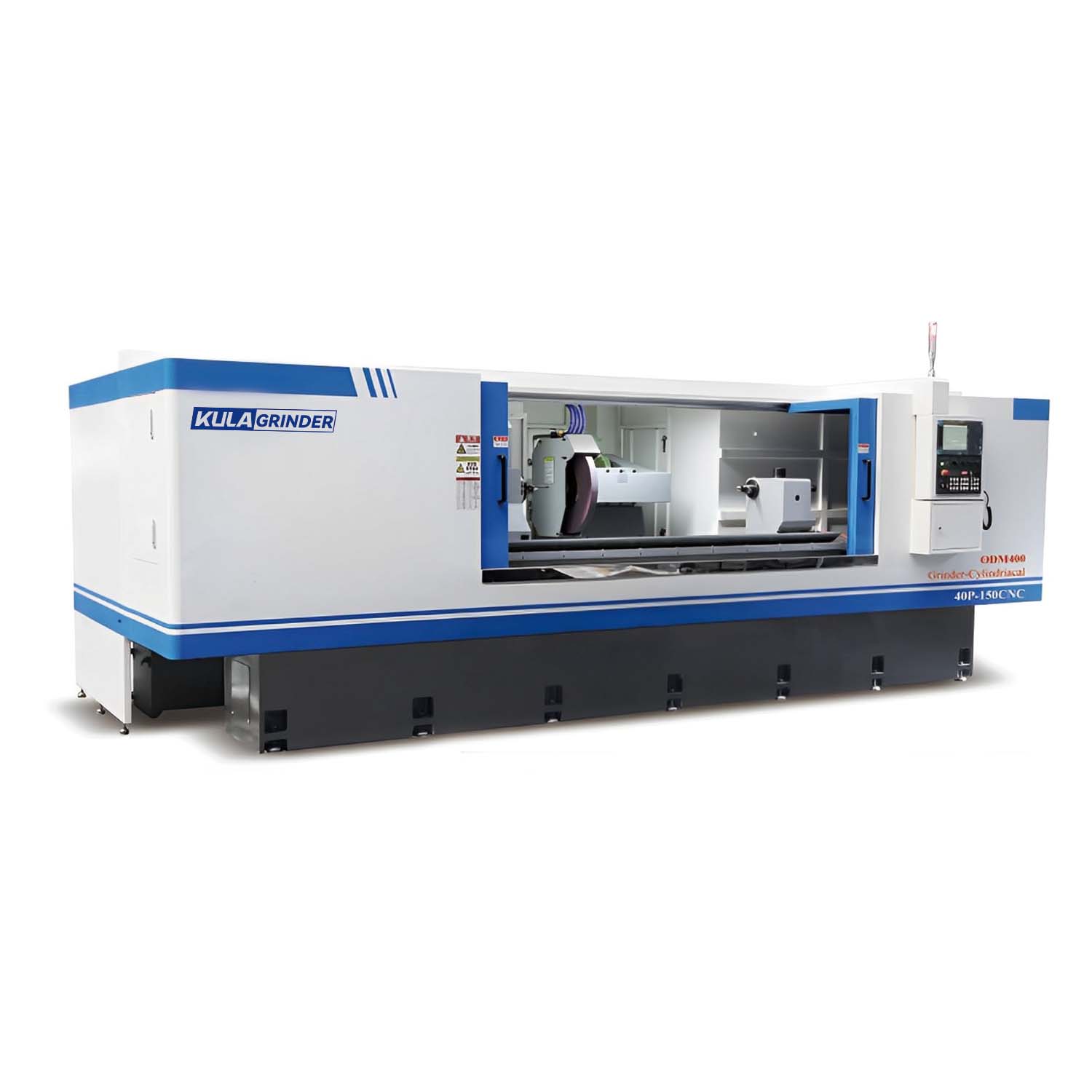
5 Major Environmental Factors Affecting Grinding Accuracy
Temperature: Thermal deformation is the primary environmental factor affecting machining accuracy
Mechanism Analysis: External ambient temperature fluctuations + internal heat sources (spindle bearings, guide rail friction) generate heat.
Accuracy Loss Manifestations:
Geometric errors: Thermal deformation of the machine bed and guide rails leads to poor straightness of the worktable.
Dimensional deviations: Thermal expansion or contraction of the spindle or workpiece directly affects the final dimensions and roundness.
Quantitative Warning: Emphasizing the fatal impact of a 1°C temperature difference fluctuation on 0.001mm level machining tasks.
Vibration: A chain reaction of compromised dynamic stability
Vibration Source Identification: Distinguishing between external low-frequency vibrations (adjacent stamping equipment, traffic) and internal high-frequency vibrations (grinding wheel imbalance, transmission system).
Accuracy Loss Manifestations:
Resonance Hazard: External vibration frequency coincides with the natural frequency of the grinding machine, exponentially amplifying errors.
Reduced Surface Quality: Causes vibration marks on the workpiece surface, failing to meet roughness (Ra) specifications.
Shape Errors: Affects roundness/cylindricity, especially prominent in cylindrical grinding.
Cleanliness and Humidity: A hidden threat to long-term performance
Wear and Failure: Dust, grinding debris, and other impurities in the air adhere to precision guide rails and ball screws, accelerating wear and damaging the long-term motion accuracy of the machine tool.
Corrosion and Media: High humidity environments accelerate the corrosion of metal components; oil and moisture in the coolant or compressed air affect the operation of pneumatic components and the grinding efficiency of the grinding wheel.
Electromagnetic Interference and Power Quality
Electromagnetic interference (EMI) has minimal impact on traditional mechanical machining, but for high-precision CNC grinding machines that heavily rely on electronic control and precise measurement, it is a critical "invisible killer."
Mechanism of Influence: Measurement System Errors: Grinding machines are typically equipped with high-resolution linear encoders or rotary encoders. Strong electromagnetic fields nearby (such as high-power switching equipment, frequency converters, and induction heating equipment) can interfere with the signal transmission of these sensitive electronic components, leading to instantaneous or periodic position feedback errors.
CNC System Instability: Noise interference can affect the internal circuits of the CNC system, causing logical operation errors or command deviations, resulting in slight deviations in the machining trajectory.
Servo Motor Fluctuations: Unstable power quality (such as voltage transients and harmonics) can affect the smooth operation of the servo motor, which in turn affects the feed speed and positioning accuracy.
Countermeasures (Our Company's Technological Advantages): Our high-precision grinding machines are designed with high-performance shielded cables, independent grounding systems, and power purification modules to ensure the "clean" operation of the electronic system.
Ambient Lighting and Operator Factors
Although not directly affecting the physical structure of the machine tool, it impacts the operator's inspection and operation accuracy.
Mechanism of Influence: Visual Fatigue: Uneven or excessively strong light can cause visual errors when operators perform manual compensation, grinding wheel dressing, or use handheld measuring tools, thus affecting the accuracy of fine adjustments.
Local Temperature Rise (Minor): In rare cases, uneven strong light (such as certain high-intensity work lights) may cause a very small local temperature rise on the machine tool or workpiece. Although the impact is weak, it cannot be completely ignored when 0.001mm accuracy is required.
Countermeasures: We advocate and provide standardized, highly uniform lighting systems, combined with ergonomic design, to ensure the highest precision operating window for operators.
Summary
The impact of environmental factors on high-precision grinding machines is not an insurmountable force, but rather an identifiable, quantifiable, and solvable systemic risk. As experts deeply rooted in the CNC manufacturing field, we have integrated these environmental countermeasures into the design of our high-precision cylindrical grinding machines, ensuring that the equipment can achieve its nominal ultimate precision under various challenges. Act now to get the precision grinding equipment that suits your needs.


