CNC honing uses a computer to control the process. It finishes the inside of a cylinder or bore. This process makes the surface very smooth. It also keeps the size very exact. A CNC Honing Machine moves the honing tool very carefully. The workpiece does not move. Manual honing needs people to make changes by hand. CNC technology gives better control and does the same thing every time. Studies show CNC methods are more accurate and faster. Many companies use CNC honing for parts with strict quality rules.
Key Takeaways
CNC honing uses computers to help make parts smooth. It also makes parts exact.
It helps factories make the same part each time. It is faster and has fewer mistakes.
CNC honing helps engines work better. It holds oil and lowers wear.
The process saves energy and materials. This makes it cheaper.
Many industries use CNC honing for strong and precise parts.
Honing Process Basics
What Is Honing?
Honing is a way to finish the inside of a cylinder or bore. It uses a special stone or tool that moves in a set pattern. This tool takes off tiny bits of material. Honing makes the surface smooth and even. Many industries use honing so parts fit well and last longer.
Surface Finish and Tolerances
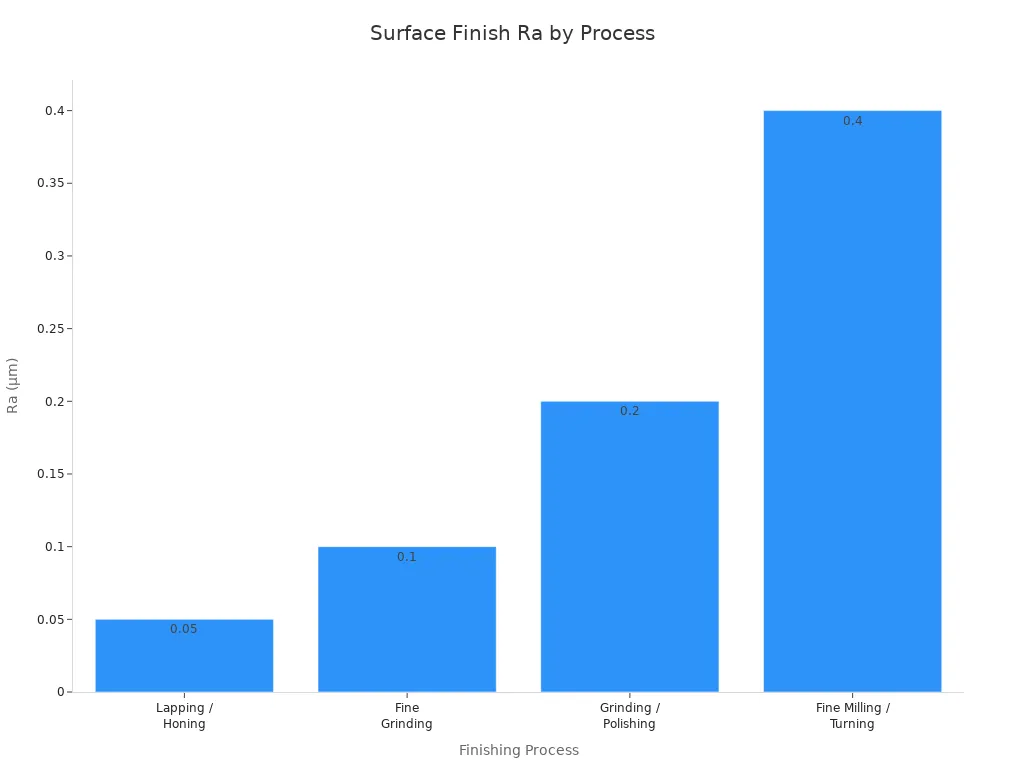
Surface finish tells us if a surface is smooth or rough. Engineers use Ra values to measure this in micrometers. Honing can make some of the smoothest surfaces in factories. The table below shows how different processes compare:
Roughness Grade (N) | Ra (µm) | Typical Process Example |
N2 | 0.05 | Lapping / Honing |
N3 | 0.1 | Fine Grinding |
N4 | 0.2 | Grinding / Polishing |
N5 | 0.4 | Fine Milling / Turning |
A CNC Honing Machine can make Ra values as low as 0.05 µm. This is smoother than most grinding or milling. The chart below shows how honing does compared to other finishing methods:
Manual vs. CNC Honing
Manual honing needs a skilled worker to move the tool. This way can work well, but parts may not be exactly the same. A CNC Honing Machine uses a computer to move the tool very accurately. The workpiece does not move while the machine changes speed, pressure, and movement. This helps every part meet strict size and finish rules. Factories use CNC Honing Machines when they want the same result every time.
CNC Honing Machine Technology
CNC Controls and Automation
A CNC Honing Machine uses a computer to control each step. The machine picks the speed, pressure, and how the tool moves. This helps factories make many parts that are all the same. The machine can change its settings for each job. It works well for both small and big groups of parts. New machines have sensors that watch the tool and check for heat. These sensors help keep the process right, even for long jobs. Many factories use these machines in "dark factories." In these places, robots do most of the work with little help from people. This makes more parts and fewer mistakes.
Tip: Using automation in CNC honing means less waste and lower costs for each part.
CNC Honing Machines also link to factory computers. They use special programs and rules to share data with other machines. This lets managers watch the work as it happens and check quality as parts are made.
Crosshatch Angle Precision
The crosshatch pattern is very important in honing. It looks like tiny X-shaped lines inside the bore. A CNC Honing Machine makes this pattern by moving the tool in a set way. The workpiece does not move. The angle of these lines matters a lot. It helps oil stay on the surface. This keeps engine parts working well. If the angle is wrong, oil may not stick. Parts can wear out faster.
Studies show the right crosshatch angle lowers friction and saves oil in engines. Special honing, like plateau honing, makes the surface even better for oil. This helps engines last longer and need less time to break in.
The crosshatch pattern helps oil stay on the surface.
A smooth surface without the pattern does not hold oil well.
Plateau honing helps the surface hold oil and lowers wear.
Flexibility and Cost Efficiency
CNC Honing Machines are very flexible. They can work on different part sizes and shapes by changing the program. This saves time and money. Workers do not need to set up the machine for each new job. The newest machines use smart programs and even artificial intelligence. These help plan the best way to hone each part. These tools help factories use less energy and fewer materials.
Factories do face some problems when they start using CNC Honing Machines. The table below shows common problems:
Challenge | Description |
High Initial Capital Expenditure | Buying new machines costs a lot at first. |
Need for Skilled Operators | Factories need workers who know how to run and fix these machines. |
Complexity of Advanced Technologies | New machines can be hard to set up and use. |
Cybersecurity Risks | Machines that connect to the internet need strong security to stop hackers. |
Even with these problems, the good points are clear. Automation and smart controls make each part cost less. Factories can make more parts faster and with fewer mistakes. More companies are buying these machines because they see the value.
Benefits of CNC Honing Machine
Precision and Repeatability
A CNC Honing Machine helps factories make very exact parts. These machines can keep parts round within 0.005 mm. They can also make surfaces as smooth as Ra 0.002 mm. The machines use strong spindles with over 2 kW of power. Automatic honing machines are good for making lots of parts fast. Every part comes out the same.
Factories use different tools to check if parts are good. Here are some common ways:
Method/Technology | Description |
Coordinate Measuring Machines (CMMs) | Used for high-precision 3D measurements, ensuring dimensional accuracy in CNC machining. |
Profilometers | Measure surface roughness (Ra, Rz values) to assess the quality of the honed surfaces. |
Optical Comparators | Verify profiles against standards to ensure surface finish quality. |
Laser Scanners | Capture complex geometries for detailed inspection. |
Factories also check and adjust their machines often. This keeps the machines working right.
Improved Engine Performance
CNC honing helps engines work better and last longer. The process makes a crosshatch pattern that holds oil. This pattern lowers friction and helps parts not wear out fast. Gary Conley fixed oil problems in a small engine by using honing. The engine ran better and lasted longer.
The table below shows how honing compares to other ways to finish parts:
Process | Speed | Surface Finish | Geometry Correction | Heat Generation |
Honing | Slower | Ultra-fine | Excellent | Low |
Grinding | Faster | Good | Limited | Moderate |
Lapping | Moderate | Ultra-smooth | Limited | Low |
Honing is best for making parts very smooth and the right shape.
Reduced Wear and Maintenance
A CNC Honing Machine helps parts last longer and need less fixing:
The smooth surface makes less rubbing between parts.
Better oil control means less heat and less damage.
Special abrasives do not cause big problems for filters. Factories already use filters, so the extra bits from abrasives are not a problem.
Using honing often keeps machines working longer and with fewer repairs.
Many factories now try to be more green. CNC honing uses less energy and makes less waste than old ways. Smart sensors and computers help save resources and follow new rules. This makes CNC honing a smart choice for companies that want to help the planet and save money.
Industrial Applications
Automotive Components
Car factories use CNC Honing Machines to make important parts. This process helps engines work better and last longer. The table below lists some car parts and how honing helps them:
Automotive Component | Performance Benefits |
Engine Cylinders | Improved dimensional accuracy and lubrication retention, reduced friction and wear. |
Hydraulic Pistons | Enhanced sealing capabilities and wear resistance, leading to longer service life. |
Fuel Injectors | Increased efficiency and reduced maintenance costs due to better surface quality. |
Surgical Instruments | Achieves tight tolerances and exceptional surface quality for precision applications. |
Car makers pick CNC honing because it makes parts the right size. It also gives them a smooth finish. This means engines use less oil and break down less often.
Marine and Stationary Engines
Marine and stationary engines run for many hours without stopping. These engines need strong and tough parts. CNC honing makes engine cylinders smooth and even. This process:
Engineers use CNC honing to keep ships and power plants safe.
Other Precision Industries
Many other industries need very exact parts. CNC honing is important in these areas:
Medical device makers need perfect surfaces and sizes for implants and tools. These parts must be safe for people and follow strict rules.
Aerospace companies use CNC honing for turbine blades and engine cases. These parts must be strong and last a long time.
High-precision tools, like electronics and measuring devices, need very smooth surfaces and exact sizes.
Note: More people are buying CNC honing machines. Experts think the market will grow from $1.20 billion in 2024 to $1.85 billion by 2033. This is a steady growth of 6.1% each year.
CNC honing machines have many good points for making precise parts.
They make parts very exact and the same every time. This is great for making lots of parts in a row.
These machines can work with many kinds of materials and shapes. They help save money and do not make much heat.
Many industries get engines that last longer, use less fuel, and stop working less often because of CNC honing.
CNC honing makes surfaces smoother and sizes more correct. This is very important for things like engine cylinders and hydraulic valves. Experts think CNC honing will grow a lot because more people want very precise parts and new technology keeps getting better.
FAQ
What materials can CNC honing machines process?
CNC honing machines work with metals like steel and aluminum. They also work with cast iron. Some ceramics and composites can be used too. Factories pick the right abrasive tool for each material.
How does CNC honing improve part quality?
CNC honing makes surfaces very smooth. It keeps sizes exact. This helps parts fit together better. Parts last longer because of this. Many industries use CNC honing for top results.
Is CNC honing only for large production runs?
No, CNC honing works for small and big batches. The machine can change settings fast for each job. This makes it useful for many factories.
What maintenance do CNC honing machines need?
Operators check oil levels often. They clean filters and look at abrasives. Software updates help the machine work well. Good care stops breakdowns and keeps parts correct.