Grinding machines are used to refine the dimensions, tolerances, and surface roughness of parts after they have been turned or milled, achieving stable micron-level or even higher precision. Grinding effectively corrects shape errors and thermal deformation effects from previous processes, improving the fit and lifespan of parts and providing reliable, consistent quality for industries such as automotive, mold making, and bearings.
However, even within the same grinding process, vertical and horizontal grinding machines differ significantly in spindle direction, workpiece orientation, footprint, applicable workpiece size, and precision emphasis, determining their respective strengths in different processing scenarios. Selecting a machine solely based on "whether it can grind" without considering workpiece size and shape, precision requirements, production cycle time, and factory layout can lead to low efficiency, inconvenient clamping, inconsistent precision, and even limitations when attempting future automation upgrades. Therefore, correctly distinguishing between vertical and horizontal grinding machines and selecting the appropriate type based on specific process requirements is crucial.
Key Differences Overview
Item | Horizontal grinder (horizontally arranged) | Vertical grinder (vertically arranged) |
Spindle direction | Grinding wheel spindle horizontally mounted | Grinding wheel spindle vertically mounted |
Workpiece clamping | The workpiece is clamped on the worktable and moves back and forth or in a rotary motion. | The workpiece is fixed on a large rotary worktable (disc) and rotates with the worktable. |
Suitable workpiece types | Slender workpieces, such as guide rails, long shafts, and long plates. | Large disc-shaped and plate-shaped parts, such as engine blocks, brake discs, and bearing rings. |
Structural complexity | The structure is relatively complex, but the support is good. | The structure is compact, and the workpiece is directly adsorbed onto the worktable. |
Processing stability | High support stability for long workpieces | Extremely high workpiece stability, suitable for high-volume, high-efficiency production. |
Operational observation | Easy to operate and provides intuitive observation of processing points. | Multiple protective shields restrict observation |
Automation | Automation is quite difficult | Easy to integrate with automation, suitable for assembly line operations |
Area | It takes up a lot of space | Small footprint and compact structure |
Detailed Explanation
1. Structure and Spindle Direction
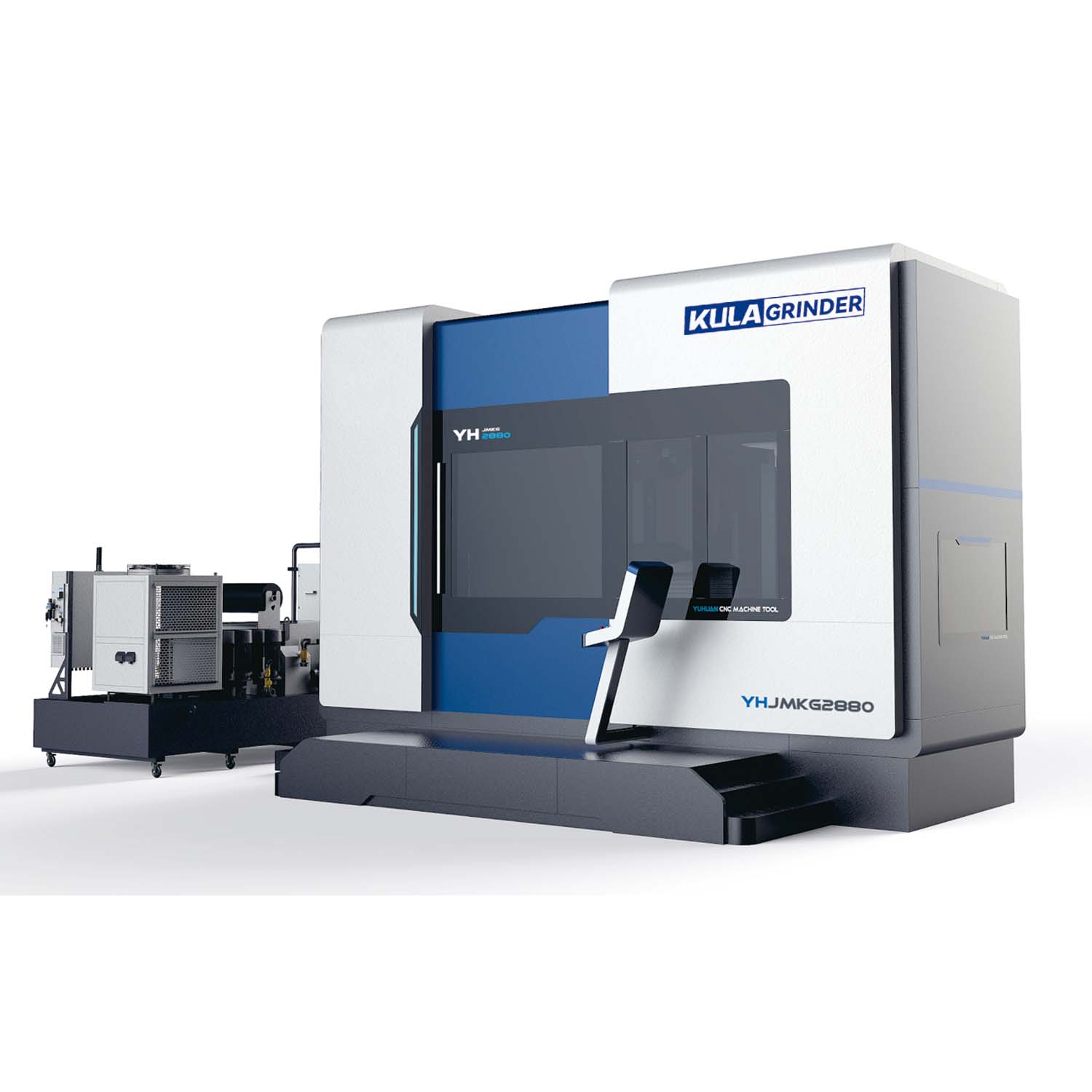
Vertical Grinding Machine: The grinding wheel spindle of a vertical grinding machine is mounted vertically, and the workpiece is fixed on a large rotary table. It is suitable for machining large disc and plate parts, offering high stability and automation advantages.
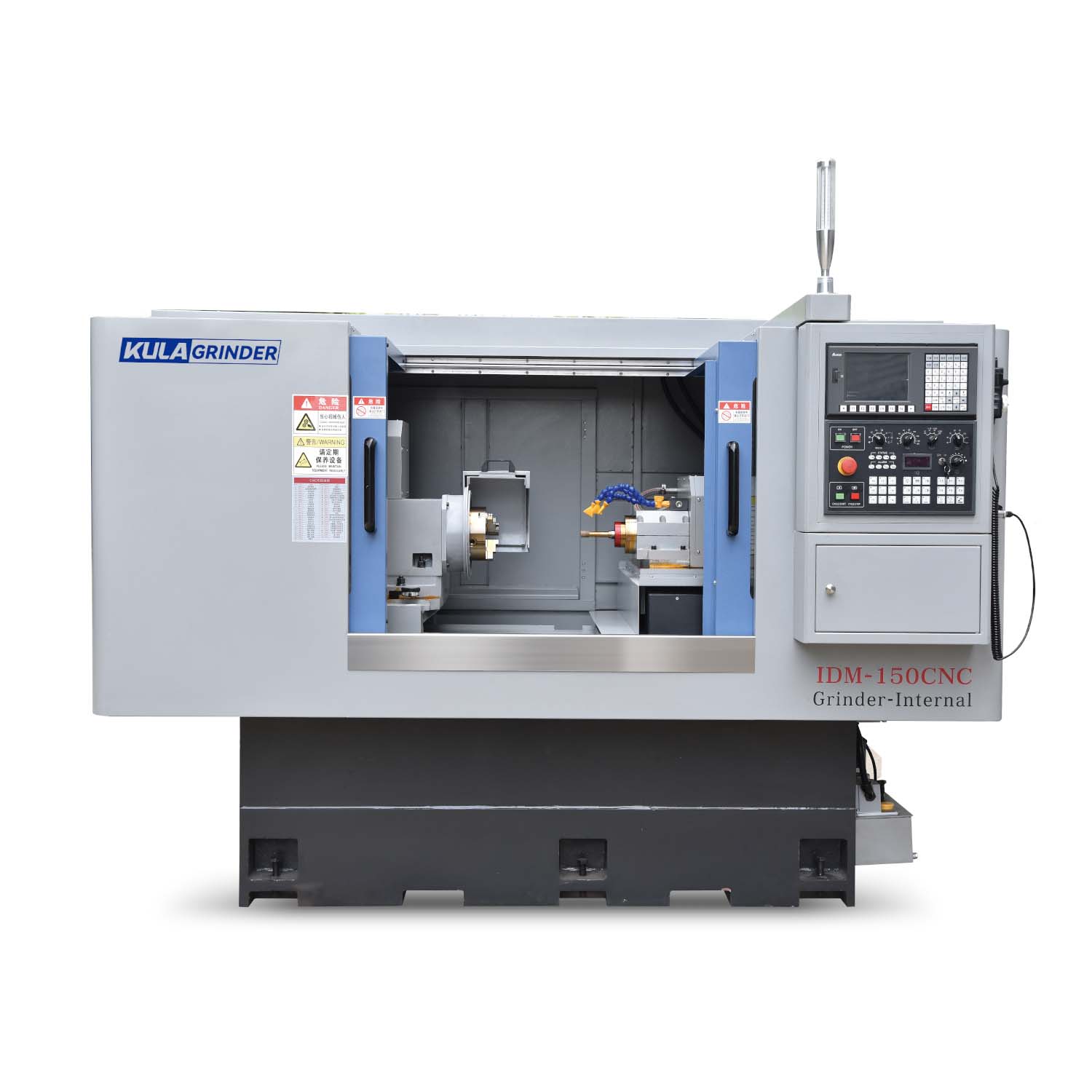
Horizontal Grinding Machine: The grinding wheel spindle of a horizontal grinding machine is mounted horizontally, and the workpiece is clamped on a worktable for reciprocating or rotary motion. It is suitable for long workpieces and high-precision surface grinding, offering intuitive and convenient operation.
2. Application Scenarios and Advantages
Advantages of Horizontal Grinding Machines:
· Long Workpieces: For example, machine tool bed guideways, columns, and long plate parts. Because the workpiece can move along its length, the entire length can be ground in a single clamping.
· High-Precision Surfaces: Due to smooth chip removal, coolant easily reaches the machining area, making it easier to achieve high surface finish and dimensional accuracy.
· Groove Machining: Using shaped grinding wheels, various grooves and profiles can be easily ground.
3. Advantages of Vertical Grinding Machines
· Large Disc and Plate Parts: For example, engine blocks, brake discs, pump valve flanges, and large bearing rings. Workpieces can be directly mounted on a large circular worktable, ensuring excellent stability.
· Mass Production: Due to its ease of automation integration, it is widely used in mass production in industries such as automotive and bearings.
· High-Efficiency Grinding: It can typically use a larger grinding wheel contact area for large-mass grinding, resulting in high efficiency.
4. How to Choose Between Horizontal and Vertical Grinding Machines
· The choice between horizontal and vertical grinding machines depends primarily on the shape, size, and processing requirements of the workpiece.
· If machining slender, guide-rail type workpieces with high precision and surface quality requirements, horizontal grinding machines are preferred because they support long-distance precision grinding, and the user can directly observe the processing.
· If machining large, heavy disc or plate parts, and processing efficiency and automated production are important, vertical grinding machines are more suitable. They have a compact structure, occupy less space, provide stable workpiece fixation, and are suitable for high-efficiency batch processing.
*For certain small to medium-sized workpieces, both types of grinding machines can be considered depending on the budget and actual workshop layout. A comprehensive evaluation of operating habits and process requirements is necessary.
Vertical and horizontal grinding machines each have their own advantages, and the choice cannot be based solely on whether they can grind certain types of workpieces. A correct understanding of their structural differences and their respective advantages in different application scenarios is a prerequisite for achieving efficient and stable machining. Combining the characteristics of your products and production needs, rationally selecting the more suitable type of grinding machine will maximize the value of your equipment investment and production efficiency.
If you have any confusion or concerns during the selection process, please contact our professional team. We will provide you with the most suitable grinder selection solution based on your specific needs and process conditions, helping you achieve further production improvements.


