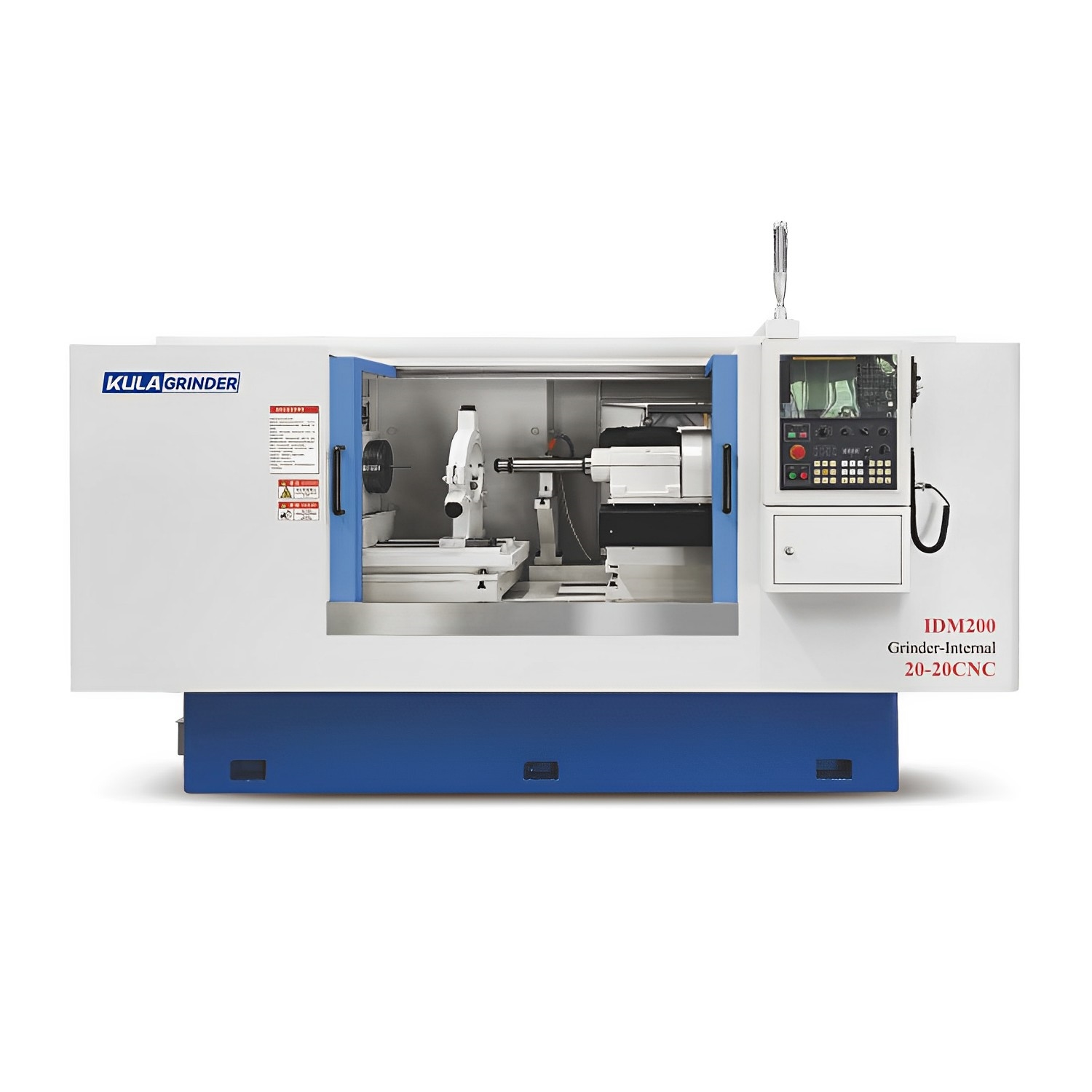
Manufacturing fluid control components is a high-stakes reality. Sub-micron deviations in internal diameter geometries cause severe pressure leaks. They can lead to component binding or catastrophic system failures. Tighter emission and performance standards demand better manufacturing methods. Because of this, standard machining methods are becoming obsolete. Industry leaders are transitioning from legacy honing to advanced precision grinding. You need a reliable method to achieve strict tolerances consistently. This guide provides production managers and manufacturing engineers an objective framework. We will explore how to evaluate equipment and optimize your cycle times. You will learn to balance extreme precision alongside high-volume output. Utilizing internal grinding for sleeves provides the exact control needed to succeed. By understanding fundamental machine architectures, tooling choices, and automation strategies, you can significantly elevate your production floor capabilities.
Key Takeaways
Achieving strict cylindricity and surface finish (Ra) in deep-bore components requires thermally stable, high-rigidity grinding architecture.
Selecting the right equipment hinges on matching spindle speeds and wheel composition (CBN/Diamond) to specific material hardness and Length-to-Diameter (L/D) ratios.
Modernizing with a specialized CNC Internal Grinder reduces scrap rates through real-time in-process gauging and automated wheel dressing.
Evaluating total cost of ownership (TCO) goes beyond the machine price, factoring in automation readiness, coolant management, and operator training.
Sleeves, manifolds, and valve spools present unique geometric challenges. These parts often feature thin walls. Maintaining straightness in thin-walled parts is notoriously difficult. Conventional machining creates excessive radial forces. These forces push against the workpiece walls. This causes heat-induced distortion. Standard clamping methods also cause chucking deformation. When you release the part, it springs back into an out-of-round shape. Specialized grinding approaches mitigate these exact issues.
Success in fluid control manufacturing relies on strict performance metrics. Industry standards demand tight concentricity between internal and external diameters. You must achieve precise roundness. Often, tolerances fall below a single micron. Furthermore, you need a superior surface finish. A poor surface finish creates friction. Friction accelerates wear on dynamic seals. You must control surface roughness (Ra) down to exact specifications to prevent premature valve failure.
Alternative methods often fall short. Basic honing and standard boring lack long-term repeatability. Honing follows the existing hole geometry. It struggles to correct severe bore straightness errors. Standard boring tools deflect when cutting high-hardness alloys used in manifolds. Tool deflection ruins your cycle times and dimensions. High-hardness alloys demand specialized abrasives. Precision internal grinding corrects straightness while delivering unmatched dimensional accuracy. It provides the only reliable path for hardened steel sleeves.
Core Architecture of a Production-Ready CNC Internal Grinding Machine
Achieving single-micron accuracy requires an exceptional foundation. Machine rigidity dictates your ultimate surface finish. Traditional cast-iron machine beds perform well. However, advanced polymer-concrete beds offer superior vibration damping. They absorb harmonic vibrations generated by cutting forces. Eliminating vibration directly improves your surface finish. It also significantly extends your tool life. A rigid base ensures consistent part quality across long production runs.
Spindle design is equally critical for deep-bore components. A specialized CNC Internal Grinding Machine uses high-frequency spindles. You must control RPM precisely to optimize cutting speeds. Thermal stability inside the spindle unit prevents shaft expansion. If the spindle expands, your tool deflects. Handling varying Length-to-Diameter (L/D) ratios requires a spindle that resists deflection under heavy loads.
Evaluating the drive system helps you understand machine longevity. You should assess the following core architectural components when evaluating equipment:
Linear Motors: These drives eliminate mechanical backlash. They provide micro-positioning accuracy. They move the wheel exactly where programmed.
Hydrostatic Guideways: Oil-cushioned guideways eliminate metal-to-metal contact. They offer long-term wear resistance and flawless interpolation.
Chiller Integration: Dedicated cooling loops stabilize spindle bearing temperatures. They prevent thermal drift during extended continuous shifts.
Acoustic Sensors: These sensors detect the exact moment the wheel touches the part. They reduce "air cutting" and speed up cycle times.
In-process gauging integration transforms your production loop. Integrated sizing mechanisms measure the bore diameter continuously. The gauge fingers sit inside the bore during grinding. They send real-time data back to the control unit. This prevents over-grinding. It automatically compensates for wheel wear. You eliminate manual measurement delays entirely. Consistent sizing becomes an automated guarantee rather than a manual guess.
Mastering Precision: Tooling, Dressers, and Thermal Management
Your abrasive selection dictates your ultimate return on investment. Conventional wheels use Aluminum Oxide or Silicon Carbide. They have a lower upfront cost. However, they wear out rapidly when cutting hardened steel. Superabrasive wheels utilize Cubic Boron Nitride (CBN) or Diamond. They carry a higher initial price tag. Despite this, their per-part cost is dramatically lower. They hold their shape longer. This reduces dressing frequency and improves your cycle time.
Below is a straightforward chart comparing abrasive types for hardened steel sleeves.
Abrasive Type
Primary Material Match
Upfront Cost
Wear Resistance
Best Application Scenario
Aluminum Oxide
Soft to medium-hard steels
Low
Low
Low-volume runs, non-critical finish
Silicon Carbide
Cast iron, non-ferrous
Low
Moderate
Roughing operations
CBN (Superabrasive)
Hardened alloy steels
High
Very High
High-volume valve sleeves, tight tolerances
Diamond (Superabrasive)
Carbide, ceramics
Highest
Maximum
Specialized brittle materials
Dressing strategies maintain your wheel sharpness. They also correct the wheel geometry. Programmable rotary dressing tools offer superior control. You program the dresser to profile the wheel precisely. This is vital for complex valve geometries. You must balance your dressing frequency against your cycle time overhead. Dressing too often wastes valuable production time. Dressing too rarely causes grinding burn and poor surface finish. Modern controls optimize this balance automatically.
Coolant application prevents severe thermal damage. Grinding burn occurs when excessive heat alters the part's metallurgy. This ruins the sleeve. Deep bores trap heat easily. You need high-pressure, targeted coolant delivery. The coolant nozzle must match the bore depth. Continuous filtration systems are equally critical. They evacuate swarf efficiently. Dirty coolant scratches the internal surface. Clean coolant ensures an optimal finish and prolongs wheel life.
Scaling Output: Automation and the Modern CNC ID Grinder
Transitioning from manual loading to automated environments changes everything. Manual loading is slow and prone to operator error. Handling high-volume runs requires uninterrupted production. You can integrate gantry loaders above the machine. Alternatively, multi-axis robotic arms can load parts seamlessly. These systems feed valve components continuously. They allow operators to manage multiple machines simultaneously. Automation ensures your production flow remains steady and predictable.
A modern CNC ID Grinder often features multi-spindle configurations. Multi-spindle setups provide massive productivity gains. They allow you to perform internal, external, and face grinding. You do all this in a single chucking operation. Clamping the part once reduces setup errors. It guarantees perfect concentricity between the inner and outer diameters. It also slashes your overall cycle times. You eliminate the need to move parts between different machines.
Software controls drive these complex operations. Finding highly specialized operators is increasingly difficult. An advanced CNC Internal Grinder simplifies this problem. Intuitive CNC interfaces make training easier. Conversational programming allows operators to input part dimensions directly. The software calculates the tool paths automatically. Predictive maintenance monitoring tracks spindle health and axis wear. It alerts you before a breakdown occurs. This prevents costly unplanned downtime.
Implementation Risks and Vendor Shortlisting Logic
Deploying advanced manufacturing equipment introduces rollout realities. You must anticipate common implementation hurdles. Operators will face a learning curve when adapting to new CNC controls. Optimizing the initial part-programs takes time. You must adjust speeds, feeds, and dressing cycles. Integrating the machine with your existing MES or ERP systems requires IT coordination. Planning for these realities ensures a smoother transition onto your production floor.
Evaluating a vendor goes far beyond reviewing a brochure. You need a 360-degree partner to ensure long-term success. Shortlisting manufacturers requires strict logic. A cheap machine becomes expensive if it lacks support. You should prioritize the following criteria when selecting a vendor:
Localized Application Engineering: Your vendor must have engineers nearby. They help optimize complex grinding cycles and troubleshoot issues quickly.
Spare Parts Availability: Extended downtime ruins profitability. Ensure the vendor stocks critical components like spindles and sensors domestically.
Customized Workholding Expertise: Valve sleeves need specialized clamping. Vendors should provide proven diaphragm chucks or low-force collets.
Proof-of-Concept Testing: Never buy based on theory. Mandate a test cut using your exact part prints.
Demanding a proof-of-concept run minimizes your risk. Provide the vendor with your toughest manifold or sleeve blueprint. Ask them to run a comprehensive time-study. Evaluate their capability index (Cpk) data. If they cannot hold your tolerances in their showroom, they will fail on your floor. A trustworthy vendor welcomes this challenge. They will demonstrate their machine's rigidity and precision transparently.
Conclusion
Balancing single-micron accuracy with high throughput in sleeves and manifolds is challenging. It requires aligning machine rigidity, advanced tooling, and strict thermal control. A high-frequency spindle paired with vibration-damping architecture ensures repeatable precision. Integrating superabrasive wheels and optimized coolant delivery protects your parts from thermal distortion. Multi-spindle automation further scales your output by compressing cycle times and eliminating redundant setups.
Your next step is to move past brochure specifications. Do not rely on generic capability claims. You must mandate a comprehensive time-study. Request a capability (Cpk) run using your exact component blueprints before procurement. Partner with a vendor who proves their precision transparently. Upgrading your internal grinding process will secure your competitive edge in fluid control manufacturing.
FAQ
Q: What is the maximum Length-to-Diameter (L/D) ratio practical for standard internal grinding of sleeves?
A: Standard internal grinding handles up to 5:1 or 8:1 L/D ratios effectively. Pushing beyond this limit increases tool deflection realities significantly. Spindle shafts bend under cutting pressure inside deep bores. For extreme depths, you need specialized long-spindle setups. Utilizing customized steady-rests or hybrid grinding strategies helps mitigate chatter and geometry loss in deep cavities.
Q: How does a CNC ID grinder handle thin-walled valve components without causing distortion?
A: Advanced grinders utilize variable clamping pressure. They employ specialized diaphragm chucks or magnetic faceplates. These distribute clamping force evenly across the component. The machine also utilizes low-force grinding strategies. By taking shallower passes with sharp superabrasive wheels, radial pressure decreases. This prevents the thin walls from flexing or overheating during the grinding cycle.
Q: Can one CNC internal grinding machine handle both roughing and sub-micron finishing?
A: Yes. Modern equipment utilizes multi-spindle options. You can mount a coarse wheel for roughing on one spindle. A fine-grit finishing wheel goes on the second spindle. Automated wheel changers and programmable dressers support this workflow. The machine switches seamlessly between aggressive material removal and gentle sub-micron finishing passes in a single automated cycle.
Q: What is the typical return timeline for upgrading from manual honing to automated internal grinding?
A: Upgrading yields quick returns for high-volume environments. Most facilities see returns within 12 to 18 months. This rapid payback stems from massive scrap reduction. Real-time gauging eliminates over-sized bores entirely. Furthermore, labor savings multiply when operators transition to managing automated gantry loaders. Cycle time compression also drastically increases your overall daily part output.