Modern precision manufacturing demands consistency beyond human capability. The transition from operator-dependent dimensional control to closed-loop CNC machining represents a vital evolution in shop floor efficiency. Manufacturers currently face incredibly strict tolerance requirements from aerospace, medical, and automotive sectors. In high-volume production runs, grinding wheel wear and thermal drift inevitably alter final part dimensions over time. Abrasive grains break down, and intense friction generates heat throughout the spindle assembly. Relying on manual offsets introduces costly downtime, frequent human error, and highly inconsistent Process Capability Index (Cpk) metrics.
This article provides a technical and commercial framework for evaluating, selecting, and implementing advanced gauging systems. You will learn how automated feedback architectures function seamlessly during active production. We will examine the strict mechanical prerequisites necessary for achieving sub-micron accuracy. You will also discover how to accurately assess system performance metrics. Finally, we will explore practical implementation realities to help you avoid common deployment pitfalls on your shop floor.
Key Takeaways
Closed-Loop Precision: Automatic size compensation eliminates manual axis interventions by networking in-process gauges directly to the CNC control.
Mechanical Prerequisites: High-resolution gauging is only effective if the CNC Centerless Grinder has the mechanical rigidity and axis resolution to execute sub-micron moves accurately.
ROI Drivers: Primary returns come from eliminated scrap, reduced operator headcount per machine cell, and tighter statistical process control (SPC).
Implementation Reality: Success requires managing environmental variables (coolant, swarf) and configuring software to prevent over-compensation ("chasing the gauge").
The Cost of Manual Offsets in High-Volume Production
Hidden costs severely limit profitability in high-volume production facilities. Relying on manual dimensional control forces operators to pause machines frequently. These continuous stops break production rhythm and lower overall throughput. Every minute spent measuring parts manually represents lost revenue potential.
Continuous grinding degrades the abrasive wheel physically over time. Abrasive grains dull, fracture, and fall away from the bonding matrix. Friction simultaneously generates intense spindle heat. This heat causes heavy machine castings to expand microscopically. Consequently, tolerance drift occurs steadily throughout a single production shift. Operators must constantly intercept outgoing parts, measure them, and calculate offsets manually.
Relying heavily on tribal knowledge poses major risks for any factory. Different operators apply micro-adjustments using their own unique judgment. Shift changes often lead to wildly varied scrap rates. One machinist might overcompensate aggressively upon seeing a small deviation. Another might react too slowly, allowing a batch of bad parts to escape. This inconsistency ruins predictable quality control.
Owning a basic Centerless CNC Grinder without closed-loop feedback leaves production extremely vulnerable. Digital axes alone cannot guarantee dimensional stability. You lack an autonomous feedback loop connecting measurement data to axis motion. Production remains exposed to rapid process variations. Uncorrected variations quickly push parts completely outside acceptable control limits. Without automated compensation, you merely have a motorized machine lacking true intelligence.
Architecture of Automatic Size Compensation in Centerless Grinding
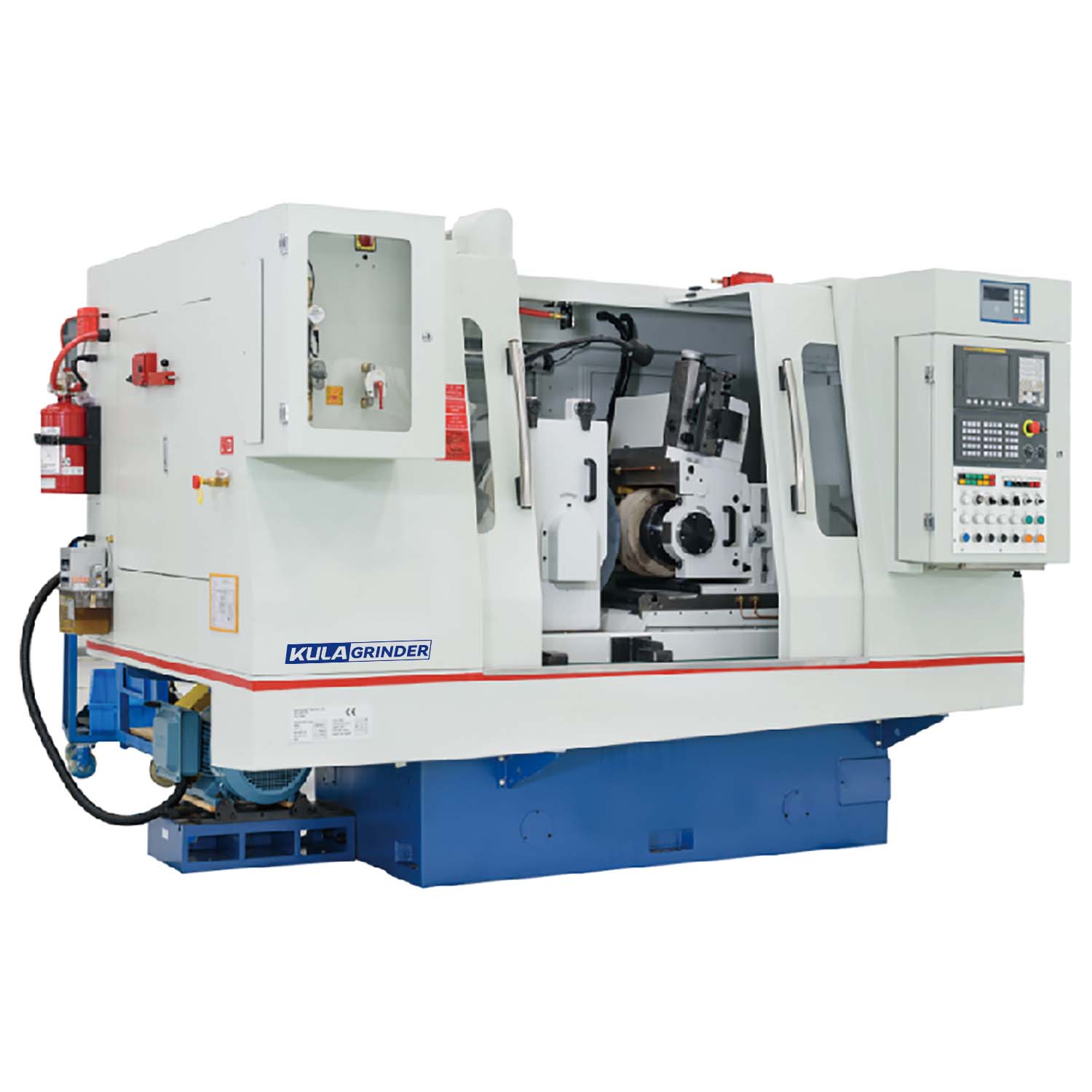
Automated feedback loops fundamentally change how machines operate. Precision measurement instruments link directly to the machine controller via high-speed networks. This architecture creates a continuous, automated dialogue between the outgoing product and the grinding mechanism. The machine essentially inspects its own work in real-time.
Manufacturers typically choose between two primary gauging typologies to capture this data. You must select the right approach based on your specific component design.
In-process gauging: Measures the workpiece actively during the actual grinding cycle. This method monitors diameter reduction continuously.
Post-process gauging: Measures the component immediately upon exiting the work zone. This method verifies final dimensions just before the part drops into the finished bin.
The industry utilizes several distinct measurement technologies. Tactile probes offer robust physical contact using diamond-tipped fingers. Pneumatic gauges use air pressure differentials to determine precise diameters without scratching the surface. Laser micrometers provide non-contact, high-speed optical readings using precise shadow projection techniques. Each technology offers unique benefits depending on the application environment.
The feedback loop processes this continuous stream of measurement data autonomously. When dimensions drift toward upper or lower limits, the gauge signals the controller instantly. The controller then commands the regulating wheel slide to adjust automatically. It executes a sub-micron step to push the dimension back to the nominal target. This happens seamlessly without pausing the production cycle.
Automated systems must also integrate perfectly alongside wheel dressing cycles. Dressing removes dull abrasive layers, which changes the wheel diameter instantly. Modern automatic size compensation centerless grinding systems anticipate this sudden dimensional jump. The macro software calculates the exact volume of abrasive removed. It then resets its baseline zero-point immediately after a dress. This calculation prevents erratic offset commands when active grinding resumes.
Evaluating the ROI: Features to Business Outcomes
Technical capabilities mean little if they fail to drive financial metrics. Evaluating your return on investment requires linking specific machine features directly to tangible business outcomes. You must build a compelling financial case for system upgrades.
Catching tolerance drift early effectively eliminates costly scrap and rework entirely. You spot gradual dimensional trends before parts breach their strict control limits. You stop manufacturing out-of-tolerance components. Eliminating scrap lowers expensive material waste. It also prevents disastrous downstream assembly failures when bad parts reach your customers.
Aerospace, medical, and automotive sectors demand strict compliance tracking. They require a highly stable Process Capability Index (Cpk). Automatic compensation physically flattens your dimensional distribution curve. The machine stays perfectly centered within the narrow tolerance band all day long. Consistent Cpk scores help you win and retain lucrative OEM contracts. Higher capability scores directly translate to better vendor ratings.
Reliable automation drastically changes modern labor requirements. You no longer need an operator stationed at every single control panel. CNC Grinding Automation allows one skilled technician to manage multiple machine cells simultaneously. This labor reallocation reduces overhead costs per part produced. It also helps companies navigate severe skilled labor shortages.
Production Metric | Manual Process Expectations | Automated Closed-Loop System |
Typical Scrap Rate | Fluctuates between 2% - 5% | Consistently less than 0.5% |
Labor Allocation Ratio | 1 Operator per Machine Cell | 1 Operator managing 3-4 Cells |
Cpk Stability Score | Highly inconsistent across shifts | Highly stable, easily exceeding 1.67 |
Measurement Downtime | High (frequent manual stops) | Zero (measured during cycle) |
Best Practice: Always measure your current baseline scrap rate across three different shifts before calculating ROI. Shift-to-shift variance often reveals the true cost of manual interventions.
Critical Evaluation Dimensions for Closed-Loop Systems
Buyers must look critically when evaluating an OEM package or a potential retrofit upgrade. You need a vendor-agnostic framework to assess true capability accurately. Marketing brochures often hide mechanical limitations.
First, strictly evaluate the relationship between gauge resolution and machine resolution. An in-process gauge reading 0.1 microns looks impressive on paper. However, it proves completely useless if your machine's ball screw suffers from 1.0 micron of mechanical backlash. The controller will demand a micro-move. Unfortunately, the physical axis will fail to execute it accurately due to mechanical stiction. A reliable CNC Centerless Grinder requires stiff mechanical fundamentals to support high-resolution gauging.
Next, assess the software filtering logic deeply. Grinding environments create chaotic, messy data streams. A stray metallic chip or a heavy coolant splash can briefly obscure the gauge sensor. The controller must filter out these rogue data points efficiently. It should recognize them as sudden anomalies rather than actual dimensional shifts. Poor filtering algorithms cause erratic, unnecessary machine adjustments.
Finally, evaluate the overarching software architecture. Does the vendor lock you into a restrictive proprietary ecosystem? Open architecture systems integrate smoothly into existing plant Statistical Process Control (SPC) networks. They easily feed data directly into your Quality Management Systems (QMS) using protocols like MTConnect or OPC UA. Proprietary systems often require expensive custom bridges to share this vital production data.
Common Mistake: Purchasing an ultra-precise laser micrometer for a thirty-year-old grinder suffering from worn slideways. Always evaluate mechanical backlash limits before upgrading sensitive electronics.
Implementation Risks and Rollout Realities
Deploying closed-loop automation often uncovers unexpected operational pitfalls. Engineering teams must address transparency and build trust in the newly installed system. Operators often resist automation initially if they do not understand the underlying logic.
One major risk involves "chasing the gauge." This phenomenon occurs when hyper-sensitive compensation loops cause rapid axis oscillation. The machine reacts wildly to every single minor measurement fluctuation. You must emphasize trend-based offset triggers instead of single-part reactions.
Consider configuring these proven software trigger strategies:
Moving Average Calculation: Calculate the average diameter of the last five components before applying any physical offset.
Trend Threshold Activation: Only adjust the slide when three consecutive parts move in the exact same dimensional direction.
Deadband Zone Implementation: Define a safe middle tolerance zone where zero compensations occur. This prevents constant, unnecessary micro-hunting near the nominal target.
Environmental interference poses another serious rollout reality. Coolant flow, heavy grinding swarf, and ambient factory temperature shifts cause absolute chaos. They easily blind optical laser gauges. They also foul up delicate tactile probes rapidly. Proper physical setup remains absolutely mandatory. You must install robust positive air-purge systems to keep measurement zones entirely clear of debris.
Crucially, automation cannot fix fundamentally bad grinding practices. Bad wheel selection will still burn parts thermally. Improper workblade angles will still cause aggressive chatter marks. Unstable coolant delivery will still ruin surface finishes. Ensure your baseline tooling stability is absolutely flawless before introducing automated size controls into the cell.
Shortlisting Logic and Next Steps for Buyers
Moving forward with a complex purchase requires a highly structured decision framework. You must validate vendor claims through rigorous physical testing. Never rely solely on digital simulations.
Always demand a multi-hour capability runoff. The vendor must demonstrate Cpk stability without any operator intervention whatsoever. A short ten-part runoff proves nothing in the grinding world. You need to see the system handle gradual wheel wear and significant thermal expansion over continuous production hours.
Buyers frequently debate retrofitting older equipment versus replacing it entirely. Use a simple matrix to guide this critical financial decision.
Machine Condition Evaluation | Recommended Strategic Action |
Machine has a rigid bed, precision linear motors, and a modern CNC. | Retrofit a new gauging system. |
Machine suffers from severe axis backlash or outdated hydraulics. | Replace with a ground-up turnkey system. |
Current control architecture is closed, proprietary, and unsupported. | Replace with a modern, open platform. |
Spindle runout exceeds acceptable baseline limits for the target tolerance. | Rebuild spindle assembly before considering retrofits. |
Prioritize vendors offering strong local application engineering support. Initial hardware integration requires deep process knowledge. Furthermore, precision measurement gauges require routine long-term calibration. Ensure the chosen supplier provides incredibly quick response times for technical service and calibration verification procedures.
Conclusion
Automated dimensional control now dictates core competitiveness in modern precision manufacturing. Transitioning to closed-loop grinding systems transforms highly variable manual processes into predictable, highly stable operations. The days of relying on operator intuition for sub-micron adjustments are ending quickly.
Consider executing these precise final steps for your production floor:
Conduct a thorough audit of your current scrap rates across multiple shifts to identify hidden waste costs.
Calculate your exact operator-to-machine ratios to spot glaring labor inefficiencies.
Build an internal business case focused exclusively on scrap reduction and improved Cpk metrics.
Consult directly with experienced automation integrators to request a comprehensive cycle-time analysis.
Embracing these automated measurement technologies safeguards your product quality. It also fundamentally reduces daily overhead burdens. Take decisive action today by assessing your oldest manual grinding cells for immediate upgrade potential.
FAQ
Q: Can automatic size compensation be retrofitted to older machines?
A: Yes, but it requires retrofitting the control and ensuring the machine's mechanical axes, such as ball screws and servomotors, have the rigidity and resolution to accept micro-offsets without backlash.
Q: Which gauging method is best for heavy coolant applications?
A: Pneumatic (air) gauges or tactile probes with positive air purges are generally more reliable than unprotected laser systems in heavy coolant and swarf environments.
A: Modern CNC controls use statistical trend analysis, typically averaging a specific number of parts, to apply an offset, rather than reacting to a single anomalous part measurement.


