In the world of modern manufacturing, achieving micron‑level precision and consistent surface quality is a non‑negotiable demand — especially in industries like aerospace, automotive, medical devices, and tool making. At the heart of these demanding precision machining tasks lies one of the most advanced machine tools available: the CNC Compound Grinding Machine. Often referred to simply as a CNC Compound Grinder, this technology combines cutting‑edge computer numerical control with complex grinding processes to deliver unmatched accuracy, repeatability, and productivity.
This comprehensive guide will explore how a CNC Compound Grinding Machine works, what makes it unique, and why it is indispensable in today’s highly competitive manufacturing landscape. We’ll break down its structure, operational principles, data‑driven performance metrics, comparisons with other grinding technologies, and the latest trends shaping its evolution.
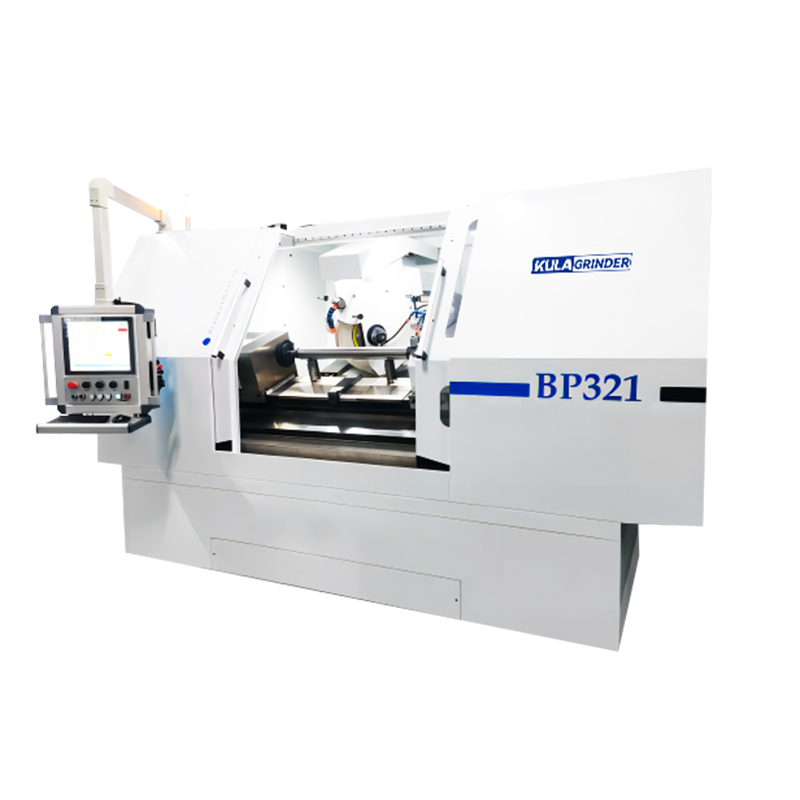
What Is a CNC Compound Grinding Machine?
A CNC Compound Grinding Machine is a type of advanced grinding system that incorporates computer numerical control to execute grinding processes with high precision, complex motion control, and repeatability. Unlike basic manual grinders, it combines multiple grinding operations — such as external, internal, and surface grinding — into one integrated setup, all guided by CNC programs.
In essence, this machine automates intricate abrasive machining tasks so they can be performed consistently, accurately, and with minimal human intervention. Modern CNC Compound Grinder models leverage multi‑axis motion control, adaptive feedback systems, and high‑speed spindles to handle complex geometries and tight tolerances across various materials.
Core Components of a CNC Compound Grinding Machine
1. CNC Control Unit
The CNC system — often equipped with industrial controls such as FANUC, Siemens, or Mitsubishi — is the brain of the CNC Compound Grinding Machine. It interprets program instructions (typically G‑code or M‑code) to precisely orchestrate the motion of axes, feed rates, and grinding wheel speeds.
2. Grinding Head(s) and Wheels
A compound grinder may have multiple grinding heads to perform different tasks such as surface, internal, and external grinding. Each head spins a grinding wheel made of abrasive materials (e.g., aluminum oxide or CBN) that removes material from the workpiece with controlled precision.
3. Workholding Fixtures
Precision machining requires secure and accurate positioning of the workpiece. Fixtures, chucks, centers, or rotary tables ensure the part remains stable throughout the operation.
4. Multi‑Axis Motion System
Unlike simple grinders, CNC Compound Grinders often have multi‑axis capabilities — typically at least X and Z axes, and frequently additional tilting or rotation axes in advanced models. This allows the machine to handle complex part geometries with seamless motion control.
5. Coolant and Filtration Systems
Efficient coolant delivery reduces thermal distortion and enhances surface finish quality. Filtration systems keep slurry and debris out of the grinding zone, prolonging wheel life and maintaining precision.
How CNC Compound Grinding Machines Work
The precise machining performed by a CNC Compound Grinding Machine is not accidental — it follows a programmed sequence of steps that maximize accuracy and consistency. Here’s a typical workflow:
Step 1: CAD/CAM Programming
A CAD model of the part is translated into a CNC program using CAM software. This program defines tool paths, speeds, feeds, and grinding sequences.
Step 2: Workpiece Loading
The part is mounted in a fixture or held between centers. For highly precise operations, even slight misalignments can lead to errors.
Step 3: Grinding Wheel Dressing
Before cutting begins, the grinding wheel is dressed to restore its profile and ensure it cuts accurately. This process is crucial for consistent results.
Step 4: Grinding Cycle Execution
Under CNC automation, the machine executes the program: grinding wheels move along programmed axes to remove material with micron‑level precision from the workpiece. Multiple grinding heads may operate sequentially or concurrently depending on the part geometry.
Step 5: In‑Process Monitoring
High‑end machines monitor parameters like wheel wear, spindle load, and axis backlash, adapting the process to maintain tolerance and surface finish quality.
Step 6: Inspection and Finishing
After grinding, parts are often inspected using in‑machine probing or external measurement systems to verify dimensional conformity before outgoing inspection.
Key Capabilities of CNC Compound Grinding Machines
A CNC Compound Grinder delivers several distinct capabilities that make it a cornerstone of precision manufacturing. Below is a comparison table illustrating these capabilities relative to traditional grinding:
| Feature | CNC Compound Grinding Machine | Traditional Manual Grinder |
| Precision | ±0.001 mm or better | Lower, operator‑dependent |
| Repeatability | Very High | Variable |
| Automation | Full CNC control | Manual |
| Ease of Complex Shapes | Excellent | Challenging |
| Production Consistency | High | Lower |
| Setup Time | Moderately low | High |
| Operator Skill Required | Moderate (programming) | High (manual skill) |
This comparison demonstrates how modern CNC Compound Grinder technology significantly enhances precision and productivity over conventional manual grinding approaches.
Precision and Accuracy — How It’s Achieved
The extraordinary precision of a CNC Compound Grinding Machine comes from a combination of mechanical and electronic innovations:
Micron‑Level Control Through CNC Programming
The CNC control system precisely manages the movement of axes and grinding wheel engagement, often down to micrometers. This results in consistent dimensional accuracy across large batches.
Rigid Machine Structure
A robust machine frame and precision guideways minimize vibration and deviations, contributing to repeatable results and surface finish quality.
Adaptive Feed Control
Some machines can adjust feed rates in real time based on feedback from sensors monitoring wheel wear or force, maintaining consistent cutting conditions.
Precision Wheel Dressing
Regular wheel dressing ensures the abrasive surface remains sharp and true, which is vital for achieving consistent surface finish and tolerance control.
Types of Grinding Operations Covered by CNC Compound Grinders
The versatility of a CNC Compound Grinding Machine means it can perform multiple grinding operations, often in a single setup:
Surface Grinding
Used for flat or contoured surfaces where precision in flatness and parallelism is required.
Cylindrical Grinding (OD/ID)
Grinding of both external and internal cylindrical surfaces. CNC compound grinders often handle OD and ID grinding without changing machines.
Centerless Grinding
This operation holds the workpiece between two wheels and is ideal for high‑volume cylindrical parts.
Complex Multi‑Axis Profiles
Advanced CNC Compound Grinders with additional axes (e.g., 5‑axis machines) can grind complex contours, tapers, and 3D profiles with minimal setup changes.
Industries & Applications
The precision machining capabilities of CNC Compound Grinding Machines make them indispensable in numerous sectors. Here are some major applications:
Aerospace: Precision grinding of turbine blades, landing gear components, and tight‑tolerance parts used in aircraft systems.
Automotive: Grinding of crankshafts, camshafts, and precision bearings where accuracy impacts performance and longevity.
Medical Devices: Surgical tools, implants, and components requiring high‑quality surface finishes and tight tolerances.
Tool & Die: High‑precision molds, cutting tools, and custom fixtures.
Research & Development: Prototyping and specialized parts where complex geometries and superior finishes are essential.
CNC Compound Grinder vs Other Grinding Systems
To better understand why CNC Compound Grinders are preferred for precision operations, compare them with other machining technologies:
| Aspect | CNC Compound Grinder | Conventional Grinder | Manual Grinder |
| Accuracy | Very High | Moderate | Variable |
| Automation | High | Low | None |
| Complexity Handling | Excellent | Limited | Poor |
| Productivity | High | Moderate | Low |
| Setup Repeatability | Excellent | Moderate | Low |
This comparison highlights the advantages of sophisticated CNC systems for modern manufacturing demands.
Latest Trends in CNC Compound Grinding Technology
1. Smart Feedback & Predictive Maintenance
Modern platforms incorporate sensor data and analytics to predict wheel wear and machine health — reducing downtime and improving consistency.
2. AI‑Assisted CNC Programming
Machine learning tools are being integrated to optimize grinding parameters automatically, reducing cycle times and improving part quality.
3. Multi‑Axis Grinding Solutions
5‑axis and higher axis count systems enable grinding of complex free‑form surfaces without multiple setups.
4. Advanced Abrasive Technologies
High‑performance grinding wheels with CBN or diamond particles increase durability and surface finish quality.
5. Industry 4.0 Integration
Enhanced connectivity and real‑time monitoring allow remote diagnostics and process visualization — improving uptime and traceability.
Data‑Driven Performance Metrics
Understanding performance metrics helps evaluate the impact of CNC Compound Grinders in production environments. Below is a general overview of typical output metrics:
| Metric | Typical Performance with CNC Compound Grinder |
| Tolerance | ±0.001 mm or better |
| Surface Roughness | Ra 0.05–0.2 µm |
| Repeatability | High across series production |
| Setup Time | Reduced due to automation |
| Scrap Rate | Lower due to consistent control |
These figures illustrate how CNC Compound Grinding Machines deliver measurable quality advantages over less advanced methods.
FAQs About CNC Compound Grinding Machines
1. What differentiates a CNC Compound Grinding Machine from a standard CNC grinding machine?
The term compound highlights the capability to handle multiple grinding operations (e.g., surface, internal, external) within the same machine — often with automated transitions and multi‑axis motion control.
2. Can a CNC Compound Grinder handle both internal and external surfaces?
Yes, modern compound grinders are programmed to grind both internal and external surfaces sequentially within one setup, improving efficiency.
3. How important is wheel dressing in CNC grinding operations?
Wheel dressing is essential — it restores wheel profile and abrasive sharpness, ensuring consistent accuracy and surface finish throughout runs.
4. Are CNC Compound Grinding Machines suitable for high‑volume production?
Absolutely — their automation, repeatable precision, and high throughput make them ideal for high‑volume applications with tight tolerances.
5. What materials can be machined on a CNC Compound Grinder?
These machines can handle metals, ceramics, and hard alloys — with specialized wheels — making them versatile in precision manufacturing.


