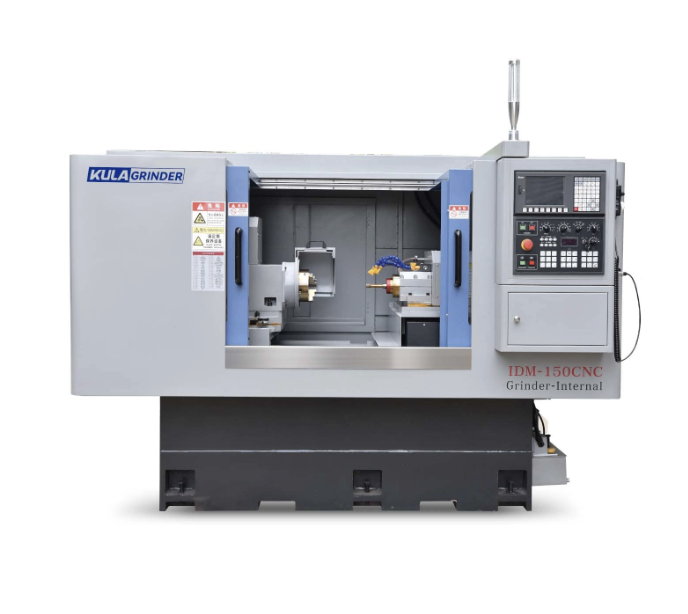
Ever struggled with achieving precise internal finishes on parts? CNC internal grinding machines are here to solve that problem. These machines use advanced technology to grind the inside of workpieces, delivering high precision and smooth surfaces.In this post, we’ll discuss how CNC internal grinding machines work, their key components, and the industries that benefit from them. You’ll also learn how they compare to other grinding methods and why they are essential for high-precision tasks.
Understanding the CNC Internal Grinding Process
What is Internal Grinding?
Internal grinding is a machining process that removes material from the inside of a workpiece. It’s used to create smooth, accurate internal surfaces like bores or holes. The process is vital when high precision is needed for parts like hydraulic cylinders, bearings, or engine components.The goal of internal grinding is to achieve an ultra-fine finish with tight tolerances. CNC technology plays a huge role in this. With computer-controlled movements, the machine can grind internal surfaces consistently, offering better accuracy than manual methods.
How Does a CNC Internal Grinder Work?
A CNC internal grinder uses advanced automation to achieve high-precision cuts. Here's how it works:
CNC Control: The CNC system directs the machine’s movements, guiding the grinding wheel precisely along the inside of the workpiece. This helps achieve consistent results.
Rotating Grinding Wheel: The grinding wheel rotates at high speed and is fed into the workpiece. CNC controls the speed and movement, allowing for smooth, even grinding.
Workpiece Support: The workpiece is securely held in place during the grinding process. The machine adjusts the wheel's position to grind specific internal features like bores, tapered surfaces, or stepped holes.
CNC internal grinding machines can automate the entire process, allowing for precise and repeatable results, which is essential for high-precision manufacturing.
Key Components of a CNC Internal Grinding Machine
What Are the Core Components of CNC Internal Grinding Machines?
A CNC internal grinding machine consists of several critical parts that work together to deliver precise results. Here’s an overview of the key components:
Machine Bed: This is the foundation of the machine. It provides stability and rigidity, absorbing vibrations to ensure accurate grinding.
Workhead: The workhead holds and rotates the workpiece during the grinding process. It is essential for securely positioning the workpiece and controlling its movement.
Wheelhead: This part houses the spindle and the grinding wheel. It is responsible for holding the grinding tool, rotating it, and feeding it into the workpiece.
Dressing Device: A dressing device is used to maintain the grinding wheel. It reshapes the wheel by removing worn-out abrasives, ensuring that the wheel remains sharp and effective.
CNC Control System: The CNC control system acts as the brain of the machine. It automates and precisely coordinates the movements of the workhead, wheelhead, and other components, ensuring accurate grinding operations.
How Do These Components Contribute to High Precision?
Each component plays a specific role in achieving the high precision required for internal grinding:
Machine Bed: By providing a stable base, it minimizes vibrations during operation. This ensures that even the smallest details are ground with accuracy.
Workhead: The workhead's ability to securely hold the workpiece and control its rotation allows for fine adjustments. This leads to consistent, precise grinding across all parts.
Wheelhead: The wheelhead controls the movement and speed of the grinding wheel. Its precision directly affects the accuracy of the grinding process.
Dressing Device: Regular dressing of the grinding wheel ensures it maintains optimal cutting performance. This helps keep the grinding surface smooth and consistent, preventing irregularities in the final product.
CNC Control System: With the CNC system, the machine can follow programmed instructions with micrometer-level precision. It ensures that the grinding process is repeatable and consistent, even for complex shapes.
These components, working together, enable the CNC internal grinding machine to achieve ultra-fine finishes and hold tight tolerances, making it a crucial tool in high-precision industries.
CNC Internal Grinding vs Other Grinding Methods
How Does CNC Internal Grinding Differ from Other Types of Grinders?
CNC internal grinding stands out because it is designed specifically for finishing the inner surfaces of workpieces. Here's how it compares with other types of grinders:
Surface Grinders: These grinders are used to grind flat surfaces, not internal features. Unlike CNC internal grinders, which work inside the workpiece, surface grinders focus on external surfaces, like planes and grooves.
Cylindrical Grinders: Cylindrical grinders are for external surfaces. They grind the outer diameter of cylindrical parts. CNC internal grinders, on the other hand, are dedicated to creating precise internal surfaces like bores or tapered holes.
Centerless Grinders: Centerless grinders are designed for grinding external features without supporting the workpiece at the ends. They are great for high-volume external round grinding, but they are not suitable for internal grinding.
CNC internal grinding machines are specially built to work on the interior of a part, a task that other grinders cannot handle with the same level of precision.
When to Use CNC Internal Grinding Machines Over Other Types?
CNC internal grinding is preferred when internal surfaces require high precision, such as:
Tight Tolerances: If the part requires very tight dimensional accuracy inside a bore, CNC internal grinding is the go-to solution. Other grinders simply can't achieve the same level of precision on internal surfaces.
Fine Surface Finishes: CNC internal grinders can create mirror-like finishes inside a part. If you need a smooth, fine surface on the inside, manual methods or other grinders are not as effective.
Complex Internal Features: When the part has intricate internal features like stepped bores or tapered surfaces, CNC internal grinding is often the only method that can achieve the required accuracy.
Choosing CNC internal grinding makes sense when dealing with complex internal surfaces, tight tolerances, or high-quality surface finishes. Other grinders may work for external surfaces or simple shapes but fall short for internal precision.
Achieving Precision and Surface Finish in CNC Internal Grinding
How Does CNC Internal Grinding Achieve High Precision?
CNC internal grinding machines achieve high precision by carefully controlling several key factors:
Rigid Machine Construction: The solid machine bed ensures stability, absorbing vibrations. This rigidity prevents any inaccuracies during the grinding process, allowing for tight tolerances.
CNC Control of Movements: The CNC system precisely controls the grinding wheel’s movements. This automation ensures that every cut is consistent and within the specified dimensions.
Specialized Grinding Wheels: The use of fine-grit, high-quality grinding wheels is essential for achieving smooth surfaces. These wheels are chosen based on the material being worked on to ensure optimal results.
Optimized Parameters: The machine’s settings, like speed and feed rates, are fine-tuned for each specific job. This ensures precise material removal and a smooth surface finish, essential for micron-level accuracy.
What Factors Contribute to a Perfect Surface Finish?
Achieving a flawless surface finish in CNC internal grinding requires several factors to work together:
Abrasives: The choice of abrasives is critical. Materials like aluminum oxide or diamond are used for their ability to cut smoothly and consistently. The right abrasive ensures a high-quality surface finish.
Spindle Speeds: Consistent and high spindle speeds are crucial for maintaining a smooth surface. High RPM helps to minimize any uneven material removal, leading to a finer finish.
Effective Coolant Usage: Coolants help reduce friction during grinding. They also prevent thermal damage to both the workpiece and the grinding wheel. A steady coolant flow ensures optimal grinding conditions.
Automated Wheel Dressing: Over time, grinding wheels wear out and lose effectiveness. Automated wheel dressing reshapes the wheel and removes embedded debris, ensuring it continues to perform at its best. This regular maintenance helps maintain precision throughout long production runs.
These combined factors ensure that CNC internal grinding machines can deliver micron-level precision and the best possible surface finishes on even the most complex parts.
Ideal Workpieces for CNC Internal Grinding Machines
What Types of Parts are Best Suited for CNC Internal Grinding?
CNC internal grinding machines are perfect for parts that require high precision on their internal surfaces. These parts include:
Bearing Races: Bearings need smooth, round inner surfaces for proper function. CNC internal grinding ensures that the inner race is perfectly finished for smooth rotation.
Hydraulic Cylinders: Hydraulic cylinders require precise, smooth internal bores to maintain sealing and fluid flow. CNC internal grinding achieves the tight tolerances needed for these critical components.
Engine Components: Parts like piston pin bores, cylinder liners, and connecting rod big ends all need accurate internal finishes. CNC internal grinding ensures these components meet strict specifications for engine performance.
Medical Devices: Components such as surgical instruments or implants need smooth, biocompatible surfaces. CNC internal grinding provides the precision and surface finish required for medical applications.
These parts demand tight tolerances and fine surface finishes, making CNC internal grinding the ideal choice.
What Materials Can Be Processed with CNC Internal Grinding?
CNC internal grinding works with a variety of materials, including:
Hardened Steels: CNC internal grinders can handle hardened steels, which are tough and require high precision. The machines can maintain sharp grinding tools and consistent speeds to process these hard materials.
High-Strength Alloys: Materials like Inconel or titanium alloys can be difficult to grind. CNC technology allows for precise control over the grinding process, ensuring these tough materials are processed with high accuracy.
Ceramics: Brittle and hard ceramics require careful handling. CNC internal grinding is ideal for achieving precise internal features without causing cracking or damage to the material.
Optical Glass: For applications like lenses, CNC internal grinding delivers the necessary precision and smoothness required for optical components.
Different materials require different grinding strategies, but CNC internal grinding is versatile enough to handle a wide range of materials with high precision.
Applications of CNC Internal Grinding Machines
Where Are CNC Internal Grinding Machines Used in Industry?
CNC internal grinding machines are widely used across several industries due to their ability to achieve high precision on internal surfaces. Here are some key industries where these machines are essential:
Automotive: CNC internal grinders are used for parts like hydraulic cylinders, engine components, and bearing races. They ensure high accuracy and smooth finishes for performance-critical components.
Aerospace: Parts such as fuel nozzles, turbine engine components, and landing gear systems require precise internal features. CNC internal grinding ensures that these parts meet stringent aerospace standards.
Medical Device Manufacturing: Surgical instruments, implants, and other medical devices often have intricate internal features. CNC internal grinding guarantees precise dimensions and smooth surfaces, ensuring functionality and biocompatibility.
Bearing Production: Bearing races and other components need perfectly smooth internal surfaces. CNC internal grinders provide the precision needed for these high-performance parts.
Gear Manufacturing: Gears often require precise internal features like splines and bores. CNC internal grinding helps create these features with micron-level accuracy.
Why CNC Internal Grinding Machines Are Indispensable for High-Precision Industries
CNC internal grinding machines are crucial in industries where high precision is non-negotiable. Here's why:
Support Mass Production: These machines allow for high-volume production with consistent quality. Once programmed, CNC grinders can operate with minimal human intervention, improving productivity.
Handle Complex Parts: CNC internal grinders are ideal for creating complex internal geometries, such as tapered holes, stepped bores, or raceways, which are difficult to achieve using other methods.
Maintain High-Quality Standards: The precision and repeatability provided by CNC grinding ensure that parts meet strict quality standards. Whether it’s for automotive, aerospace, or medical devices, these machines help maintain exacting specifications, reducing waste and rework.
CNC internal grinding machines are essential tools in modern manufacturing, offering the precision and efficiency required for high-quality, mass-produced parts.
Conclusion
Investing in CNC internal grinding machines offers precision and efficiency for industries requiring tight tolerances. These machines provide consistent, high-quality results for complex parts, making them indispensable for sectors like automotive, aerospace, and medical device manufacturing. At KULA Precision Machinery Co., Ltd., we don’t just offer CNC internal grinders. We also specialize in other high-performance grinders, including CNC cylindrical grinders, designed to meet the diverse needs of modern manufacturing. Our expertise extends beyond the products themselves, as we are committed to delivering comprehensive customer service and partner support solutions. With years of experience in the global market, we are poised to enhance your production capabilities with cutting-edge grinding technology.
FAQs
Q: What types of workpieces can be processed using a CNC internal grinding machine?
A: CNC internal grinding machines are ideal for parts like bearing races, hydraulic cylinders, engine components, and medical devices, requiring tight tolerances and fine finishes.
Q: Can CNC internal grinders handle large and complex internal features?
A: Yes, CNC internal grinders can handle complex internal geometries, such as tapered holes, stepped bores, and intricate internal profiles.
Q: How often should the grinding wheel be dressed?
A: The grinding wheel should be dressed regularly, depending on usage. Automated dressing helps maintain consistent performance during long runs.
Q: What is the difference between CNC internal grinding and manual grinding in terms of cost and efficiency?
A: CNC internal grinding is more efficient and cost-effective over time, offering higher precision, repeatability, and reduced labor compared to manual grinding.
Q: Can CNC internal grinding be used for both hardened and non-hardened materials?
A: Yes, CNC internal grinding is suitable for both hardened and non-hardened materials, including steels, alloys, ceramics, and optical glass.


